

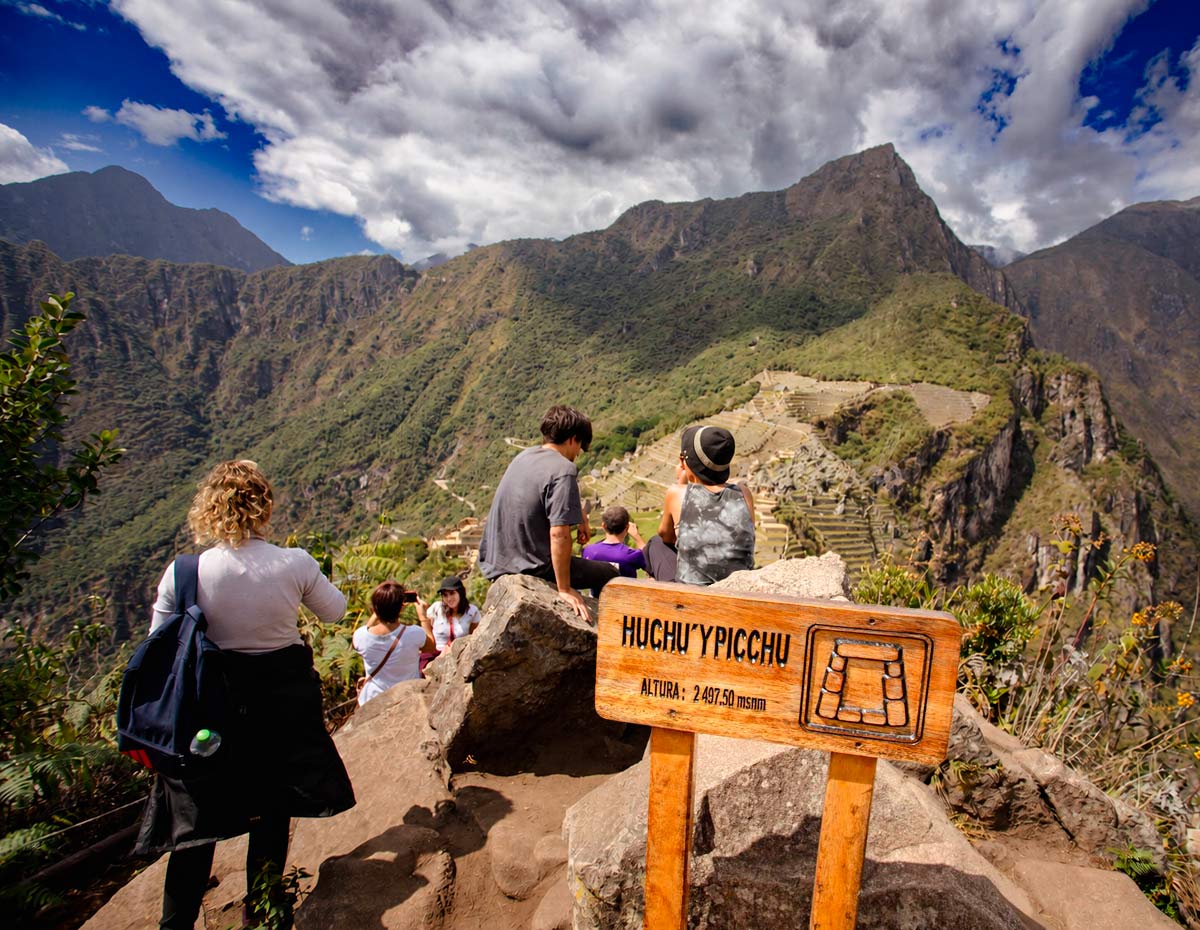
If you plan to visit Machu Picchu and are looking for a different experience from Wayna Picchu, Huchuy Picchu is the option that many travelers still do not know. It is the smallest mountain inside the historic sanctuary of Machu Picchu, located to the north of the citadel. Despite its size, it offers one of the best views of the whole archaeological complex, without the long lines or the high ticket demand that mark the most popular routes.
Unlike Wayna Picchu, which limits entry to 400 visitors per day split into two schedules, Huchuy Picchu receives much less tourist traffic. This makes it an ideal choice for those who prefer to walk calmly, take pictures without crowds, or simply enjoy a short, but equally amazing climb. Its path is brief (just 1.7 kilometers round trip) and does not require an advanced physical level, although it does have stone steps and some uneven parts that are worth keeping in mind.
In this travel guide, we tell you everything you need to know to climb Huchuy Picchu: exactly where it is located, how it is different from Wayna Picchu, how and where to buy your ticket, what to bring, what is the best time and schedule to go, what views wait for you at the top, plus safety tips and the most frequently asked questions from travelers.
History and meaning of the name (Quechua)
The name Huchuy Picchu comes from Quechua, the ancient language of the Peruvian Andes. “Huchuy” means “small”, while “Picchu” refers to a peak or pointed mountain. Thus, Huchuy Picchu literally translates as “small mountain”, in direct contrast with its neighbors: Machu Picchu (“old mountain”) and Wayna Picchu (“young mountain”).
This naming system reflected how the Incas described the landscape around the citadel, using direct references to the shape, age, or size of the geographic features. Even though Huchuy Picchu does not have buildings as detailed as those of the main citadel, its closeness to the ceremonial center and its high position suggest that it was also part of the sacred setting that the Incas added to their architecture and worldview.
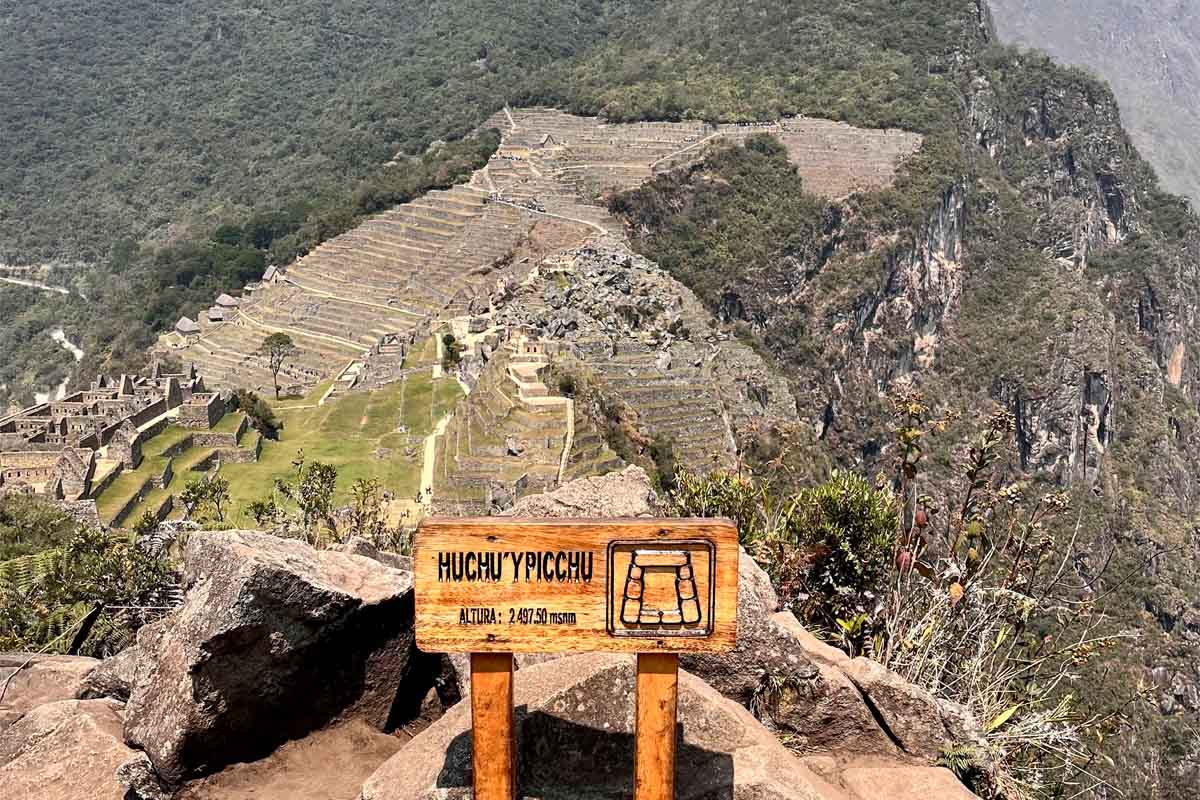
Where exactly is Huchuy Picchu?
Huchuy Picchu is found inside the Historic Sanctuary of Machu Picchu, to the north of the Inca citadel and very close to Wayna Picchu. In fact, it shares an access trail for a good part of the trip. Since it is inside the same archaeological complex, it does not require extra rides: the entry to the mountain is done from a checkpoint located on the route to Wayna Picchu. Therefore, both experiences are geographically connected, even though they have different tickets and rules.
What is the route to Huchuy Picchu Mountain like?
Before climbing Huchuy Picchu, it is useful to know the specific facts of the route to plan your visit and know what to expect from the tour. Unlike Wayna Picchu or Machu Picchu Mountain, which require greater physical effort and more time, Huchuy Picchu is a short and easy walk for most visitors, as long as some basic precautions are taken for the terrain and altitude. So, if you visit this place keep the following in mind:
-
Distance and elevation
The Huchuy Picchu trail covers about 1.7 kilometers (1.1 miles) round trip, making it one of the shortest routes inside the historic sanctuary. The total elevation gain is about 67 meters (219 feet), a moderate climb that is mostly overcome by stone stairs, restored to allow safe access for visitors.
-
Estimated time
Most visitors complete the climb up and down in a range of 30 to 60 minutes, depending on personal pace, the level of adjustment to the altitude and the time spent taking pictures at the top. It is one of the fastest routes to walk inside the complex, ideal for those who have little time available before or after their visit to the main citadel.
-
Difficulty level
Huchuy Picchu is rated as a moderate difficulty route. Although it does not require previous trekking experience, the path includes uneven stone steps and some narrow sections where it is recommended to move carefully, especially in the rainy season when surfaces can become slippery.
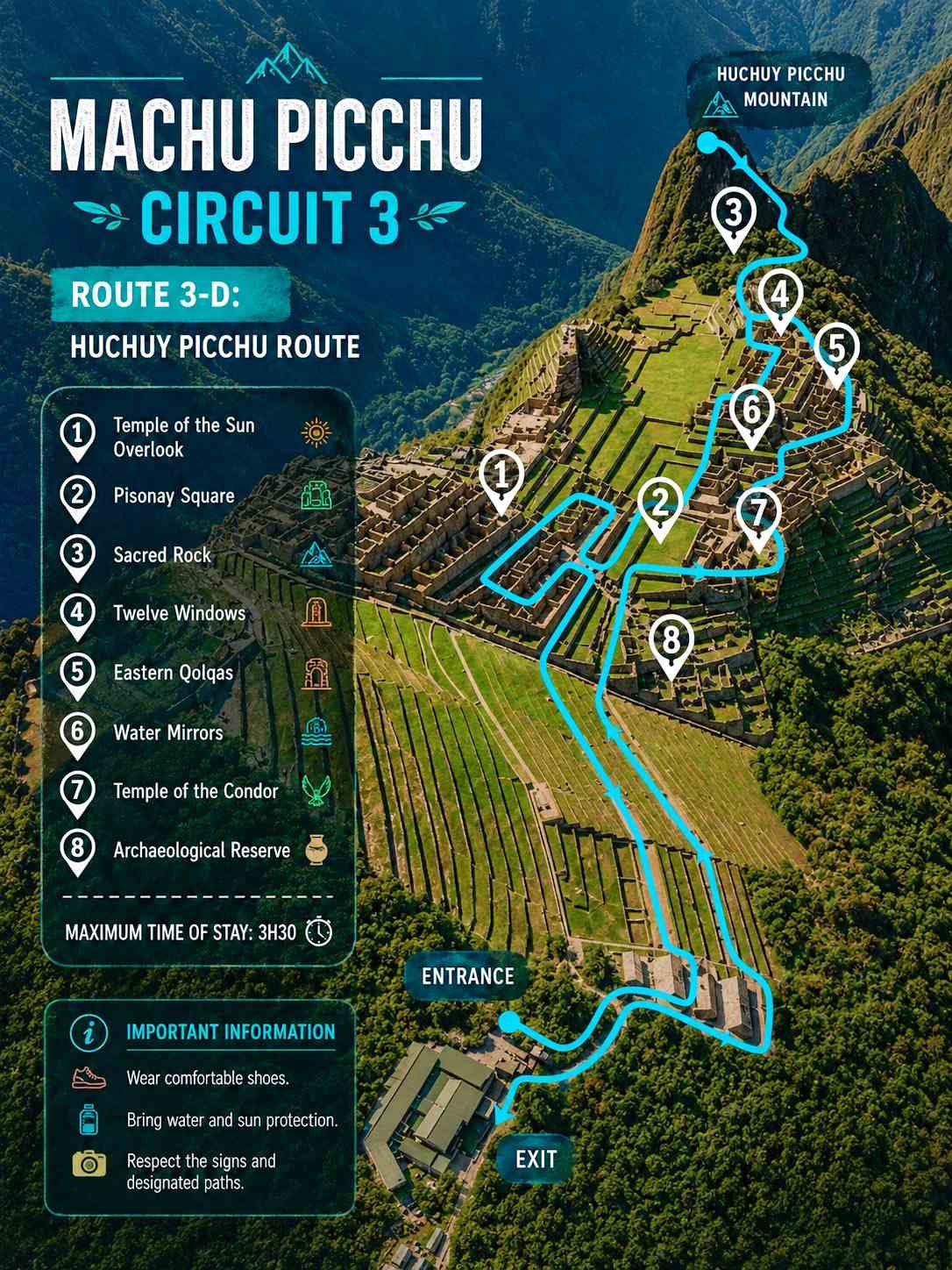
How to buy the ticket for Huchuy Picchu?
Just like the other attractions inside the Machu Picchu circuits, Huchuy Picchu also has its own ticket and independent route: Circuit 3D – Huchuypicchu Route. This means that you need to buy this specific ticket, and keep in mind that its availability is subject to a daily limit and the season.
Where to buy it (official vs. agencies)
The official and authorized platform to buy the Circuit 3D ticket is tuboleto.cultura.pe, managed by the Ministry of Culture of Peru. It is the only platform authorized by the government, and buying directly there guarantees valid tickets at official prices. The process requires prior registration, email and phone verification, and then the selection of the circuit, date and available entry time.
If you prefer to avoid the registration process or the official site shows no availability, you can use authorized agencies in Cusco, which manage the same official ticket with personal advice and real-time spot verification. This option goes beyond simply selling tickets: it also coordinates the complete travel logistics, including transfers from your hotel or Aguas Calientes, bus schedules and the organization of other tickets (such as Machu Picchu mountain or Huayna Picchu), which greatly simplifies planning. This option is especially useful for foreign travelers, since the official site is only available in Spanish and has had recurring technical failures that create uncertainty in the booking process.
Prices and options
The Circuit 3D ticket has a separate cost from the general entrance to Machu Picchu. The official reference prices are:
- Foreign adult: S/ 152 (approx. USD 40)
- Student (with valid ID): S/ 77 (approx. USD 20)
- Child (3–17 years): S/ 70 (approx. USD 18)
This ticket does not include entry to other circuits, such as Huayna Picchu or the classic citadel route, so if you want to complete your visit you will need to buy separate tickets. Circuit 3D is only available during the high season, with 50 tickets available per day between June 1st and October 15th, and from December 30th to 31st. Entry times are at 7:00 a.m. or 9:00 a.m., with a maximum delay allowance of 30 minutes.
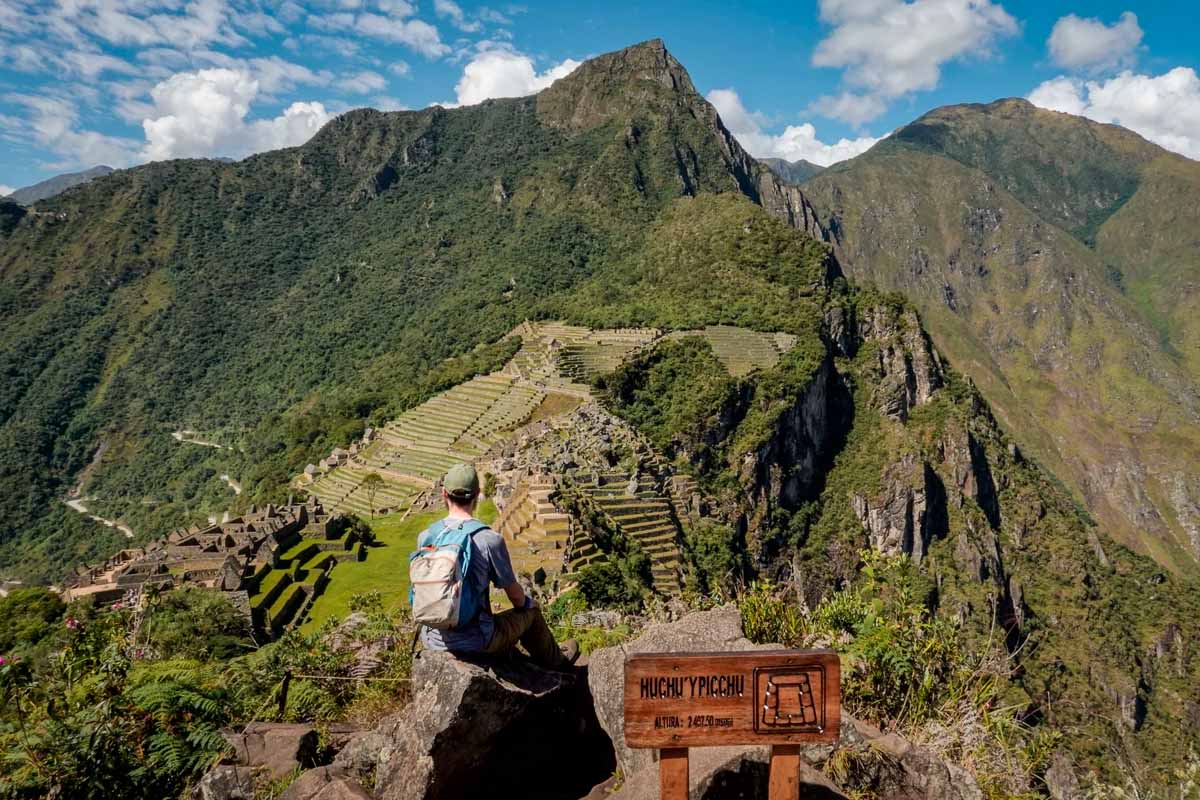
Huchuy Picchu vs Wayna Picchu
Both mountains offer views of the Inca citadel, but they differ greatly in physical demand, availability, and type of experience. Knowing these differences will help you decide which one fits your trip better.
Differences in difficulty and elevation
| Feature | Huchuy Picchu | Wayna Picchu |
|---|---|---|
| Altitude | ~2,527 meters above sea level (approx.) | 2,720 meters above sea level |
| Elevation gain | 67 m | 340 m |
| Distance (round trip) | 1.7 km | ~2 km |
| Total time | 30–60 min | ~90 min |
| Terrain type | Uneven stone steps | Narrow steps, ledges and open sections |
| Use of safety ropes | No | Yes, in some sections |
| Level of exposure to the drop | Low | High |
| Overall difficulty | Moderate-low | Moderate-high |
Wayna Picchu is much more demanding: besides the higher elevation, it includes the section known as the “stairs of death”, with almost vertical slopes near cliffs. Huchuy Picchu, on the other hand, does not have sections with major exposure nor does it require holding onto ropes, making it a more accessible route for most visitors.
Available spots and entry times
| Huchuy Picchu | Wayna Picchu | |
|---|---|---|
| Daily spots | 50 people | 400 people (2 groups of 200) |
| Season | Only high season | All year round |
| Entry times | 7:00 a.m. or 9:00 a.m. | 7:00 a.m. or 10:00 a.m. |
| Recommended time to book in advance | A few weeks | Several months |
| Age restriction | None | Over 12 years old |
Although the capacity of Huchuy Picchu is lower in numbers, the demand is too, so in practice it is usually easier to get a ticket than for Wayna Picchu, whose spots sell out months in advance in the high season.
Which one is better for your time and physical condition?
Choose Wayna Picchu if:
- You are in good physical shape and you don’t mind heights or open spaces
- You are looking for a memorable physical challenge as part of the experience
- You can book several months in advance
- You want the iconic “close up” view from the classic Machu Picchu postcards
Choose Huchuy Picchu if:
- You travel with children, older adults or people with moderate physical condition
- You prefer a short and light walk within your schedule
- You did not manage to book Wayna Picchu on time
- Your visit matches the high season (June, July, September, and October), when Circuit 3D is available
- You look for amazing views with fewer tourist crowds
What to bring and how to prepare
Even though Huchuy Picchu is a short walk with low physical demand, a good preparation makes the difference between a comfortable and an uncomfortable experience, especially because of the altitude and the trail conditions. This is what we recommend you bring:
- Comfortable shoes with good grip: The trail has uneven stone steps; trekking shoes or closed shoes with non-slip soles are ideal.
- Enough water: Even though the route is short, the altitude can cause a greater feeling of thirst and tiredness; bring at least 500 ml.
- Sunscreen and a cap or hat: The solar radiation in the area is strong even on cloudy days.
- Mosquito repellent: Especially useful in the rainy season or if you visit early in the morning.
- Poncho or light waterproof jacket: The weather in Machu Picchu can change quickly, even in the dry season.
- Original passport or ID: It is required for entry, and must exactly match the details on your ticket.
- Camera or cell phone: Tripods and selfie sticks are not allowed, so prioritize light and easy-to-handle gear.
- Light snack: Even though eating inside the sanctuary is not allowed, it is useful to bring something for before or after the tour.
Recommended previous preparation:
- Acclimatize in Cusco at least 1-2 days before your visit to lower the risk of altitude sickness.
- Arrive early for your assigned entry time (7:00 a.m. or 9:00 a.m.), as the maximum wait time is 30 minutes.
- Remember that you will not be able to re-enter once you leave the sanctuary, so go prepared to stay inside during your whole tour.
Best time and time of the year
Choosing the right time for your visit to Huchuy Picchu can make a big difference, both in the safety of the trail and the quality of your photos and the peace of the tour.
Dry season vs. rainy season
The best time to visit Huchuy Picchu is during the dry season, especially from May to September, when visibility is usually better and the stone paths are less slippery. This time also matches the window when Circuit 3D is open (June to October), so it practically matches the only period of the year when the mountain can be visited.
During the rainy season (November to March), the stone steps can become slippery and the fog reduces the wide view from the top. However, this period is out of range for Huchuy Picchu anyway, since the trail remains closed between October 16 and May 31, so planning your visit depends directly on this seasonal window and not just on the weather conditions.
Best time to avoid crowds and for photos
Having only two entry times (7:00 a.m. and 9:00 a.m.) and a small daily limit of 50 people, Huchuy Picchu already offers an experience with few people compared to other routes in the sanctuary. Even so, some tips can improve your experience:
- 7:00 a.m. shift: Ideal for soft morning light and less chance of thick fog; it also allows you to continue with the rest of your visit to the citadel with more time available.
- 9:00 a.m. shift: Good if you prefer to avoid waking up early or if you arrive from Cusco the same day by train, although the sun will be higher and the light will be harsher for photos.
Because the limit is so small, both times usually feel quiet, without the typical crowds of other viewpoints inside the sanctuary.
What can be seen from the top?
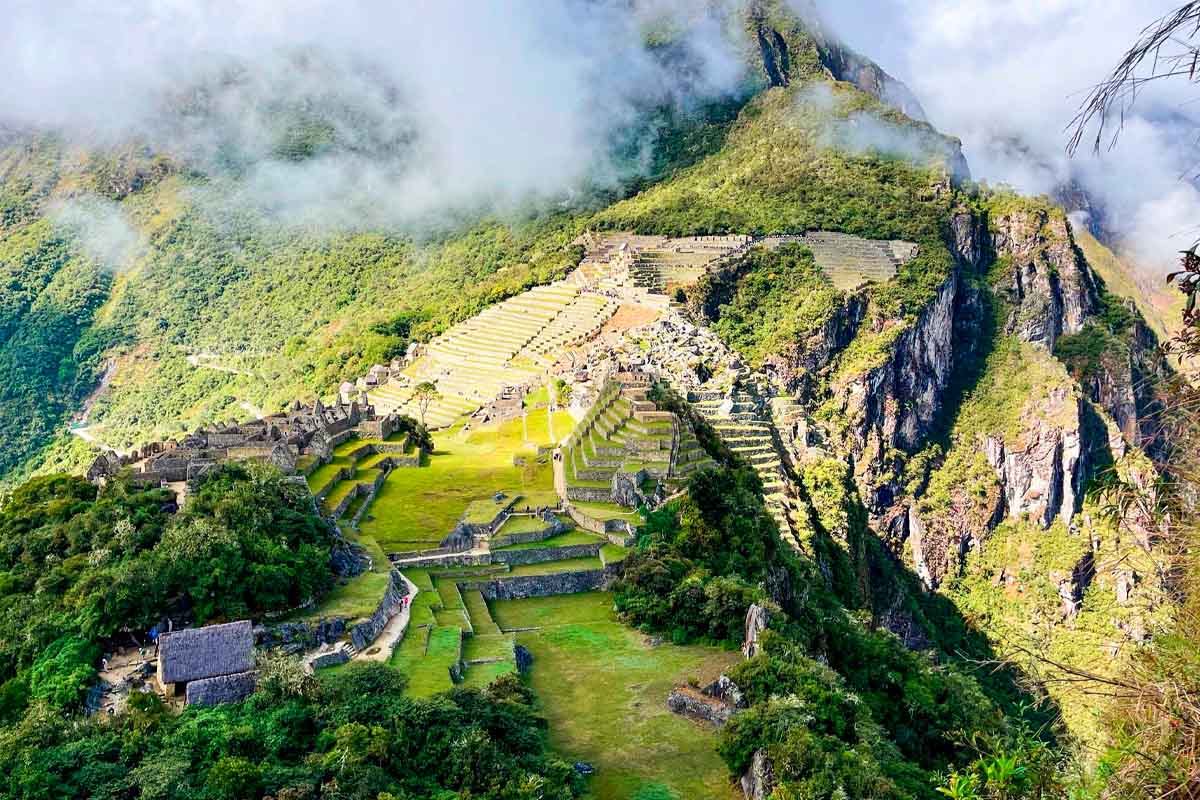
From the top of Huchuy Picchu, located at about 2,497 meters above sea level, you get a wide view of the entire archaeological site of Machu Picchu, including the Sacred Rock, the Intihuatana and the Main Square. Unlike Wayna Picchu, this view is seen from the north side of the citadel, offering a different angle from the classic photos.
During the climb and from the top it is also possible to see the Putucusi mountain, the Machu Picchu mountain and, in the distance, the Sun Gate (Intipunku). The cloud forest setting around the trail adds a natural element to the experience, with thick plants and views towards the Urubamba river canyon, which winds below the sanctuary.
Although the wide view does not reach the size of the one you get from Wayna Picchu or Machu Picchu Mountain, Huchuy Picchu makes up for it with a rare advantage: the chance to enjoy these views almost alone, without the typical crowds of the most famous viewpoints in the sanctuary.
Safety tips
Although Huchuy Picchu is one of the most accessible routes inside the sanctuary, some basic precautions will help you enjoy the tour with more peace of mind and safety.
Uneven sections and stone steps
The trail is mostly made of stone steps built by the Incas centuries ago, which means their height and depth are not always the same. Some sections may have loose stones, surfaces worn out by time, or steep drops between one step and another. To avoid stumbling or slipping:
- Use closed shoes with good grip soles; avoid sandals or flat shoes.
- Walk at a steady pace, without rushing, paying attention to each step instead of looking at the scenery while you move forward.
- Lean on the stone structures or handrails available in the sections that allow it.
- Be especially careful when going down, as this is when most slips happen due to movement and built-up tiredness.
- If the ground is wet from recent rain or morning dew, slow down and avoid stepping right on moss or stones that look wet.
Altitude recommendations
Even though Huchuy Picchu does not reach extreme heights, it is inside the Historic Sanctuary of Machu Picchu, at a high altitude that can affect travelers who are not used to it, especially if they arrive the same day from sea-level cities like Lima.
- Get used to the altitude in Cusco for at least 1 to 2 days before your visit to Machu Picchu, letting your body adapt slowly to the height.
- Stay well hydrated before and during the walk; avoid alcohol the night before, as it makes altitude symptoms stronger.
- If you feel dizzy, have a mild headache, or unusual tiredness, stop, take a deep breath, and move forward at a slower pace.
- Avoid hard physical effort or heavy meals right before the climb.
- If you have a history of altitude sickness (soroche), think about taking specific pills or coca leaf tea with you, widely used in the region to ease the symptoms.
- Faced with worse symptoms like severe breathing trouble, confusion, or loss of coordination, go down right away and look for help from the sanctuary staff.
Frequently asked questions (FAQ)
- What is Huchuy Picchu?
Huchuy Picchu is the smallest mountain inside the Historic Sanctuary of Machu Picchu, located north of the citadel and next to Wayna Picchu. Its name means “small mountain” in Quechua, and it offers wide views of the archaeological site with fewer tourists than other routes. - How do you buy the ticket for Huchuy Picchu?
Access is through Circuit 3D – Huchuypicchu Route, a separate ticket bought on the official platform tuboleto.cultura.pe or through allowed agencies in Cusco, which can also set up transfers and extra logistics. - How much does the entrance to Huchuy Picchu cost?
The reference price is S/ 152 for foreign adults, S/ 77 for students with a valid card, and S/ 70 for children from 3 to 17 years old. This ticket does not include entry to other circuits like Huayna Picchu. - How long is the walk to Huchuy Picchu?
The full tour, between going up and coming down, takes about 30 to 60 minutes, depending on the visitor’s pace. - Is it hard to climb Huchuy Picchu?
No. It is considered a route of low-moderate difficulty, with uneven stone steps but no rope sections, narrow passages exposed to the edge, or extreme drops, making it suitable for most visitors, including older adults in good physical shape. - What time of the year can you visit Huchuy Picchu?
Circuit 3D is only available in high season: from June 1st to October 15th, and from December 30th to 31st. Outside these dates, the trail remains closed. - What is the difference between Huchuy Picchu and Wayna Picchu?
Wayna Picchu is taller (2,720 m), has a bigger drop (340 m), and is harder, with rope sections and narrow steps. Huchuy Picchu (2,497 m) is shorter, with a smaller drop (67 m), and a much easier difficulty. - Is there an age limit to climb Huchuy Picchu?
No, unlike Wayna Picchu (which requires a minimum of 12 years old), Circuit 3D has no age limits, although caution is recommended with small children because of the uneven ground. - What can you see from the top of Huchuy Picchu?
From the top you can see a wide view of the Machu Picchu citadel, the Sacred Rock, the Intihuatana, the Putucusi mountain, and, in the distance, the Intipunku (Sun Gate). - Do I need a passport to enter Huchuy Picchu?
Yes, it is required to show your original passport or identity document, and the details must perfectly match those on your ticket.