

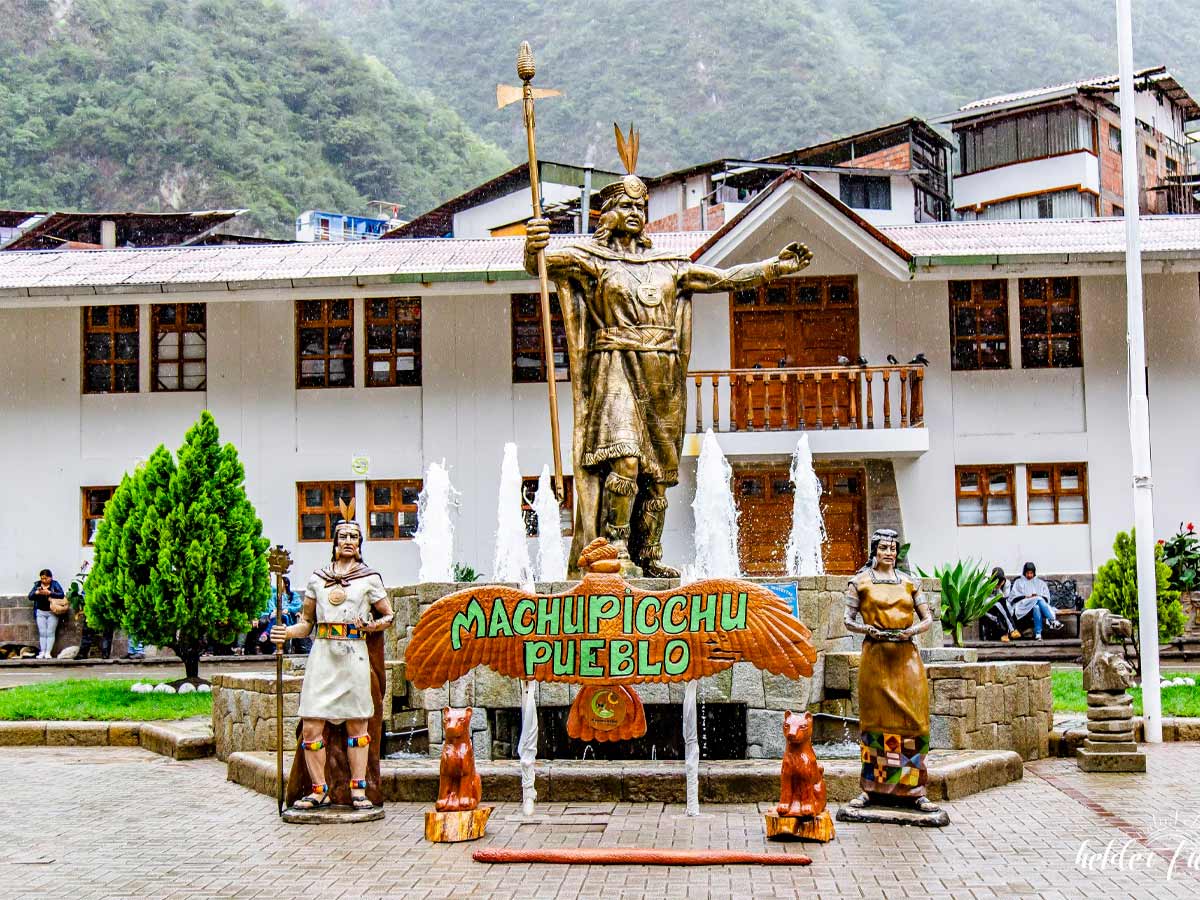
Aguas Calientes is a small town in the Urubamba province, in the Cusco region, located in a high jungle valley at the foot of Machu Picchu. Its official name is Machu Picchu Pueblo, though travelers and agencies still call it Aguas Calientes. There is no road connecting it to Cusco, you get there by train or on foot.
It is the starting point to the citadel, since the buses that go up to Machu Picchu leave from here. Because of this, many travelers spend at least one night, which lets them arrive early in the morning, rest after the visit, and not depend on the train return schedules. It is also the place where many trekkers end their hike, after routes like the Inca Trail or the Salkantay Trek.
In this guide you will find the essentials to plan your stay: how to get there, what to do in the town and its surroundings, how to go up to Machu Picchu, where to stay and eat, and some practical tips to avoid surprises.
What is Aguas Calientes?
As mentioned before, Aguas Calientes is the town located at the foot of Machu Picchu and the entry point to the citadel. Its official name is Machu Picchu Pueblo, it is the capital of the Machupicchu district and belongs to the Urubamba province, in the Cusco region. The popular name comes from the hot springs in the town.
The town formed as a worker camp during the building of the railroad and grew with the arrival of tourists. Today it brings together hotels, restaurants, a craft market, and the hot springs. It is a walking town: the only vehicles that move around are the buses that go up to the citadel.
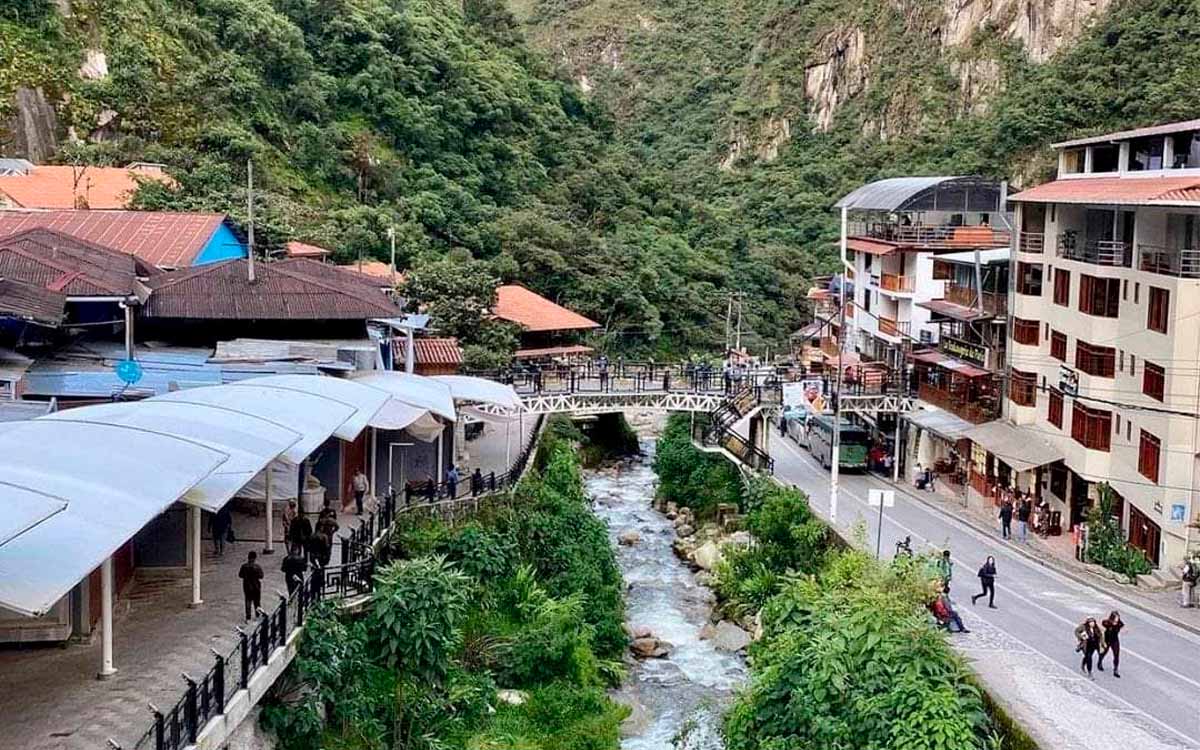
Facts about Aguas Calientes
- Official name: Machu Picchu Pueblo
- Location: Machupicchu district, Urubamba province, Cusco region
- Access: Only by train or on foot, there is no road from Cusco
- Distance to the citadel: 6 km, about 90 minutes walking
Where is Aguas Calientes?
Aguas Calientes is in the Urubamba province, in the Cusco region, in southern Peru. It is located next to the Vilcanota (Urubamba) river, between mountains covered with high jungle plants, right below Machu Picchu.
The town is at 2,040 meters above sea level (6,690 feet). It is more than 1,300 meters lower than Cusco (about 3,400 meters), so the altitude usually affects you less than in the city.
The Weather in Aguas Calientes
The weather is that of the high jungle: warm, humid, and with lots of plants. It can rain in any month, but there are two seasons:
- Dry season (April to October): With less rain and more visitors. June, July, and August are the months with the most people.
- Rainy season (November to March): With more frequent rain and fewer tourists.
How to get to Aguas Calientes?
Aguas Calientes has no road access from Cusco, so there are three ways to get there: by train, by the land route through Hidroelectrica combined with a walk, or on foot through a trek like the Inca Trail or Salkantay.
By train from Ollantaytambo or Poroy
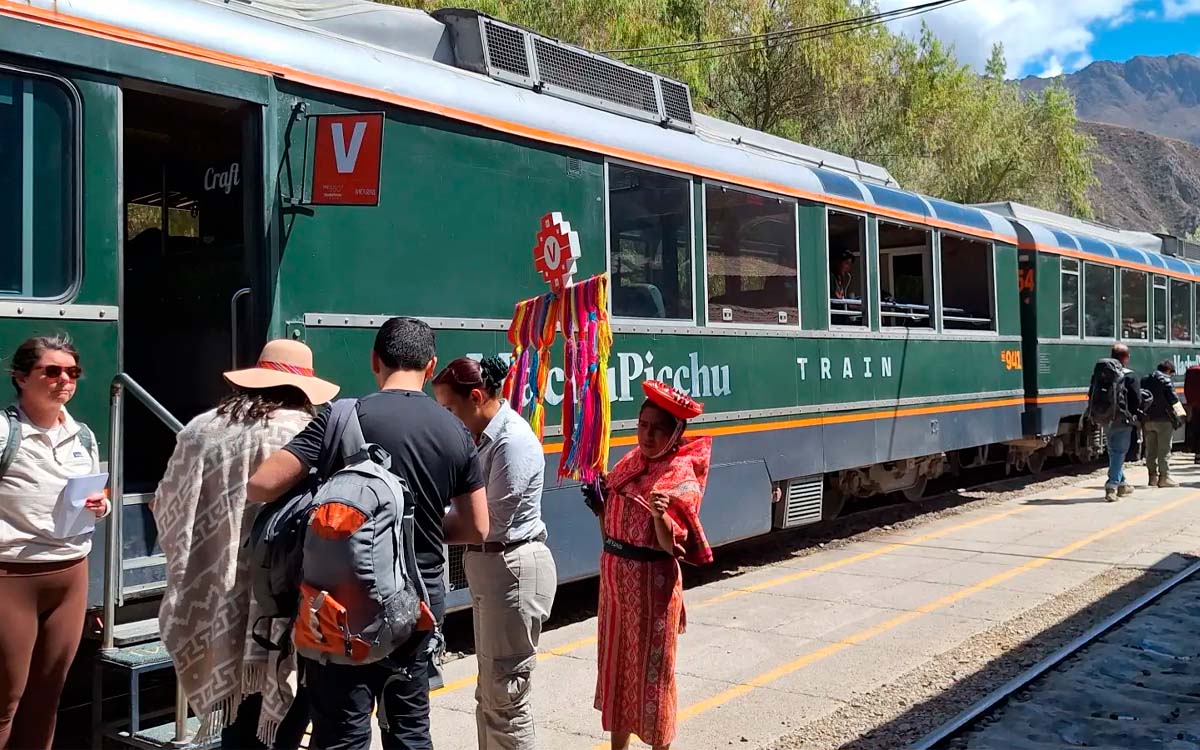
The train is the most direct option and the one used by most travelers. Two companies cover the route: PeruRail, with the Expedition and Vistadome services, and IncaRail, with the Voyager, 360°, and First Class services.
The most used departure stations are:
- Ollantaytambo (Sacred Valley): It is the station with the most departures per day. The trip takes between 1 h 30 min and 2 h approximately. From Cusco, Ollantaytambo is about 90 minutes away by road.
- Poroy (Cusco): It is about 20 minutes from the city and has few departures per day. The trip takes around 3 h 20 min.
- San Pedro and Wanchaq (Cusco): From San Pedro the trip takes about 4 hours. From Wanchaq there is a combined bus and train service, with a similar duration.
Two practical tips:
- Trains sell out weeks or months in advance in high season (May to September), so it is best to book early.
- Most schedules are in the morning, designed to arrive in Machu Picchu on the same day.
For more information about the train trip to Aguas Calientes, visit our blog: Machu Picchu by train
Through Hidroeléctrica: land route and walk
It is the cheapest route and the one that takes the most time. The journey has these sections:
- Cusco → Santa María: Bus of about 5 hours.
- Santa María → Santa Teresa: Shared taxi of approximately 1 hour.
- Santa Teresa → Hidroeléctrica station: Shared taxi of 30 to 40 minutes.
- Hidroeléctrica → Aguas Calientes: Walk of 2 to 3 hours depending on your pace, or a 30 to 45-minute train ride.
In total, from Cusco to Hidroelectrica, it takes about 7 hours. There are also minivans that make the direct trip between Cusco and Hidroelectrica without stops.
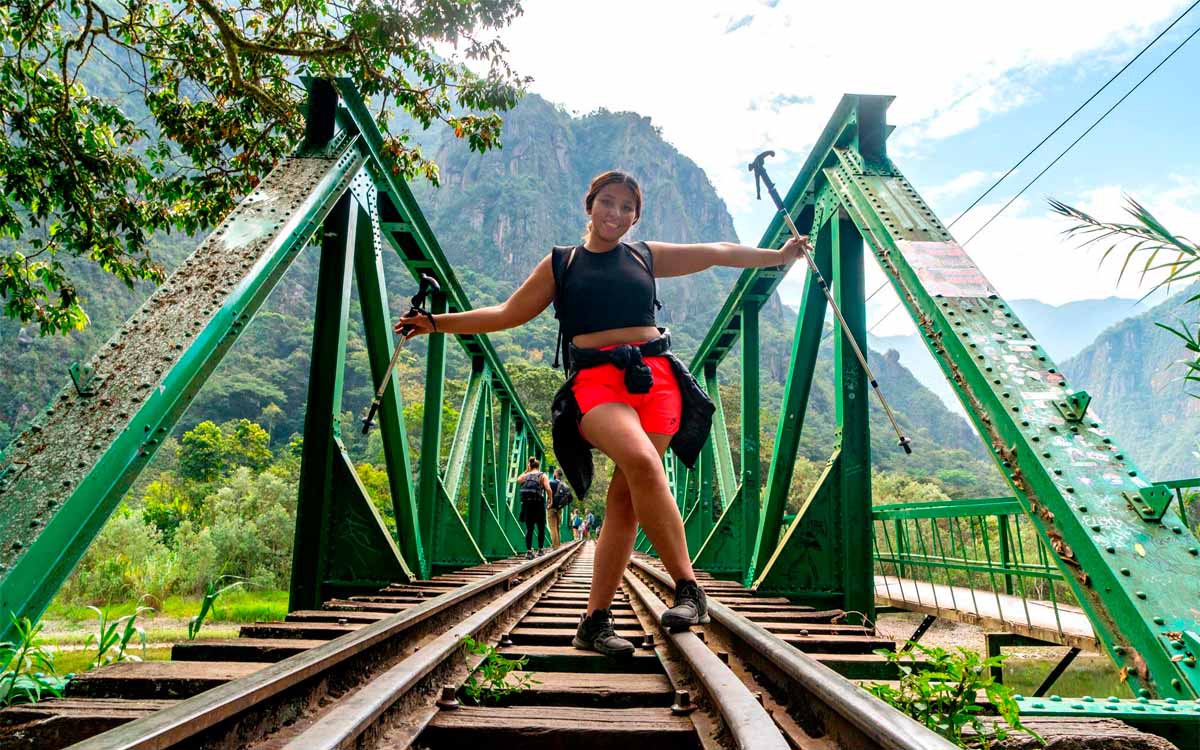
The walk follows the train tracks next to the Vilcanota river, it is on flat ground and has no steep slopes. It is a good idea to:
- Start in daylight.
- Bring a light backpack.
- Pay attention to passing trains.
- Consider a night in Santa Teresa, where the Cocalmayo hot springs are, if you want to split the trip.
On foot through the Inca Trail or the Salkantay Trek
Another way to get there is to include the arrival in Aguas Calientes as part of a multi-day trek:
- Inca Trail: The classic route takes 4 days and starts at km 82. It reaches Machu Picchu and from there you go down to Aguas Calientes by bus or on foot. It requires a permit, which is booked many months in advance. There is also a short version that starts at km 104.
- Salkantay Trek: An alternative 5-day route that does not require permits. It crosses the Salkantay snow-capped mountain and goes down through the edge of the jungle. In the final stage, you reach the Hidroelectrica station to do a final 3-hour walk on foot next to the train tracks to Aguas Calientes.
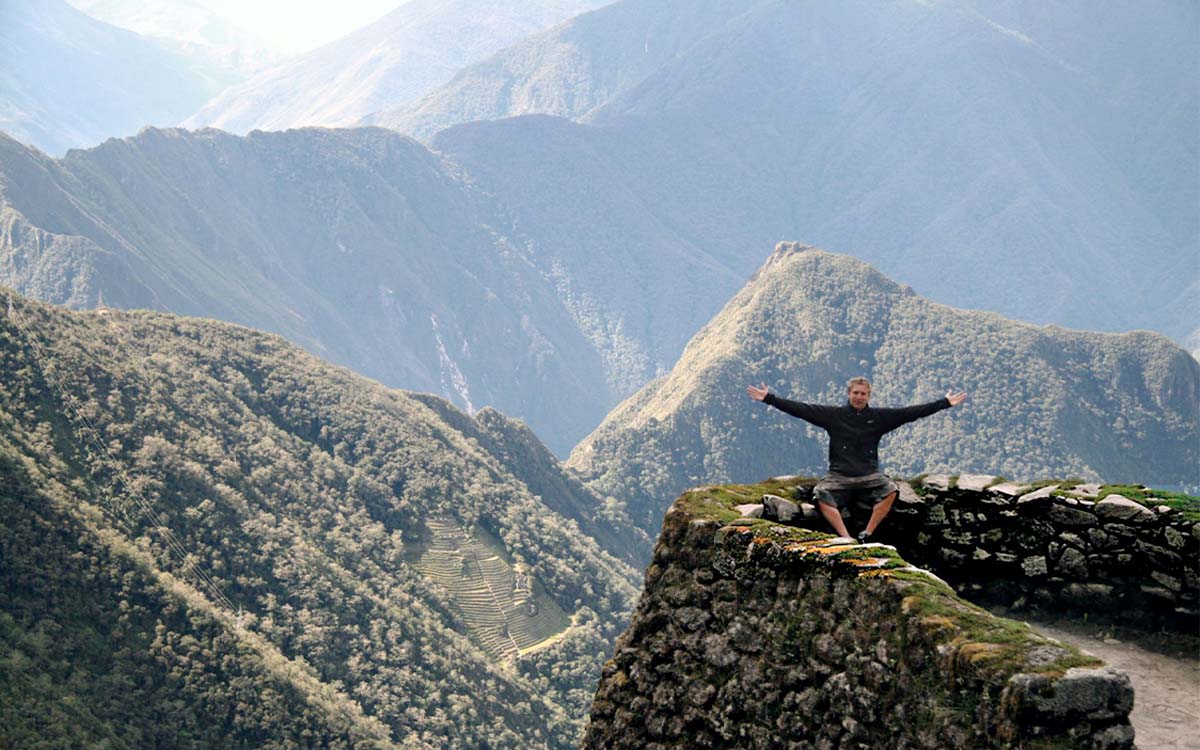
What to do in the town of Aguas Calientes?
Aguas Calientes, being a small and pedestrian town, its main attractions are less than a walking hour away. Most travelers use it as a base to visit Machu Picchu, but it is a good idea to reserve at least one afternoon to get to know what the town offers. These are the main attractions of the place:
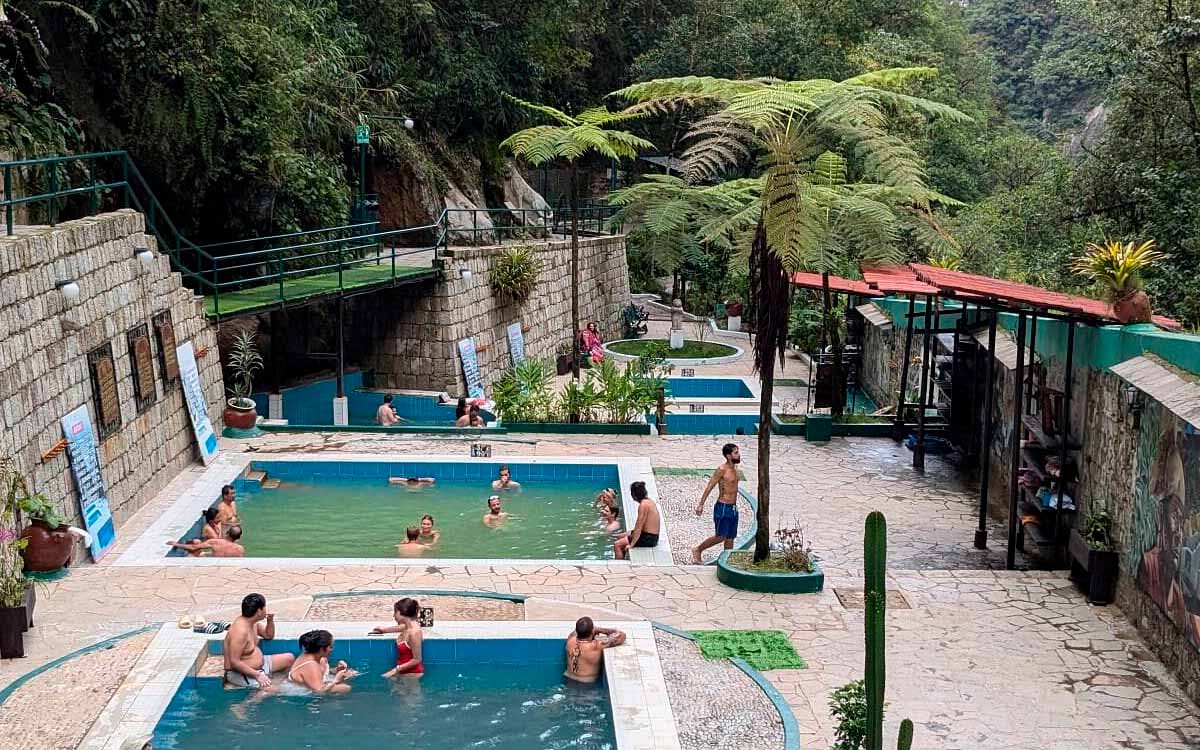
1. Hot springs or thermal baths
They are the reason for the town’s name. The pools are fed by a hot water spring and have different temperatures, going from about 38 °C to 46 °C. The pools are simple, and work well to rest after a long hike or after visiting Machu Picchu.
About this place:
- Location: In the upper part of the town, about a 10 to 15 minute walk from the main square, following Hermanos Ayar Avenue.
- Schedule: Generally from 5:00 a. m. to 8:00 p. m.
- Fee: Between S/10 and S/20 for foreigners.
- What to bring: Swimsuit, towel, sandals, and cash.
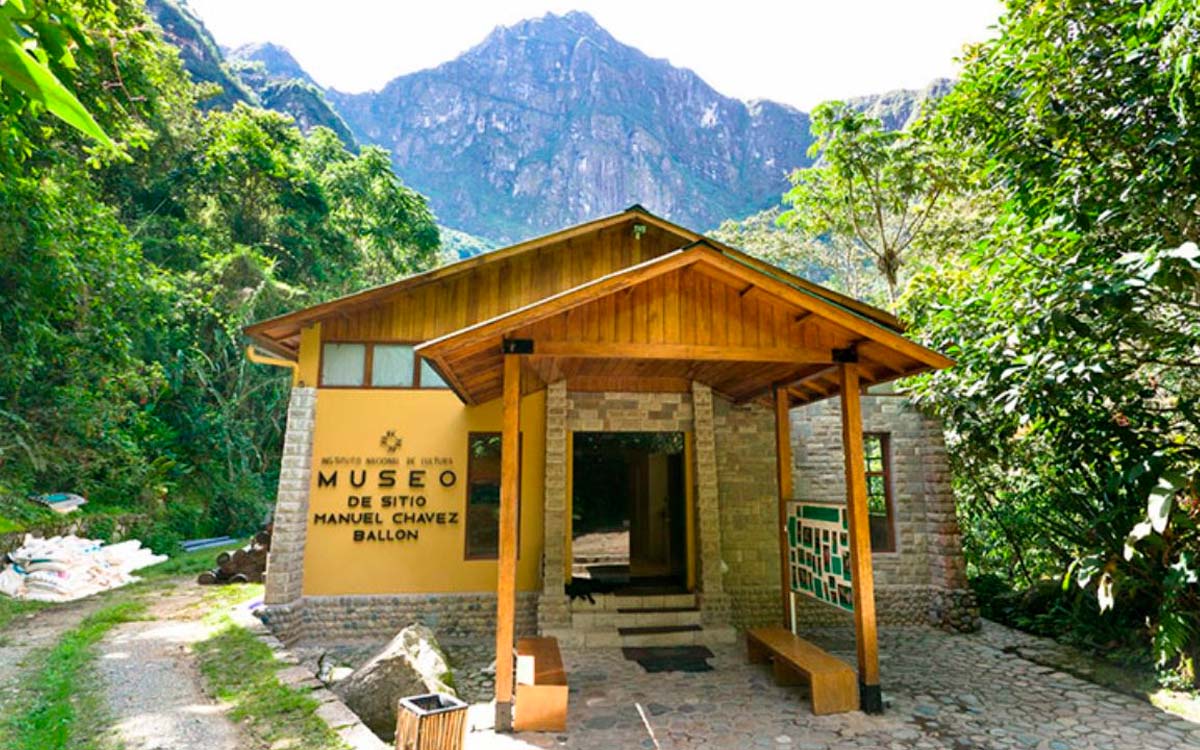
2. Manuel Chavez Ballon Site Museum
It is the museum of Machu Picchu and explains the discovery, excavations, and history of the citadel. It displays objects found at the site, like pottery, metal pieces, and stone tools, part of which returned from Yale University. It is named after the Peruvian archaeologist who pushed for its creation and reopened in 2005. Next to the museum there is a botanical garden with orchids and other native plants.
About this place:
- Location: It is located at km 112 of the railway, in the Ruins Bridge sector.
- How to get there: It is about a 30 minute walk from the town.
- Schedule: From Monday to Sunday, from 9:00 a. m. to 4:00 p. m. or 4:30 p. m.
- Fee: For adults it is S/. 22, for students S/. 11, and for children (up to 17 years old) it is free.
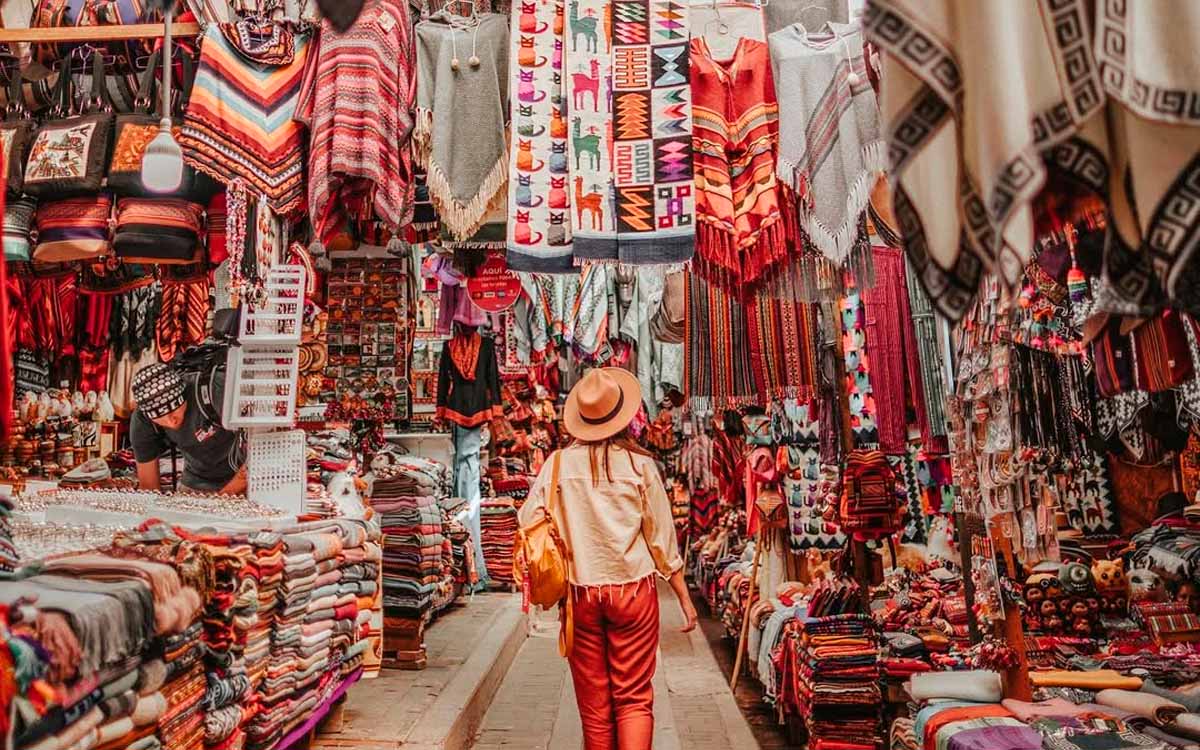
3. Craft market and main square
The craft market is a few steps from the square and gathers stalls of alpaca clothing, musical instruments, silver jewelry, pottery, masks, paintings, and souvenirs. The main square, with the statue of Pachacuti and the church, is the reference point of the town and a good place to sit, locate yourself, and choose where to eat.
About this place:
- Location: In the center of the town, near the train station.
- Tip: Compare prices between stalls and bring cash in soles.
4. Mandor Garden
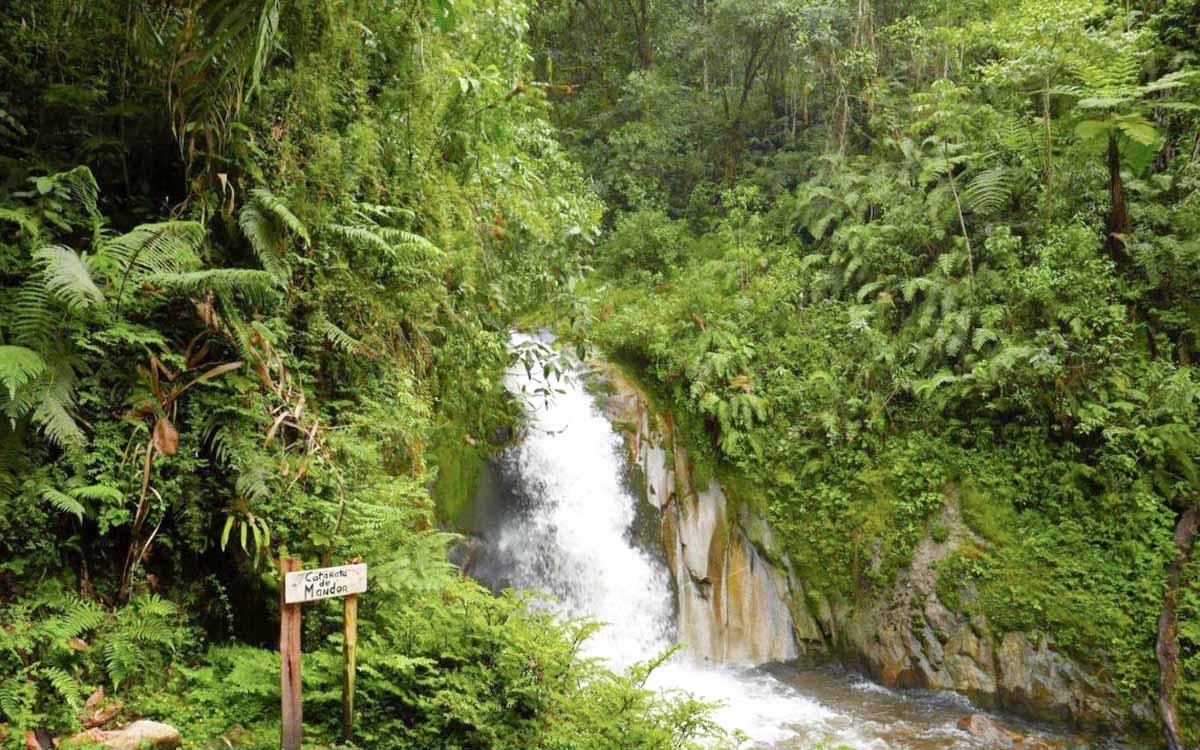
It is a short walk through high jungle to a botanical garden and a waterfall of about 30 meters. It is one of the least crowded activities in the town. The gardens are on private land belonging to a local family and were opened to visitors in the late 90s.
About this place:
- How to get there: Following the train track towards the Hydroelectric Plant. Near km 114 there is a sign showing the turnoff to the entrance.
- Duration: Around 1 hour one way to the gardens, plus about 30 minutes inside to the waterfall.
- Schedule: From 6:30 a. m. to 4:30 p. m.
- Fee: Between S/10 for Peruvians and S/20 for foreigners.
- Season: The dry season (May to November) is the most comfortable.
- Recommendations: Comfortable clothing and shoes, repellent, and water. Walk paying attention to the passing of trains on the track.
From Aguas Calientes to Machu Picchu
The citadel is in the upper part of the mountain, about 8 or 9 km from Aguas Calientes by road and with about 400 m of elevation change. There are two ways to go up: by bus or on foot. In both cases you need your Machu Picchu ticket, which is bought separately.
Going up by bus
The bus is the most used option. It is operated by Consettur, the only authorized company for this route, and there are no taxis or other vehicles that go up to the citadel.
About the option of going up by bus:
- Departure point: Bus stop on Hermanos Ayar Avenue, near the train station and a few minutes from the square.
- Duration: Between 25 and 30 minutes along a road of sharp curves.
- Schedule: Buses go up from 5:30 a. m., with departures every 15 minutes approximately.
- Price: About US$12 per trip and US$24 round trip for foreign adults.
- Where to buy: Online, at the official office in Aguas Calientes, or at the Machu Picchu entrance booth for the return.
Going up on foot
It is a free alternative for travelers with good physical condition. The route starts with a walk of about 20 minutes from Manco Capac Square to Ruins Bridge, where there is a checkpoint that opens at 5:00 a. m. and where you must show your ticket and passport. From there the climb is 1 h 30 min to 2 h. You do not need a guide or extra payment.
About tickets and circuits to Machu Picchu
The entrance to Machu Picchu is bought on the official platform of the Ministry of Culture, tuboleto.cultura.pe. It is personal, so your details must match the document you will use to enter.
Machu Picchu has 3 circuits:
- Circuit 1 (Panoramic): Upper terraces, the classic photo from the Guardian’s House and routes like Intipunku and Inca Bridge. It is the one that allows going up Machu Picchu Mountain.
- Circuit 2 (Classic): Classic route and lower terraces. Includes the urban sector of the citadel.
- Circuit 3 (Royalty): Lower zone, ceremonial fountains and royalty rooms. It is the one that allows going up Huayna Picchu and Huchuy Picchu.
Frequently asked questions about Aguas Calientes
- Are Aguas Calientes and Machu Picchu Town the same?
Yes, they are the same town. Machu Picchu Town is the official name and Aguas Calientes is the name it is popularly known by, due to the hot springs in the place. - Is Aguas Calientes Machu Picchu?
No. Aguas Calientes is the town located at the foot of the mountain. Machu Picchu is the Inca citadel, which is in the upper part, about 8 or 9 km away by road. - How do you get to Aguas Calientes?
There is no road from Cusco. You get there by train from Ollantaytambo, Poroy, or Cusco, by the land route to the Hydroelectric station and then on foot or by train, or by walking on routes like the Inca Trail or the Salkantay Trek. - How long does the bus to Machu Picchu take?
The bus takes between 25 and 30 minutes and leaves from the stop on Hermanos Ayar avenue. The one-way ticket costs about US$12 for foreign adults. - Can you walk up to Machu Picchu?
Yes. The climb takes between 1 h 30 min and 2 h through stone stairs. It is free, but you must show your ticket and your passport at the Ruinas Bridge checkpoint, which opens at 5:00 a.m. - Is it worth sleeping in Aguas Calientes?
It depends on your travel plan. Sleeping there allows you to reach the citadel early without depending on train schedules, rest after the visit, and see the hot springs and the town. If you have little time or prefer to stay in the Sacred Valley or in Cusco, you can also do the visit in one day. - Can you go and come back in one day from Cusco?
Yes, it is possible. There are morning trains going and afternoon trains returning to Cusco. Keep in mind that the schedules of the train and your ticket mark how long you can stay in the citadel. - Are there ATMs in Aguas Calientes?
Yes, in the town there are ATMs and exchange houses (check which ones and their availability). The currency is the Peruvian sol. It is a good idea to bring enough cash, because not all places take cards.