

You can get to Machu Picchu in several ways, and trekking is one of the most chosen by those who want more than just arriving by train. Among the available options are the classic Inca Trail, the Salkantay Trek, the Lares Trek, and the Inca Jungle Trek, each with a different duration, difficulty level, and type of landscape. They all end at the same destination, but the journey to get there changes completely depending on the chosen route.
Choosing a trek instead of the train makes sense for those who want to live the journey as part of the experience, not just as a means of transport. Walking for several days lets you see landscapes that are not visible from the railway, pass through Andean communities, cross mountain passes, and, in the case of the Inca Trail, arrive in Machu Picchu on foot through the Sun Gate, just as the Incas did. It is a more physically demanding option, but also a more complete one.
This guide details the four trekking routes to Machu Picchu, with their duration, difficulty level, and what makes each one special. A comparison table is also included to make the choice easier, along with a final section with recommendations based on the traveler’s profile.
How to choose the best trek to Machu Picchu?
With four routes available, the choice does not depend on which one is “best”, but on what each traveler is looking for. These are the criteria that influence the decision the most:
According to available time
The classic Inca Trail and the Salkantay Trek require 4 and 5 days respectively, while the Lares Trek can be done in 3 to 4 days and the Inca Jungle in 3 or 4 days, with shorter options. Anyone with little time in Cusco should prioritize Lares or Inca Jungle; anyone who can dedicate a full week to trekking has all four options open.
According to physical level
The Salkantay Trek is the most demanding due to the altitude of the mountain pass (above 4,600 meters), followed by the Inca Trail, with stretches of steep stone stairs. The Lares Trek has a moderate level, and the Inca Jungle mixes specific physical effort (biking, hiking) with easier stretches.
According to main interest
- History and archaeology -> Inca Trail, for the Inca sites along the route and arrival through the Sun Gate
- Mountain landscapes and snow-capped peaks -> Salkantay Trek
- Culture and visits to Andean communities -> Lares Trek
- Adventure and multi-sport activities -> Inca Jungle Trek
According to how far in advance the trip is planned
The Inca Trail requires booking several months in advance due to the daily permit limit. If the trip is organized with little lead time, Salkantay, Lares, and Inca Jungle are viable alternatives, since they do not depend on a limited quota.
According to budget
The Inca Trail usually has a higher cost due to permit regulations and the small number of authorized operators. Salkantay, Lares, and Inca Jungle offer a wider variety of prices depending on the level of service (camping, domes, or hotels along the way).
Trekking to Machu Picchu
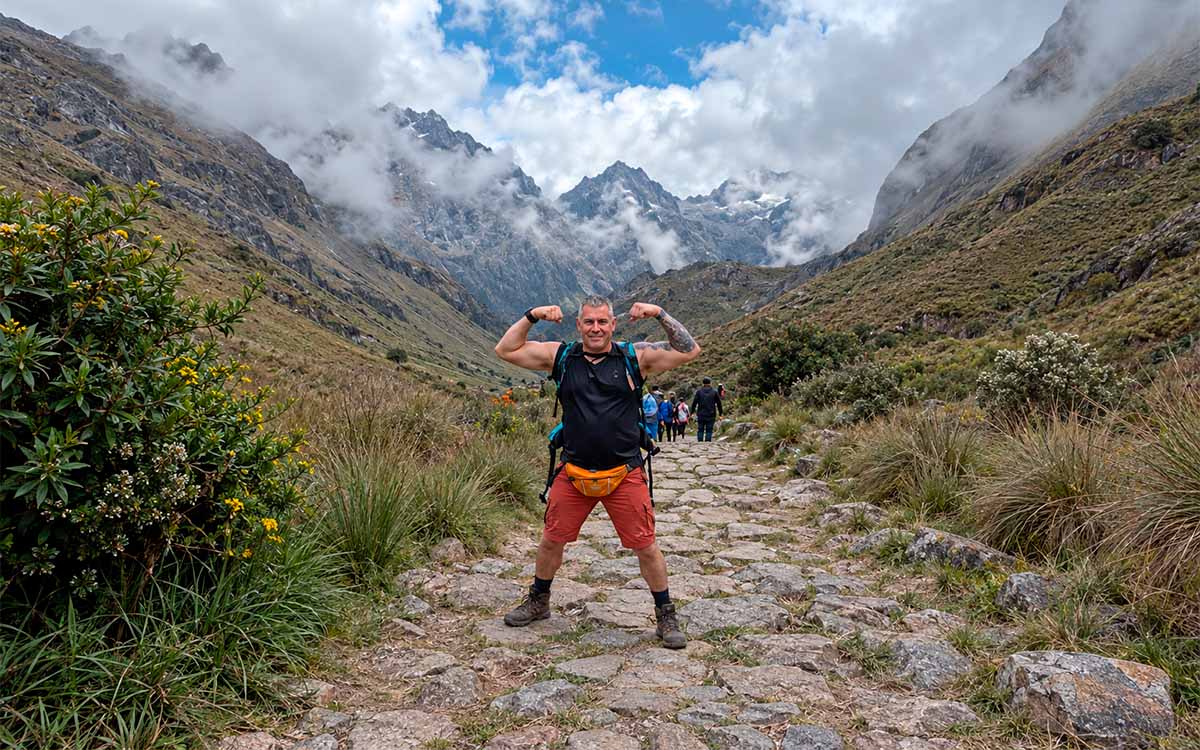
The four trekking routes that lead to Machu Picchu share the same final destination, but the path to get there varies quite a bit. The duration, type of scenery, level of physical effort, and cultural experience change from one route to another, so knowing the differences is the first step to choosing the one that best fits each traveler.
Classic Inca Trail
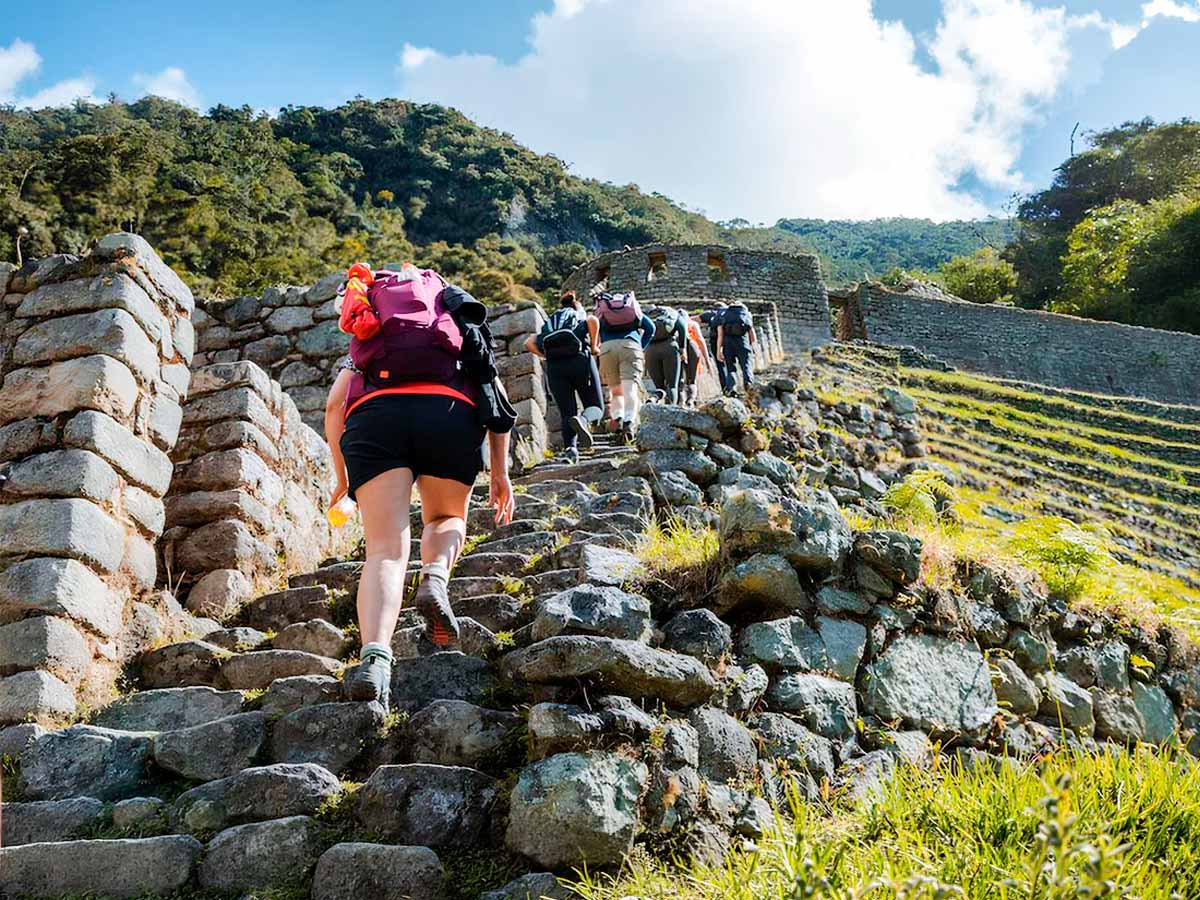
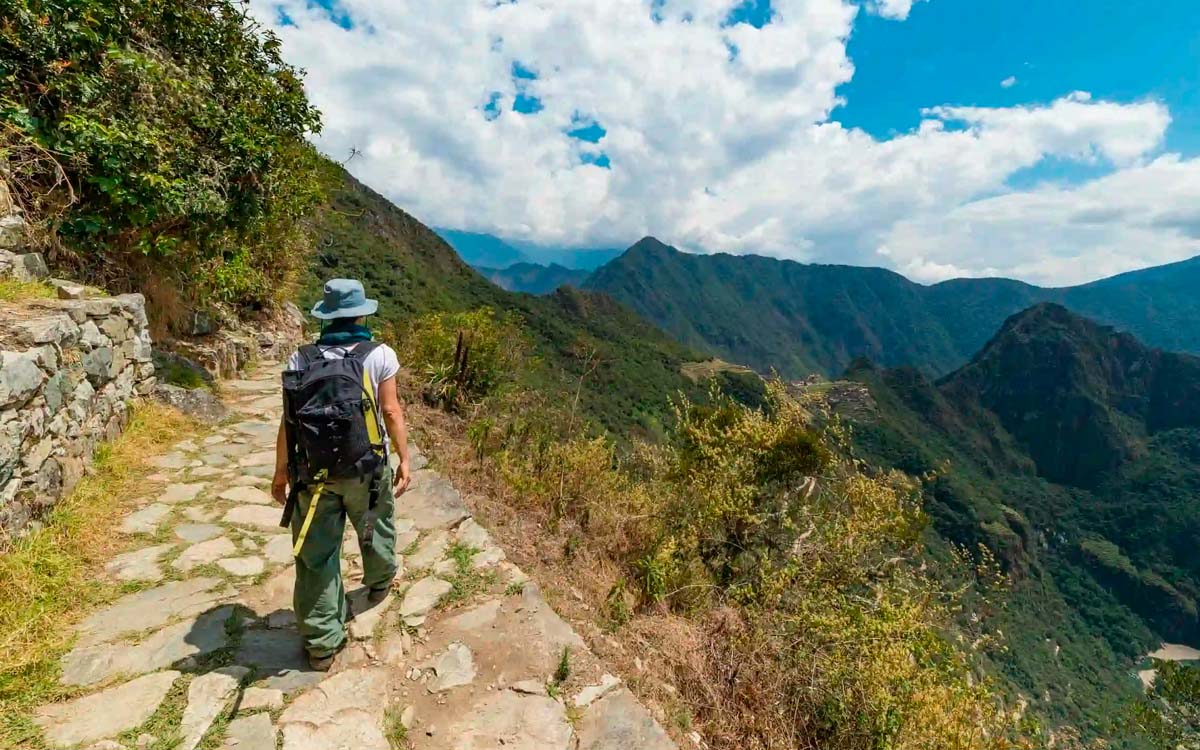
The classic Inca Trail lasts 4 days and 3 nights, and is considered a moderate to high-difficulty trek, with sections of original stone steps built by the Incas. What sets this route apart from the others is its arrival at Machu Picchu through Inti Punku, the Sun Gate, the same ceremonial entrance used by the Incas centuries ago.
Facts about the hike
- Total distance: Approximately 39 to 43 kilometers.
- Maximum altitude: Warmiwañusca or “Dead Woman’s Pass”, at 4,215 meters
- Permits: Limited (500 per day, including visitors and trek staff)
- Campsites: 3 nights in tents, at designated points along the route
- Archaeological sites along the way: Llactapata, Runkurakay, Sayacmarca, Phuyupatamarca, and Intipata, plus Machu Picchu at the end
Why is the Inca Trail famous?
The Inca Trail is the only one of the four routes that is part of the original road network built by the Incas, the Qhapaq Ñan, and it connects several archaeological sites directly before reaching Machu Picchu. This has made it one of the most recognized treks, and is why many travelers consider it an experience distinct from simply “arriving” at Machu Picchu.
Travel notes
- It is recommended to arrive in Cusco at least 2 days before the trek to get used to the altitude
- The permit must be booked several months in advance, especially for trips between May and September
- It can only be done with an authorized operator; independent trekking is not allowed
- You need to bring your original passport (not a copy) on the day you enter the Inca Trail
- The weather changes between hot during the day and below-freezing temperatures at night in the higher-altitude campsites
Salkantay Trek
The Salkantay Trek lasts 5 days and 4 nights, and is considered the most physically demanding trek of the four routes, mainly due to the altitude of the mountain pass. Unlike the Inca Trail, it does not require a permit, making it the most flexible alternative for those planning their trip with short notice.
Facts about the hike
- Total distance: Approximately 60 to 72 kilometers.
- Maximum altitude: Salkantay Pass, at 4,600-4,650 meters
- Permits: No limit on permits (unlike the Inca Trail)
- Accommodation: From camping to mountain domes or lodges
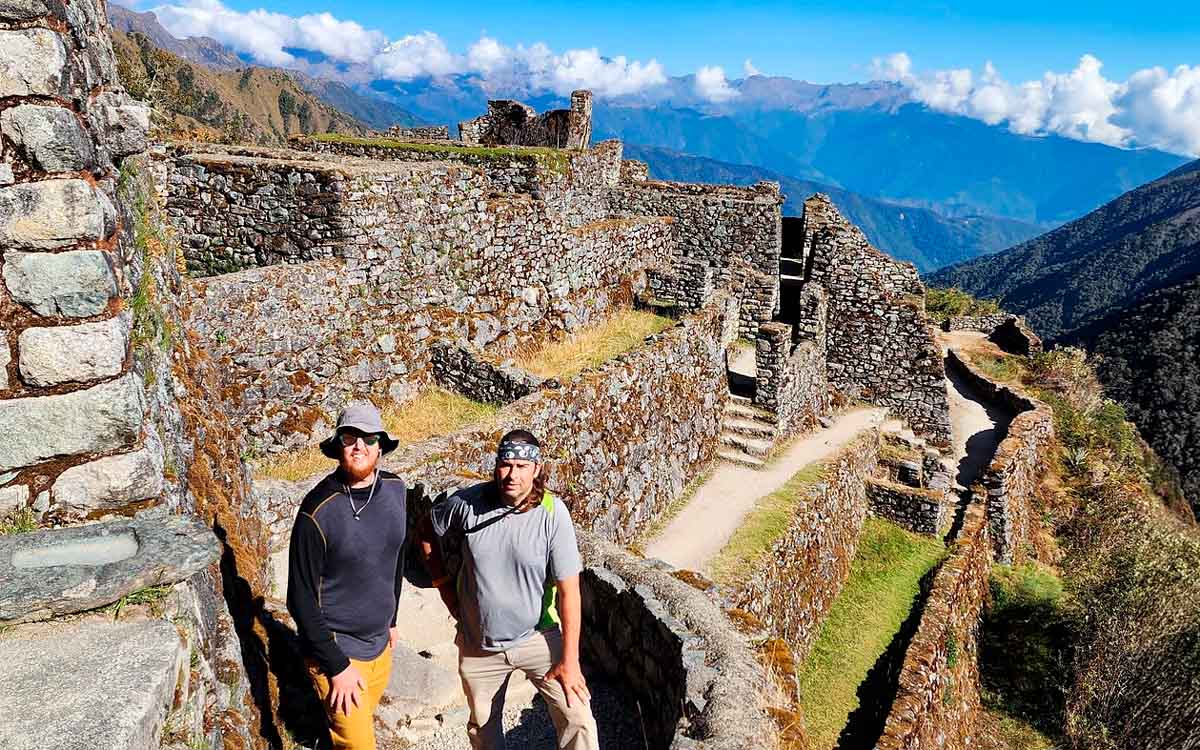
- Highlighted landscape: Direct view of the Salkantay snow-capped peak (6,271 meters), one of the most important apus for Andean culture
- Final route: The last stretch is usually completed by train or by walking from Hydroelectric to Aguas Calientes
Why is the Salkantay Trek a good alternative?
The Salkantay Trek is recognized by National Geographic as one of the 25 best hikes in the world, mainly due to the diversity of landscapes it crosses: from the snowy high mountain to the high jungle, in a single journey. Its popularity grew as a direct alternative to the Inca Trail when it reached its capacity limit, and today it remains the second most chosen route to reach Machu Picchu on foot.
Travel notes
- The same prior acclimatization in Cusco is recommended as for the Inca Trail, given the elevation gain of the mountain pass
- Since it does not depend on a limited quota, it can be booked with less advance notice, although in peak season it is still a good idea to book a few weeks ahead
- The weather changes drastically between the mountain pass (intense cold) and the final sections toward the high jungle (warmer and more humid)
- There are variations of the route, some include hot springs in Santa Teresa or an extra rest day
Lares Trek
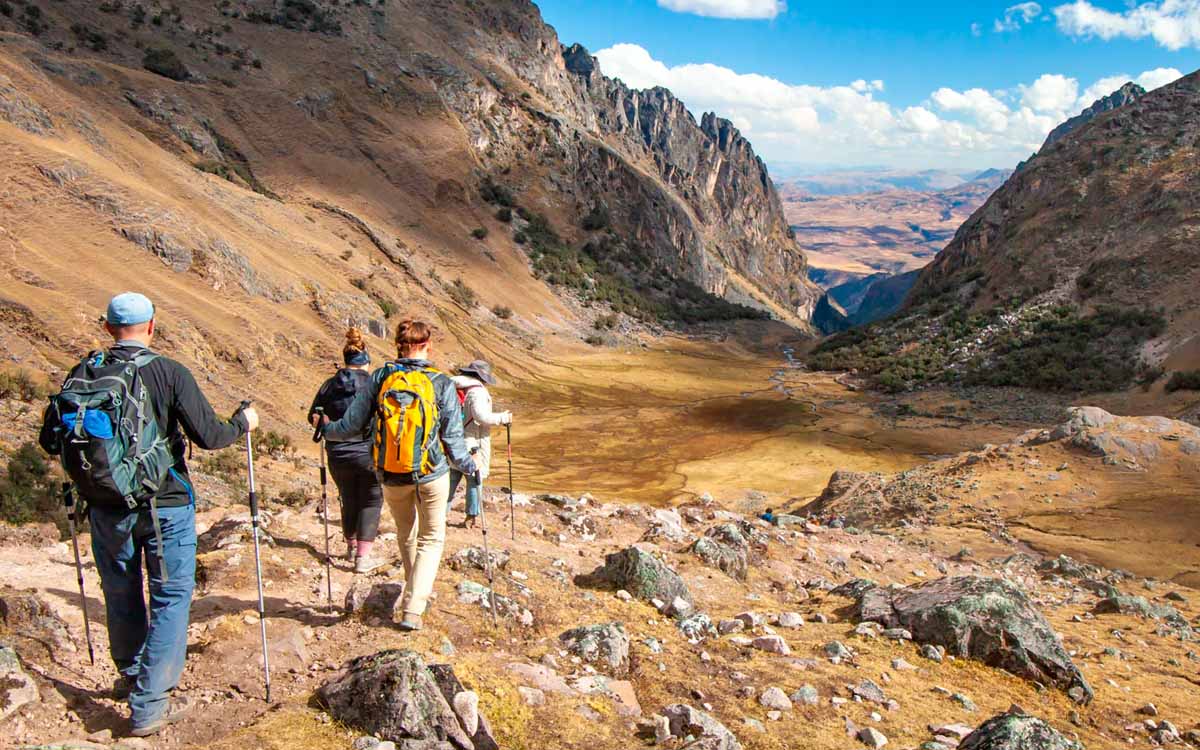
The Lares Trek lasts 3 to 4 days, and is considered a trek of moderate difficulty, without stretches as demanding as the Salkantay pass or the steps of the Inca Trail. What sets this route apart is its cultural focus, as it crosses Andean communities where locals keep textile and alpaca and llama herding traditions, with fewer tourists than the other routes.
Facts about the hike
- Total distance: Approximately 33 kilometers
- Maximum altitude: Between 4,200 and 4,450 meters
- Permits: No limit on permits
- Accommodation: Camping
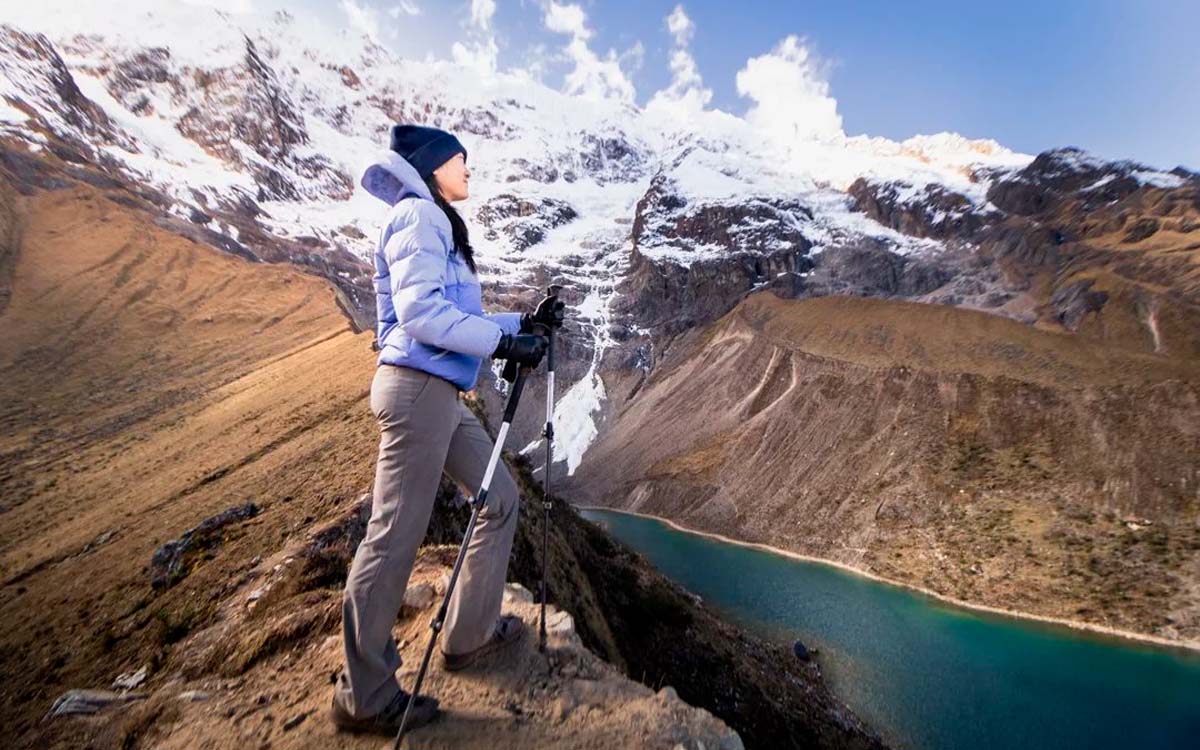
- Highlighted landscape: High Andean lakes, valleys with Andean communities, and the Lares hot springs
- Final route: Just like Salkantay, it is usually completed by train or combining train and land transport to Aguas Calientes
Why is it a good alternative?
The Lares Trek has positioned itself as an option for those looking for a less crowded experience than the Inca Trail or Salkantay, without giving up high mountain landscapes. Its main value is in contact with Andean communities that keep their traditional way of life, something the other three routes offer in a more limited way. It is also an alternative with lower physical demand for those who want to hike to Machu Picchu without facing the altitude of the Salkantay pass.
Travel notes
- Requires prior acclimatization in Cusco, although its physical demand is lower than Salkantay’s
- Since it does not depend on permits, it can be booked with less advance notice than the Inca Trail
- Direct contact with local communities makes it a good idea to carry cash in soles for artisan purchases or direct exchanges
- The weather is cold in the high areas and mild in the valleys, with less humidity than on the routes that get closer to the jungle
Inca Jungle Trek
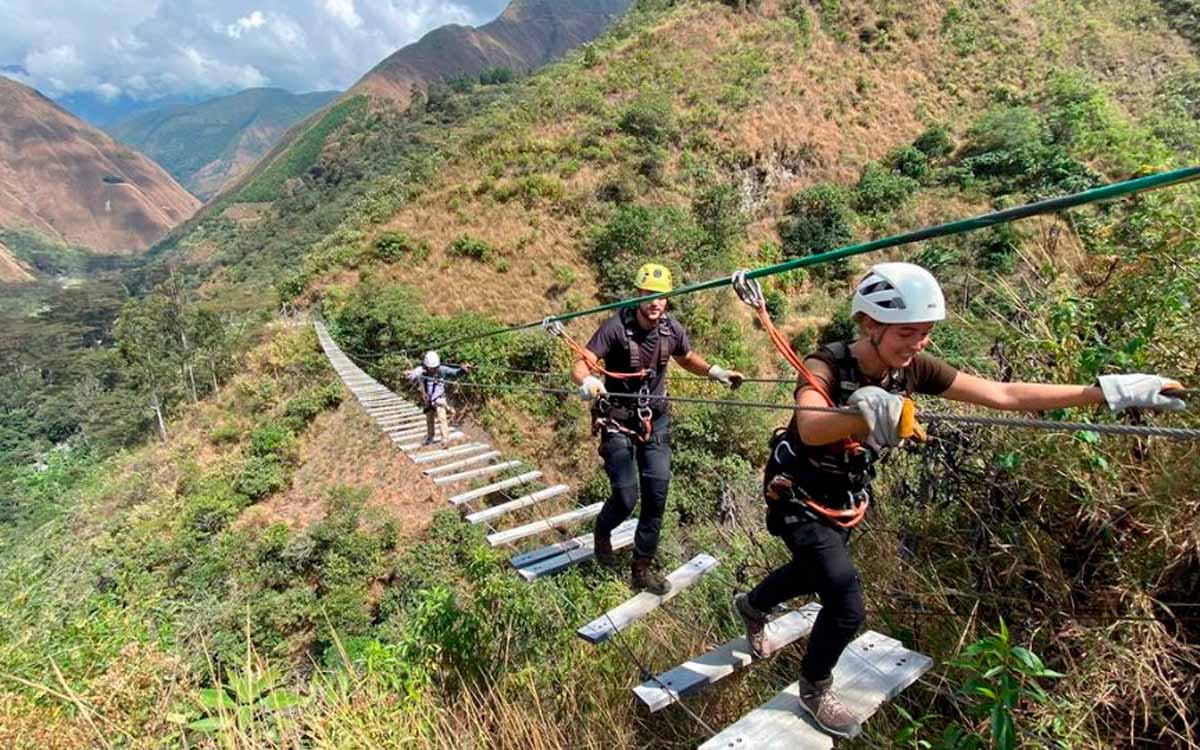
The Inca Jungle Trek lasts 3 to 4 days, and differs from the other three routes by combining several adventure activities in a single journey: mountain biking, hiking, and on some itineraries, zip-lining and rafting. It is considered the trek with the lowest sustained physical demand, since the effort is spread among different activities instead of walking every day.
Facts about the hike
- Total distance: Variable, with stretches of biking (30-60 km) and hiking (approximately 20-25 km in total)
- Maximum altitude: Low compared to the other routes, since the starting point (Abra Málaga) descends toward the high jungle
- Permits: No limit on permits
- Accommodation: Hostels or simple lodgings in the towns along the way
- Additional activities: Downhill biking, zip-lining (canopy), and rafting
- Final route: Hike from Hydroelectric to Aguas Calientes, or combination with train
Why is it a good alternative?
The Inca Jungle Trek has established itself as the preferred option for a younger traveler profile or one interested in adventure activities rather than long hikes. Its main appeal is variety: in the same trip it combines biking, hiking, and optional activities like rafting or zip-lining, something none of the other three routes offer. It is also the route with the most lodging flexibility, by using towns with hotels instead of campsites.
Travel notes
- By starting in a lower altitude zone than the other routes, it requires less prior acclimatization
- The weather is warmer and more humid due to the descent into the high jungle, especially in the final stretches
- By combining adventure activities, it is a good idea to confirm with the operator the level of prior experience needed for biking or rafting
- It is an option with greater variety of prices and services, since each operator puts together their own combination of activities
Route Comparison
After learning about the individual features of each trek, it is helpful to have an overview that lets you compare the four routes using the same criteria. The following table sums up the key info (duration, difficulty, landscape, need for permit, and price range) to make the decision easier based on what each traveler prioritizes.
Prices are reference numbers and change depending on the operator, the season, and the level of service hired (camping, domes, or lodging), so confirming the exact cost directly with the chosen agency is recommended.
| Route | Duration | Difficulty | Predominant landscape | Need for permit | Approximate price |
|---|---|---|---|---|---|
| Classic Inca Trail | 4 days / 3 nights | Moderate to high | Archaeological sites and high mountain | Yes, months in advance (limited quota) | $750 – $950 per person |
| Salkantay Trek | 5 days / 4 nights | High | Snow-capped peaks and transition to high jungle | No | $350 – $600 per person |
| Lares Trek | 3 to 4 days | Moderate | Andean communities and high-Andean lagoons | No | $550 – $650 per person |
| Inca Jungle Trek | 3 to 4 days | Low to moderate | High jungle, with biking sections | No | $250 – $450 per person |
Best time for a trek to Machu Picchu
The time of year directly affects the experience of any of the four routes, since weather conditions change the state of the trails, landscape visibility, and even the availability of spaces.
-
Dry season (May – October)
This is the most recommended season to do any of the treks, with sunny days, clear skies, and trails in better condition. It is also high season, so prices tend to be higher and, in the case of the Inca Trail, spots sell out much earlier. Nights are cold, especially in the highest altitude sections, with temperatures that can drop below zero.
-
Rainy season (November – April)
Rains are more frequent and heavy, which can affect the state of the trails and reduce visibility at panoramic viewpoints. The Inca Trail closes during February for maintenance, so that route is not available that month; the other routes (Salkantay, Lares, and Inca Jungle) stay open all year. In exchange for less stable weather, this season has fewer tourists and lower prices.
-
Intermediate months (April and October)
These months work as a transition between both seasons and usually offer a good balance: lower chance of heavy rains than in the wet season, but with fewer people and more moderate prices than in the high season. They are considered by many operators as the most recommended months for those who want good weather without the crowds of May to September.
Frequently Asked Questions
- Which is the best trek to Machu Picchu for beginners?
The Lares Trek and the Inca Jungle Trek are the most recommended for those with no prior experience in high-altitude trekking, since their physical demand is lower than the Inca Trail or the Salkantay Trek. - Is it necessary to book alternative treks to the Inca Trail in advance?
It is not mandatory, since Salkantay, Lares, and Inca Jungle do not have a limited daily capacity. However, in high season (May to September), booking a few weeks ahead is recommended to ensure availability. - Can you do more than one trek on the same trip to Peru?
Yes, although combining them on the same trip is not common due to the time each one takes. Some travelers choose to do a short trek (Lares or Inca Jungle) on one trip and leave the Inca Trail or Salkantay for a later visit. - Do all treks include entrance to Machu Picchu?
Yes, the entry ticket to Machu Picchu is included in the package of any of the four routes, since it is the final destination of the journey. - Which trek has the best balance between landscape and difficulty?
The Salkantay Trek is often mentioned as offering the greatest diversity of landscapes (snow-capped mountains, valleys, and high jungle) relative to its physical difficulty level, though this depends on each traveler’s preferences. - Is it safe to do these treks with no prior mountain experience?
Yes, all routes are done with certified guides and supporting muleteers. The most important thing is to arrive with at least a couple of days of acclimatization in Cusco before starting any of the four treks.