


At the moment of buying tickets to Machu Picchu, many travelers face a decision: choosing between Huayna Picchu or Machu Picchu Mountain. Which one is harder? Which one has better views? Is it really worth paying for the extra ticket? Both options appear as independent routes in the official booking system, and at first sight they may seem interchangeable, two mountains, two walks, the same citadel in the background. But the truth is that they are completely different experiences, both in difficulty and in the views they offer, and choosing wrong can mean ending up exhausted halfway or, even worse, being left wanting the walk you really wanted to do.
This confusion is more common than it seems. Huayna Picchu is the pointy mountain that appears behind the citadel in almost all the famous pictures of Machu Picchu, which makes it the most requested option and, therefore, the one that sells out first. Machu Picchu Mountain, on the other hand, is less photographed but offers a different perspective: being taller, it allows you to see the whole citadel from above, like in a map view. Is it true that Huayna Picchu is only for people in good physical shape? Can you climb it with a fear of heights? The problem is that many travelers book the first available option without solving these doubts, and they discover the difference only on the day of the walk.
The right choice depends on several factors: your physical condition, your tolerance to heights, the time you have available in your schedule and, above all, what kind of experience you are looking to live in Machu Picchu. Is it a good idea to book months in advance? Which one is better if I travel with children or with my parents? A traveler looking for the thrill of climbing almost vertical Inca steps is not the same as someone who prefers a longer but safe walk, with stops to enjoy the Andean landscape.
In this blog we are going to solve those doubts once and for all. We will review what each mountain is and its history, the key differences between both routes, the real difficulty level of each one, how the ticket system and limited spots work, and we will help you identify which one is best according to your traveler profile. We will also share practical tips for the day of the climb and answer the most frequent questions, so that you arrive at Machu Picchu with the decision made and enjoy your experience to the fullest.
What is Huayna Picchu?
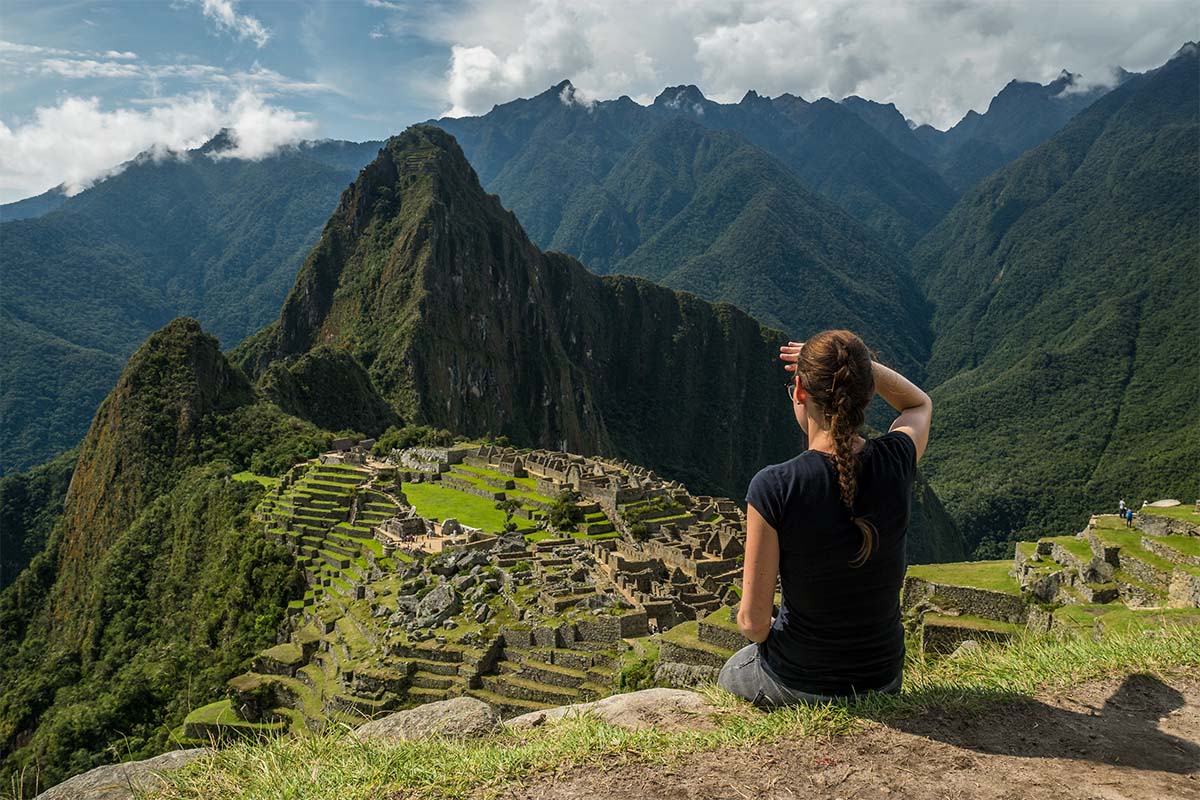
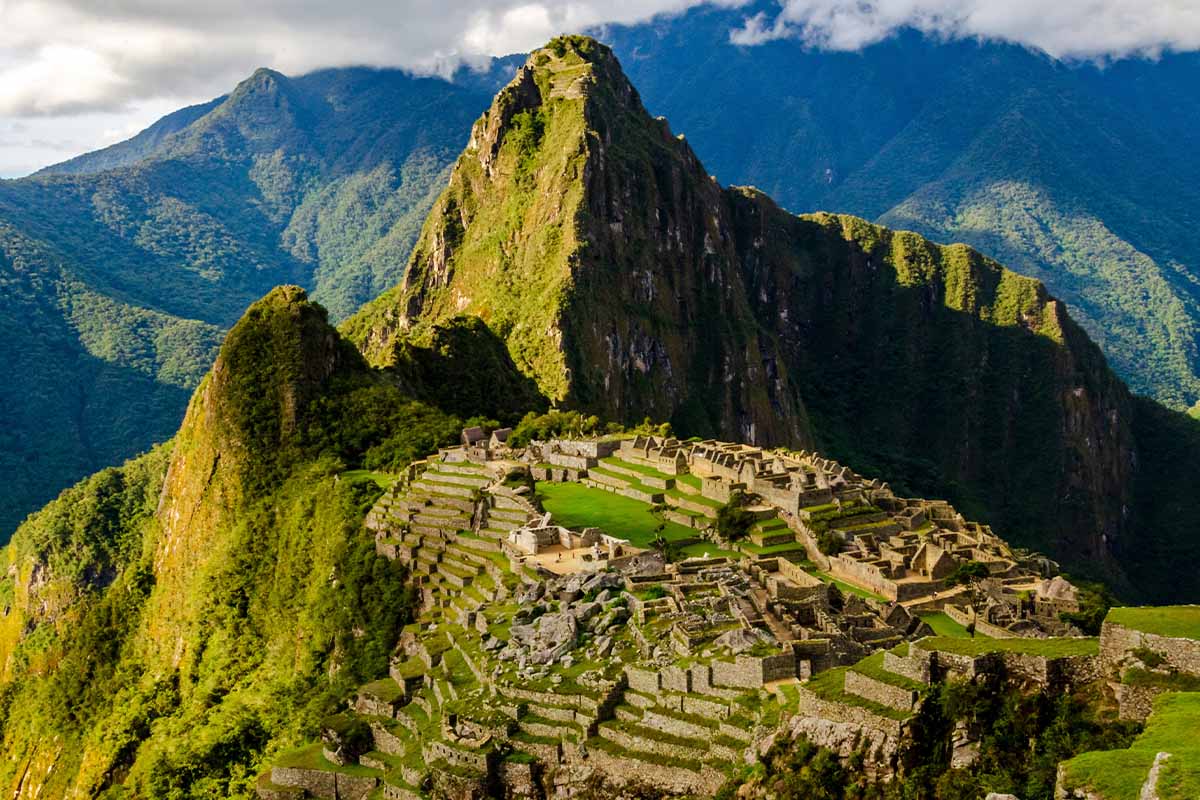
Huayna Picchu (which in Quechua means “young mountain”) is the pointy peak that rises right behind the Inca citadel, and is, without a doubt, the most recognizable image of all Machu Picchu. With an altitude of about 2,720 meters above sea level, this mountain is not only a spectacular viewpoint, but also an archaeological site in itself, with terraces, stairs and Inca buildings that go almost up to the top.
-
Location and view from the citadel
Huayna Picchu is located north of the citadel, separated from it by a small area of cloud forest. It is exactly this closeness that makes it so attractive: the trail starts inside the archaeological complex itself, so the climb feels like a natural extension of the visit to Machu Picchu. From the top, the reward is unique: an aerial view of the whole citadel, with its terraces and temples ordered in perfect harmony on the mountain, and the Urubamba river winding hundreds of meters below. It is the same perspective that appears in most postcards and promotional photos of Machu Picchu, which explains why so many travelers choose it as their favorite extra ticket.
-
Knowing a little more about Huayna Picchu
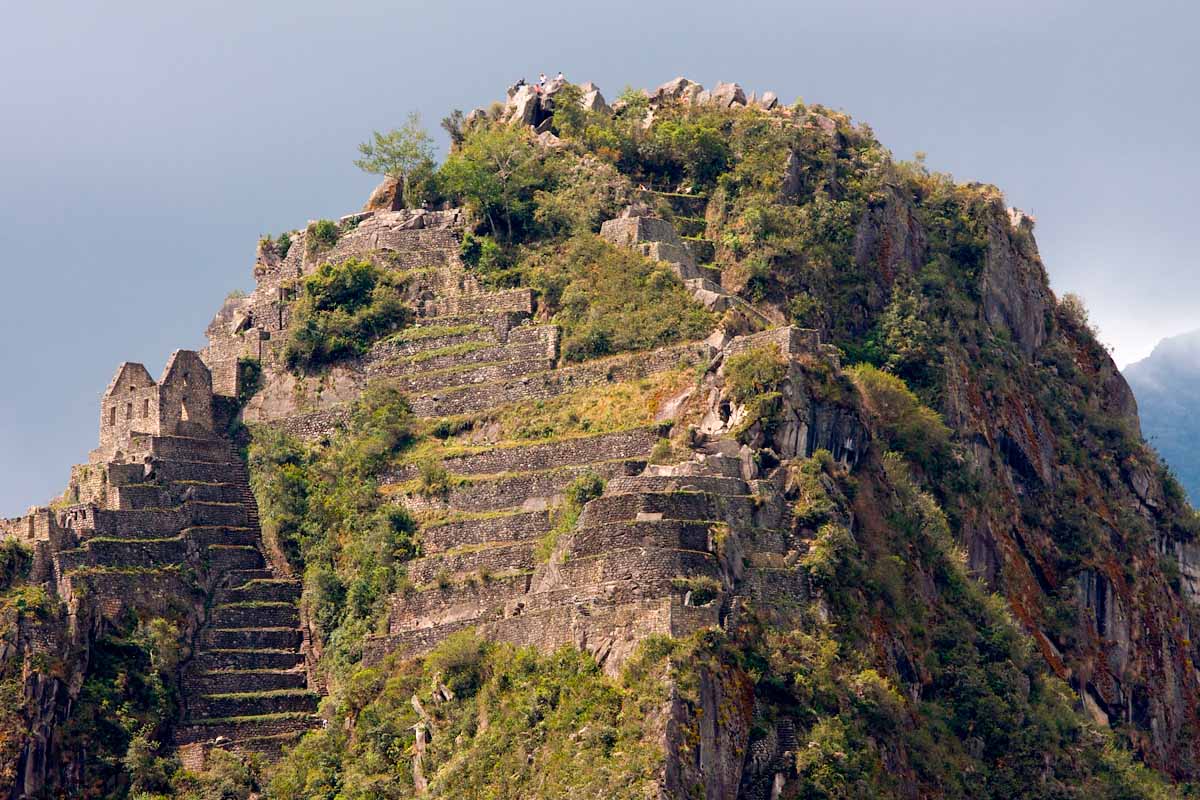
For the Incas, Huayna Picchu was not only a natural viewpoint, but a space with a strong religious and astronomical value. It is believed that ceremonies dedicated to the solar cult and the sacred mountains or “apus” were held at the top, a central practice in the Andean beliefs. On the opposite side to the citadel is the well-known Temple of the Moon, a construction carved partly inside a natural cave, which strengthens the idea that the mountain had ceremonial functions besides serving as a natural watchtower over the access road to Machu Picchu. The narrow farming terraces that are still preserved on its slopes show, in addition, the engineering level that the Incas were able to develop even on the steepest slopes.
What is Machu Picchu Mountain?
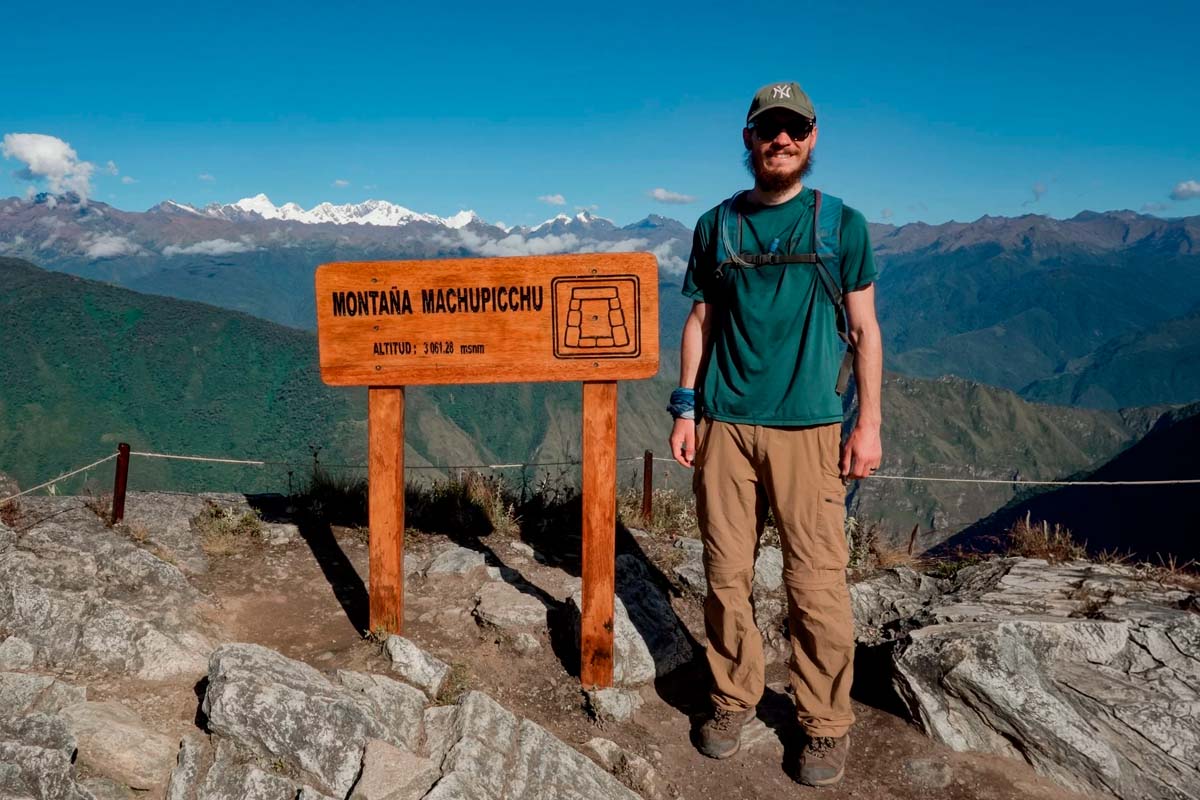
Machu Picchu Mountain (also called Machu Picchu Mountain) is the peak that gives its name to the whole citadel: “Machu Picchu” means “old mountain” in Quechua, as opposed to the “young mountain” of Huayna Picchu. Unlike its more famous neighbor, this mountain does not appear in classic postcards, but it is actually the highest elevation of the two, reaching about 3,082 meters above sea level, that is, about 360 meters above the citadel.
-
Location regarding the citadel
This mountain is located south of the archaeological complex, in the opposite direction to Huayna Picchu. The climbing trail starts from an independent control point inside the sanctuary, and is a considerably longer path, as it winds through the vegetation of the cloud forest before making its way to clearer areas near the top. Being far from the core of the citadel, the walk is usually quieter and with fewer crowds of tourists, which makes it an attractive option for those looking for a slower experience in contact with nature.
-
Why it is known as the highest viewpoint
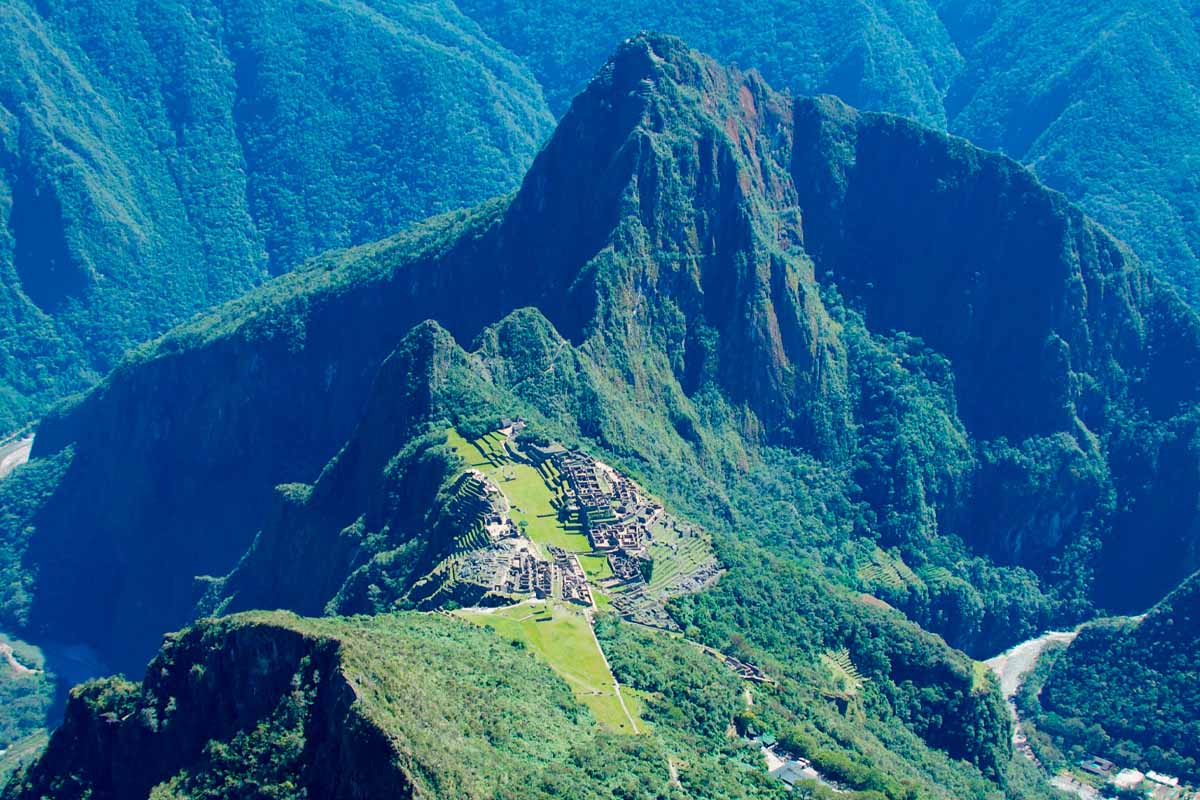
Thanks to its higher altitude, the top of this mountain offers a completely different perspective than Huayna Picchu: instead of a close and vertical view of the citadel, here you get a wide panoramic view of the whole sanctuary, as if looking at a scale map. From this viewpoint it is possible to appreciate not only Machu Picchu in its entirety, but also the mountain range that surrounds it, including snow-capped peaks on clear days, and the full path of the Urubamba river making its way through the valley. It is, without exaggerating, the best point to understand the size of the geographical environment in which the Incas decided to build their citadel, something that is difficult to appreciate from inside the complex itself.
Differences between both routes
Now that we know the context and the history of each mountain, it is time to directly compare the aspects that most influence a traveler’s decision: how much you have to climb, how much time it takes, what the trail is like, and what you see from the top.
-
- Altitude and elevation gain: Although Machu Picchu Mountain is the highest in absolute terms (3,082 meters above sea level compared to 2,720 meters above sea level for Huayna Picchu), the elevation gain covered from the starting point is similar in both cases, between 350 and 400 meters of climbing approximately. The real difference is not so much in how much you climb, but in how you climb: Huayna Picchu concentrates that elevation gain in a much shorter section, which translates to a much steeper slope.
- Duration of the climb: Huayna Picchu takes between 1.5 and 2.5 hours in total (up and down), thanks to the trail being shorter. Machu Picchu Mountain, on the other hand, requires between 3 and 4 hours in total, since the path is longer and with more turns before reaching the top. If your daily schedule is tight, this time difference can be a deciding factor.
- Type of trail (Inca steps vs. wider path): The Huayna Picchu trail keeps original Inca stairs, narrow, steep and, in several sections, with support ropes to hold on to. There are sections where the path gets very narrow and going down requires as much or more attention than going up. The Machu Picchu Mountain trail, instead, is wider and with more modern and regular steps, built specifically to make it easier for visitors to pass, which makes it feel more like a long walk than a climb.
- Views: panoramic view of the citadel vs. wider Andean landscape: Here is, perhaps, the most important difference for many travelers. From Huayna Picchu you get the “postcard” view: the entire citadel, close and in the foreground, with the layout of its terraces perfectly visible. From Machu Picchu Mountain, the citadel looks smaller and distant, but you gain a much wider panoramic view of the surrounding mountain range and the Urubamba river valley. In short: one offers the iconic photo, the other offers the greatness of the landscape.
Difficulty level
Huayna Picchu: steep sections and altitude exposureHuayna Picchu has a reputation for being the most intense walk inside Machu Picchu, and it is not an exaggeration. Some points to consider:
|
Machu Picchu Mountain: longer walk but less technicalMachu Picchu Mountain requires more endurance, but it is technically less demanding. Some key points:
|
Tickets and availability
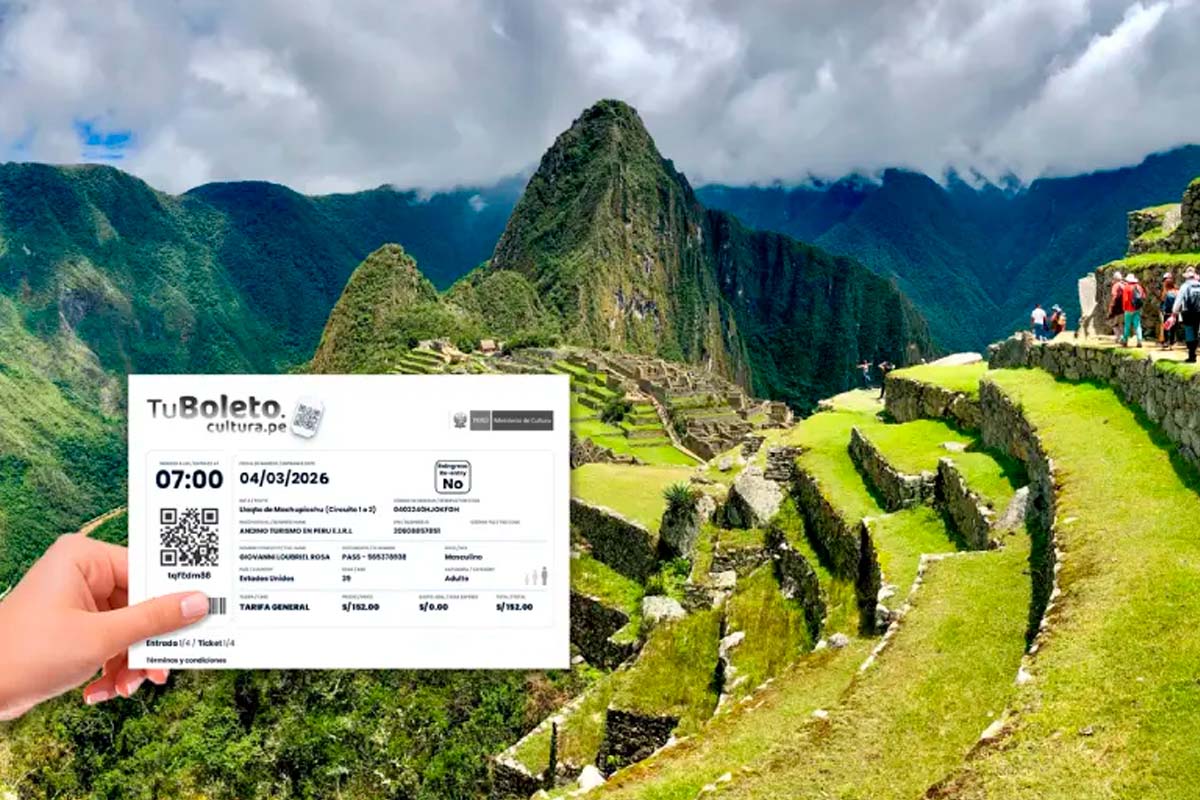
The Ministry of Culture of Peru strictly controls the number of visitors that can enter each mountain per day, in order to protect both the archaeological heritage and the safety of the walkers. Huayna Picchu has a daily limit of about 200 people, divided into two entry groups, which makes it the most restricted option and, therefore, the first to sell out. Machu Picchu Mountain, on the other hand, has a larger limit, around 400 people a day, also divided into two entry times.
This difference in availability is not a minor detail: while tickets for Machu Picchu Mountain can usually be gotten with relative ease even booking a few weeks in advance, those for Huayna Picchu can sell out months in advance, especially during the high season (May to September).
Entry times (entry groups)
Both mountains work under a group system with a fixed entry time, designed to stagger the flow of visitors:
- Huayna Picchu: Group 1 (entry 7:00 am) and Group 2 (entry 10:00 am).
- Machu Picchu Mountain: Group 1 (entry 7:00 am) and Group 2 (entry 9:00 am).
Once a time is assigned, it is mandatory to enter within that specific time slot; access outside the range set on the ticket is not allowed. That is why it is essential to arrive at the entrance of the corresponding mountain with time to spare, since access controls are strict and do not make exceptions for delays.
How far in advance to book
The general recommendation varies depending on the chosen mountain and the travel season. For Huayna Picchu, the ideal is to book between 4 and 6 months in advance if the trip is made in the high season, and at least 2 months in the low season. For Machu Picchu Mountain, 1 to 2 months in advance is usually enough in most cases, although it is always better to book with more time if the travel dates are fixed and there is no room for flexibility. In both cases, the tickets are bought together with the general entrance to Machu Picchu, not independently, so it is important to select the desired mountain from the first moment of purchase in the official system.
Which one to choose according to your traveler profile?
With all the above information on the table, the choice comes down to identifying what kind of experience you are looking for and what conditions you have for the day of the walk. Here we help you define it according to different traveler profiles.
1) If you are looking for the iconic photo of Machu PicchuIf your priority is to take that classic photograph, with the complete citadel in the foreground and the perfectly ordered terraces in the background, Huayna Picchu is the right option. No other mountain offers such a close and recognizable perspective of the sanctuary. However, keep in mind that you must book several months in advance and be willing to take on a technical and demanding climb to get it. |
2) If you prefer a calmer walk with panoramic viewsIf what you are looking for is to enjoy a walk in contact with nature, without the pressure of steep sections or constant exposure, and you are not so worried about getting the “postcard” shot, Machu Picchu Mountain is the best alternative. The reward is a panoramic view of the valley and the mountain range that few travelers get to appreciate, in addition to a route with fewer tourist crowds. |
3) If you travel with children, older adults or are afraid of heightsIn this case, the most advisable thing is to avoid both walks and enjoy the visit to the citadel without climbing either of the two mountains. If you still want to try one of them, Machu Picchu Mountain is the less risky option, since its trail is wider and with less vertical exposure, although it still requires good physical condition due to its duration. Huayna Picchu is not recommended for this traveler profile due to its narrow, steep sections without handrails. |
4) If you have limited time in your itineraryIf time is your main restriction, Huayna Picchu is more convenient, since its complete climb and descent takes between 1.5 and 2.5 hours, compared to the 3 to 4 hours that Machu Picchu Mountain demands. This allows you to complete the visit to the citadel and the extra walk in a single morning, leaving the rest of the day free to explore Aguas Calientes or start the return to Cusco. |
Practical tips for the climb
No matter which mountain you choose, there are some practical recommendations that will make the difference between enjoying the walk or having a hard time trying. Here we share the essentials so you arrive prepared.
What to bring (water, sunscreen, proper shoes)
The weather in Machu Picchu can change quickly, and the physical effort of the climb requires being well equipped. The essentials:
- Water: At least 1 liter per person, since there are no sales points on the trail of either mountain.
- Sunscreen and hat or cap: Sun exposure is high despite the vegetation, especially in the clear sections.
- Shoes with good grip: Preferably trekking shoes or closed sports shoes, never sandals or flip-flops, given the uneven and sometimes slippery ground.
- Insect repellent: The cloud forest usually has mosquitoes, especially in the sections with more vegetation.
- Rain poncho or light waterproof jacket: Rains can appear suddenly, even in the dry season.
- Energy snacks: Nuts or energy bars help keep your spirits up during the effort, although leaving trash on the trail is not allowed.
Keep in mind that large backpacks are not allowed inside the sanctuary; it is recommended to bring a small backpack with the essentials.
Best time of day to climb
Choosing the first entry group (7:00 am) is usually the best option in both cases. At that time temperatures are cooler, there is less chance of thick fog blocking the view from the top, and the trail has less visitor traffic, which makes the walk smoother, especially in the narrow sections of Huayna Picchu. Besides, climbing early gives you plenty of time to calmly explore the citadel after going down, without the pressure of other plans in the day’s itinerary.
Prior acclimation in Cusco
Before even thinking about the physical effort of the mountains, it is essential to arrive well adjusted to the altitude. Cusco is at 3,400 meters above sea level, and altitude sickness can affect the physical performance even of travelers in good shape. What is recommended is:
- Spend at least 2 days in Cusco before visiting Machu Picchu (which is at a lower altitude, 2,430 meters above sea level, but the effort of the walk is felt more if you did not arrive adjusted).
- Avoid alcohol and heavy meals during the first days.
- Stay well hydrated and consider coca tea, a traditional remedy widely used in the region.
- Pay attention to symptoms like severe headache, nausea or dizziness, and consult a doctor if they continue before trying either of the two walks.
Frequently asked questions
- Can I climb both mountains on the same day?
No. The Machu Picchu ticket system does not allow buying tickets to Huayna Picchu and Machu Picchu Mountain for the same date, since they exclude each other. You must choose one of the two at the time of purchase, along with your general ticket to the citadel. - Which one is safer?
Generally speaking, Machu Picchu Mountain is the safer option, since its trail is wider, with regular steps and less risk of vertical falls. Huayna Picchu, although it has support ropes in the most critical sections, has narrow and steep parts that require more care, especially when going down or on rainy days. - Do I need trekking experience?
It is not a strict requirement for either of the two, but it is recommended to have a certain level of physical fitness, especially for Huayna Picchu,where the steep slope demands more effort in a short time. For Machu Picchu Mountain, no technical experience is needed, although good endurance is needed to keep up a longer walk. - Is there an age limit to climb?
There is no official age limit, but both trails require good physical shape and mobility. It is recommended that small children and older adults with mobility problems avoid Huayna Picchu due to its exposure level, and carefully consider if they try Machu Picchu Mountain. - What happens if I am late for my entry time?
Access is strict and entry outside the time range assigned on the ticket is not allowed. If you arrive late, you run the risk of losing your ticket to the mountain, with no chance of a refund or time change on the same day. - Which one offers better photos, beyond the classic view?
It depends on what you are looking for. Huayna Picchu offers a close panoramic view of the citadel, ideal for photos that show its full layout. Machu Picchu Mountain, on the other hand, offers wider shots of the valley, the mountain range and the Urubamba river, perfect for those looking to capture the size of the Andean landscape. - Is it necessary to hire a guide to climb any of the mountains?
It is not mandatory, since both trails are marked and have control staff at the entry and exit points. However, having a guide can enrich the experience with extra historical and cultural information, both of the citadel and the mountains.