

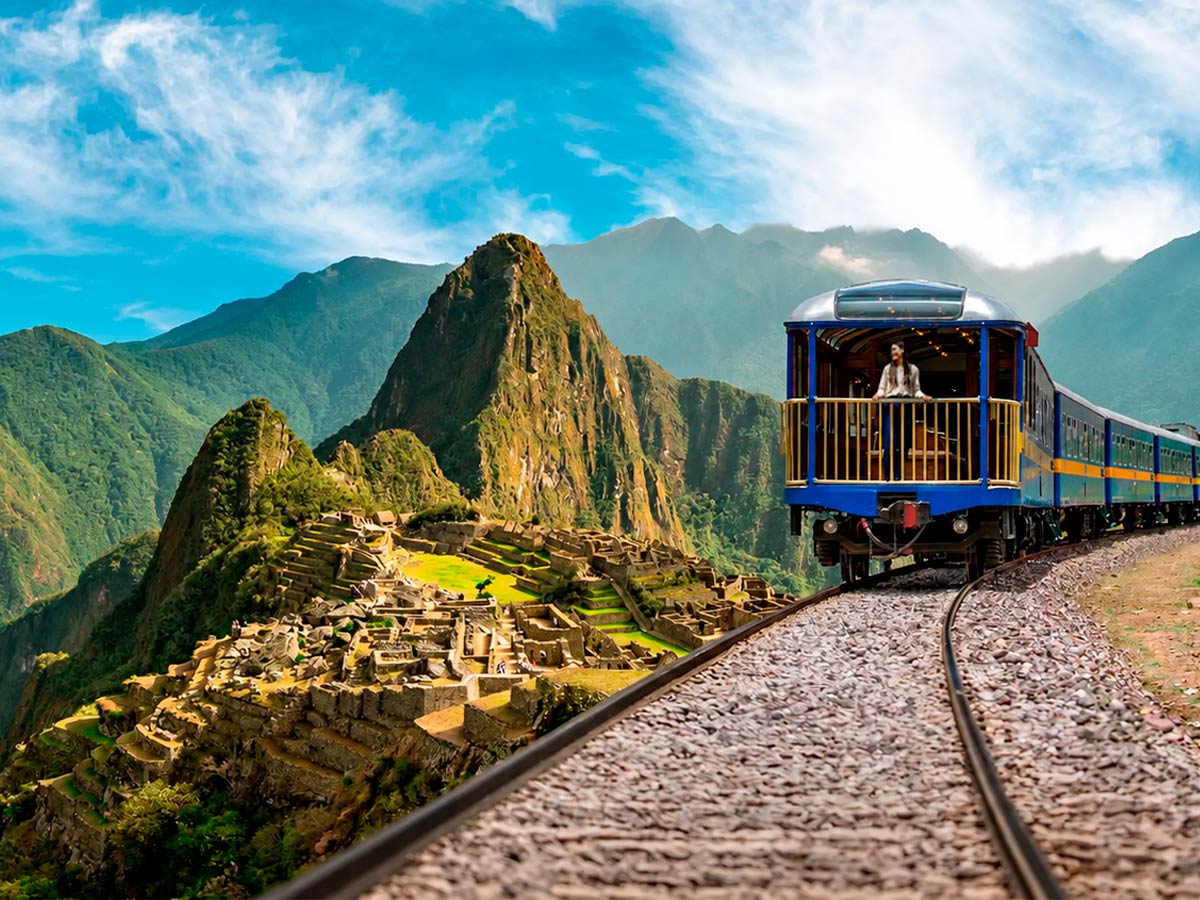
There is no road that connects Cusco or the Sacred Valley with Aguas Calientes, the town at the foot of the Inca citadel. Because of this, traveling to Machu Picchu by train is the only motorized way to get there; the alternative is to do it on foot, through routes like the Inca Trail, the Lares trek or the Salkantay, which take between two and five days. Therefore, for the great majority of visitors, the train remains the most practical option and the one that allows you to organize the trip in one or two days.
Before buying a ticket, several questions come up: which company is better, PeruRail or IncaRail? Which station is best to leave from, Poroy, Ollantaytambo or Hidroelectrica? How much does it cost depending on the service class? Are there discounts if you travel with children? The answers change depending on the starting point, the budget and the date of the trip, and making the decision without comparing the options can mean paying more than necessary or wasting time on logistics that can be planned in advance.
In this guide, the companies that run the service and their categories are detailed, the differences in price and comfort between both, how the departure and return stations work, the available discounts for children and some practical tips for boarding the train.
What companies offer transport to Machu Picchu by train?
Only two companies run the train service on the route to Machu Picchu: PeruRail and Inca Rail. Both cover the same sections, mainly Ollantaytambo–Aguas Calientes, although PeruRail also leaves from Cusco (Poroy station) and Urubamba, and each one offers several service categories depending on the comfort level the passenger is looking for.
The choice between one and the other does not only depend on the price: the available schedules, the closest departure station to your travel plan, and the type of experience on board that you prefer also play a part. Next, the origin of each operator and the service classes they offer for the trip to Machu Picchu by train are detailed.
PeruRail
PeruRail, the main railway company in Peru, has been running for over twenty years, offering train services to two of the most representative destinations in Peru, like Machu Picchu and Lake Titicaca, with a wide variety of travel options suited for different budgets and preferences.
PeruRail offers several travel options, among them:
- Expedition: The cheapest option. It has cars with wide side windows, large seats with folding tables, and interiors decorated with Inca themes. It offers a basic on-board service: with background music and the sale of snacks and drinks. Ideal for those who prioritize budget without giving up comfort.
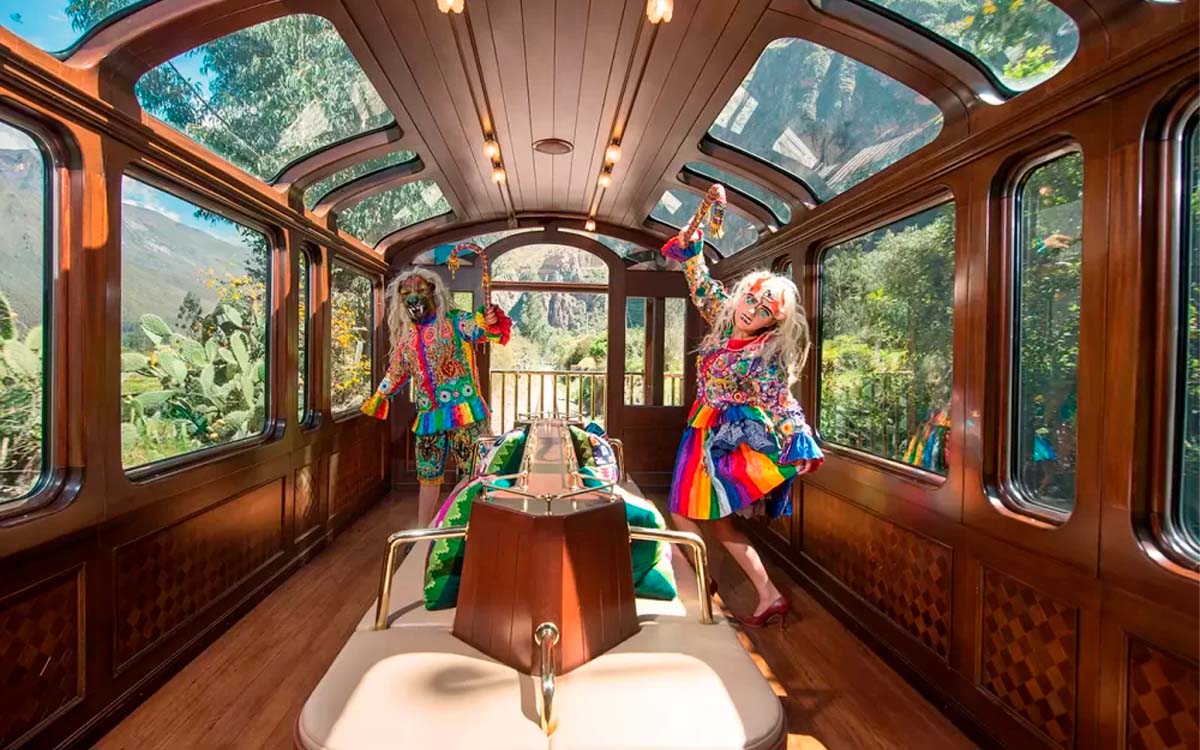
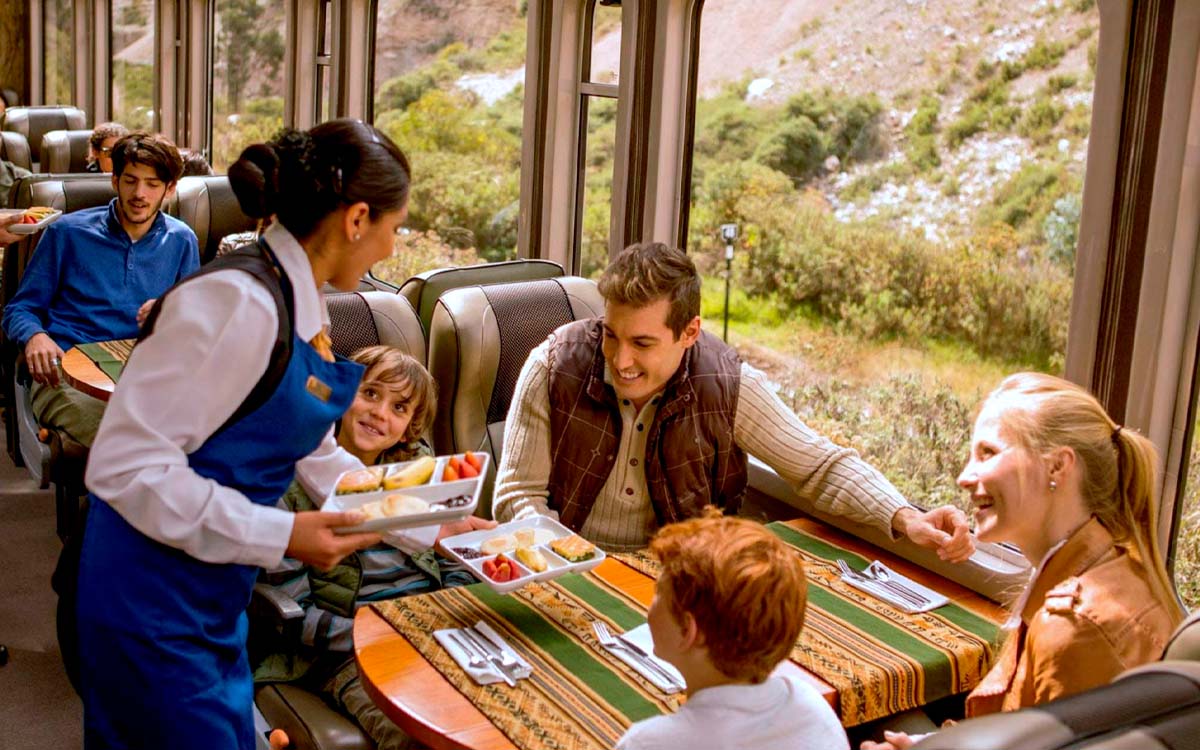
- Vistadome: A train a level above the Expedition, with top windows as well as side ones to widen the view of the Sacred Valley. It includes a free snack made with local ingredients and, on the return trip, a fashion show with baby alpaca clothing and a live traditional dance show.
- Hiram Bingham (luxury category): The flagship service of PeruRail, run under the Belmond brand and styled like Pullman cars. It includes a gourmet lunch on the outbound trip, dinner on the return, a bar car, live music, and a welcome show with traditional dance. It is the only service that includes the entrance to Machu Picchu and, in some cases, the guided tour within the package.
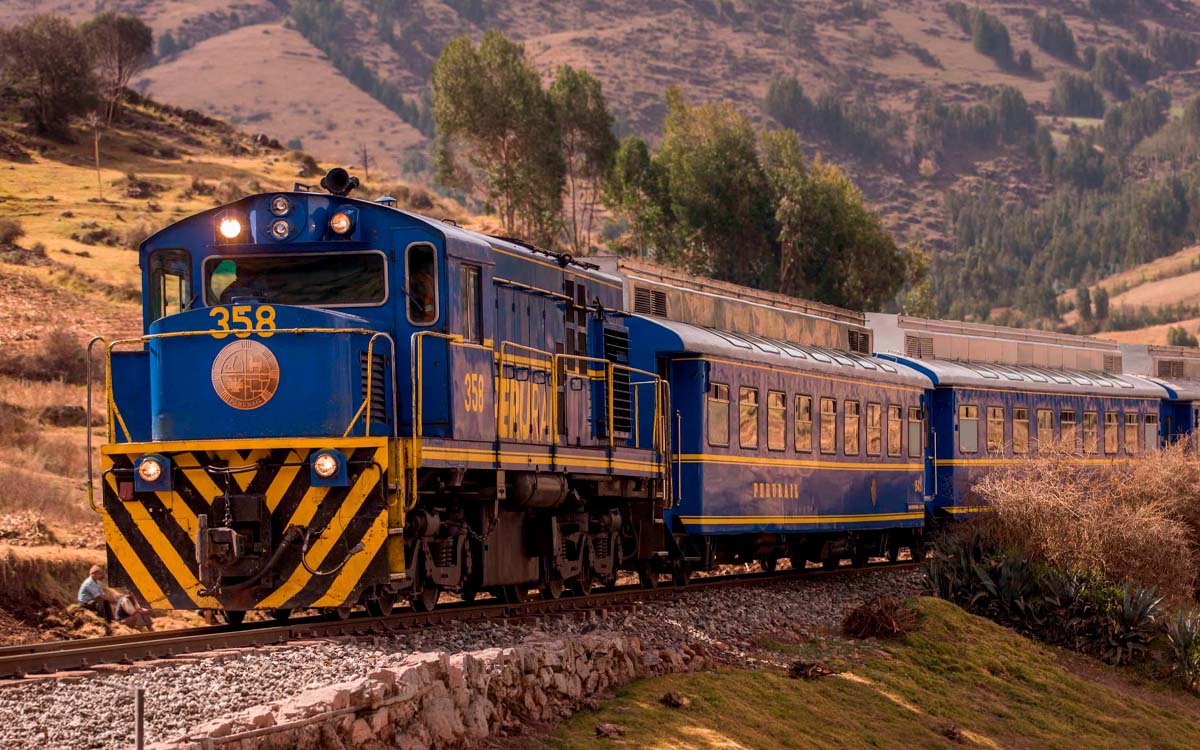
Inca Rail
With more than a decade of experience in railway transport to Machu Picchu, it stands out for its strong commitment to sustainability and environmental management, specially attracting travelers who prioritize green practices. Unlike PeruRail, this company only runs between the Ollantaytambo and Machu Picchu stations.
This company offers various routes to Machu Picchu, among them:
- The Voyager: The entry service of Inca Rail. It has cars with room for 42 passengers, wide side windows with UV protection, folding tables, and decoration with Andean themes. It offers background music, free drinks, and the on-board sale of local snacks.
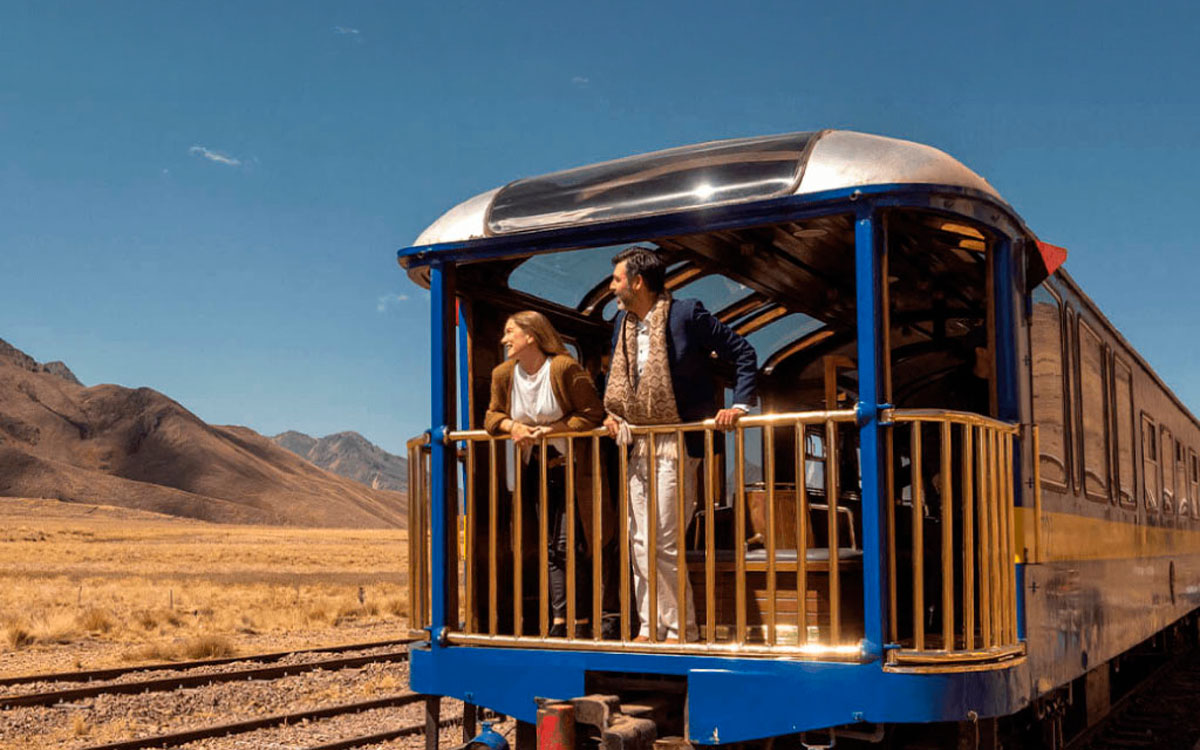
- The 360°: Designed specifically to appreciate the Sacred Valley: it adds panoramic windows on walls and ceiling, as well as an open-air viewing car. It includes traditional Andean snacks and drinks as part of the experience.
- The First Class: The executive service of the company, with more space and comfort on board. It has an Observatory-Lounge car that combines a bar, live music, and an outdoor balcony. It includes a gourmet lunch or dinner, and on some routes the entrance to Machu Picchu along with the guided tour, based on availability.
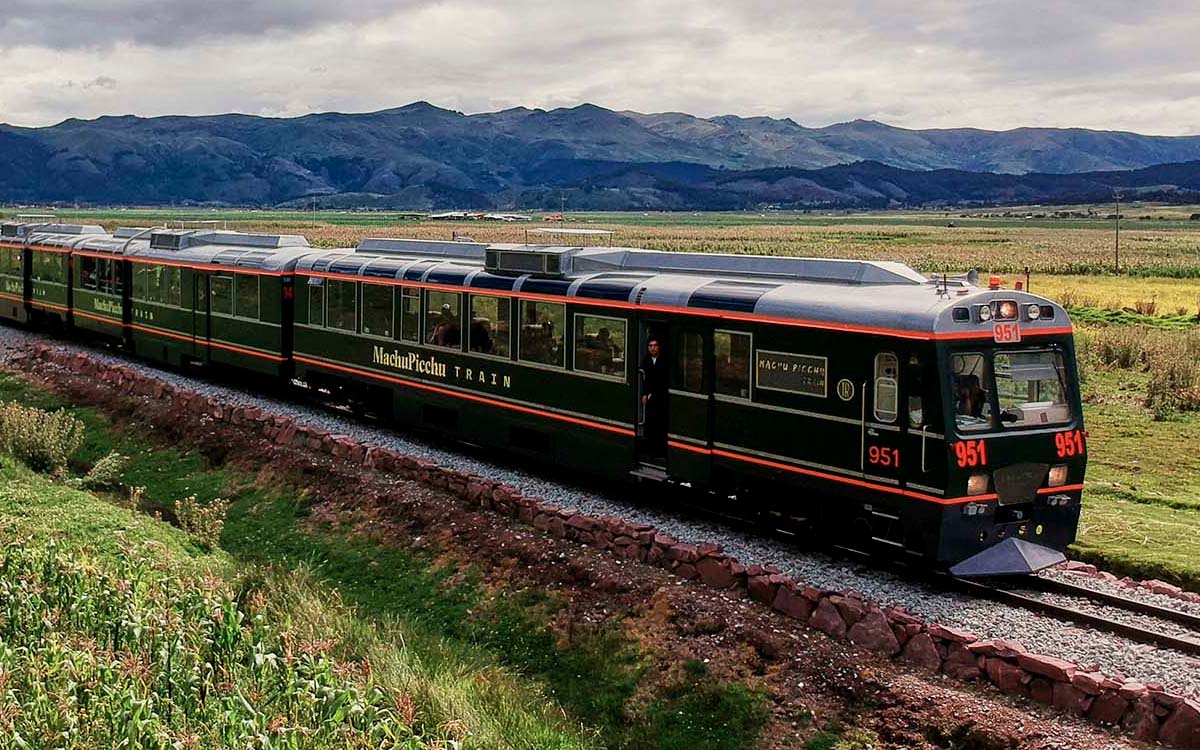
PeruRail vs IncaRail: key differences
Price
The price does not only depend on the name of the service: it changes based on the departure station, the season, how early you book, and the chosen time. Even so, it is possible to make a reference order between categories, from the cheapest to the most exclusive:
| Company | Train | Category and experience | Estimated price (USD) |
|---|---|---|---|
| PeruRail | Expedition | Basic tourist. Functional design and accessible budget. | $60 – $85 |
| Vistadome | Panoramic. Wide windows on walls and roof. | $75 – $110 | |
| Hiram Bingham | Luxury. Elegant car, gourmet dinner, open bar and music. | $500 – $630 | |
| Inca Rail | The Voyager | Basic tourist. Comfortable and modern, with background music. | $60 – $85 |
| The 360° | Panoramic. Open-air viewing car and wide windows. | $85 – $120 | |
| The First Class | Premium. Gourmet menu, cocktails and high comfort service. | $200 – $350 |
Comforts and services on board
Both companies offer panoramic windows on all their services, but the difference is in the extras: snacks, food, entertainment, and special train cars.
| Company and train | Design and windows | Food on board | Entertainment and extras |
|---|---|---|---|
| PeruRail Expedition | Classic and wide windows. | Sale of snacks and drinks on board. | Background Andean music. Ideal for the practical traveler. |
| PeruRail Vistadome | Panoramic windows on sides and roof. | Free light snack and non-alcoholic drink. | Traditional dance and alpaca fashion show (only on the return). |
| PeruRail Hiram Bingham | Pullman style cars | Welcome cocktail, 3-course gourmet lunch/dinner. | Bar car with live music, open bar, bus going up, guide and entrance to the citadel. |
| Inca Rail The Voyager | Comfortable seats and classic windows. | Sale of snacks and drinks on board. | Immersive background music. |
| Inca Rail The 360° | Wider and taller panoramic windows. | Light box lunch with Andean ingredients and drink. | Open-air viewing car and interactive app of the route. |
| Inca Rail The First Class | Wide armchairs and refined decoration. | Welcome cocktail and 3-course gourmet menu. | Viewing car with bar, balcony, live music and bus going up to the wonder. |
Frequency and schedules
PeruRail operates more departure stations and, in general, more daily times; IncaRail focuses its operation in Ollantaytambo, with the bimodal option (bus + train) from Cusco.
| Company | Departure stations | Frequency | Approximate time |
|---|---|---|---|
| PeruRail |
|
High (~18 to 22 total daily departures) |
|
| Inca Rail |
|
Medium (~8 to 12 total daily departures) |
|
About the train tickets
The train ticket is bought separately from the Machu Picchu entrance ticket; since they are two different processes and neither replaces the other. Entry to the archaeological sanctuary is bought separately on the official platform of the Ministry of Culture of Peru, while the train ticket is managed directly with PeruRail or Inca Rail, either on their official websites or through authorized travel agencies in Cusco.
To book online, the details of each passenger are asked for: full name, nationality, passport number, date of birth, and gender, plus the payment method (credit or debit card; some platforms also accept PayPal). Once the purchase is confirmed, both companies send the ticket by email, which must be shown printed or in digital format along with the matching ID document on the day of the trip.
Some practical points to keep in mind before buying:
- Recommended advance time: Between 2 and 4 weeks in regular season; it is a good idea to increase that time in high season (June–August and December–January), when the most requested times sell out first.
- Luggage: Both companies limit hand luggage to a low weight (it changes based on the source between 5 and 8 kg); whatever goes over that limit should be left at the hotel or in a luggage storage in Cusco.
- Changes and refunds: The rules depend on the purchased rate; some tickets allow rescheduling at no extra cost and others apply fees, so you have to check the terms before paying.
- Local train: There is a PeruRail service for local residents with an ID or foreigner card, different from the tourist train; it does not apply to most international visitors and cannot be bought online.
Train stations
Departure stations
To travel to Machu Picchu there are several boarding points, all located in Cusco or the Sacred Valley:
- San Pedro: Right in the historic center of Cusco, next to the market of the same name. It offers few daily departures.
- Wanchaq: Also in the center of Cusco; from here mainly leaves the bimodal service (bus + train), which takes passengers to Ollantaytambo to board the train.
- Poroy: About 11–15 km from the center of Cusco (30 minutes by car). It offers several daily services, including the Hiram Bingham.
- Urubamba: In the Sacred Valley, with fewer departures than Ollantaytambo.
- Ollantaytambo: The station with the highest number of daily schedules (more than 30 departures) and the most used by tourists, since it cuts the travel time to about 1 hour 45 minutes.
- Hidroeléctrica: The cheapest route, combined with a previous walk of about 2 hours to Aguas Calientes.
Note: The Cusco stations (San Pedro, Wanchaq and Poroy) usually close during the rainy season (January to April) for track maintenance; in those months the service is focused on Ollantaytambo.
Return stations
Unlike the outbound trip, the return has a single boarding point: the Aguas Calientes station (also called Machu Picchu Pueblo), located next to the town’s artisan market. From there the trains return to the original station that the passenger chose when buying the ticket (Poroy, Ollantaytambo, Urubamba, San Pedro, Wanchaq or Hidroeléctrica), so it is important to keep the outbound ticket to check which station the return goes to.
Discounts for the train to Machu Picchu
Both companies offer different prices for family travel, although the exact rules change from one to the other.
Children under 3 years old
- PeruRail: Infants from 0 to 2 years old do not pay a ticket as long as they travel sitting on the lap of a responsible adult. If the parents prefer the infant to have their own seat, the price for children from 3 to 11 years old is charged.
- Inca Rail: Applies the same rule, but only allows one free infant per adult passenger. If an adult travels with two children of that age, the second one must have their own seat and pay the child price.
In both cases it is required to travel with a responsible adult (over 18 years old) and, in the case of Inca Rail, to show the child’s identity document at the ticket office in advance.
Children from 3 to 12 years old
- PeruRail: According to their own official policy, children from 3 to 11 years old pay 75% of the adult price (that is, 25% discount), on services like Expedition, Vistadome and Hiram Bingham.
- Inca Rail: Different third-party sources mention a discount close to 50% for this same age range, although this number does not appear confirmed in the official terms of the company.
Tips for boarding the train
- Arrive early: Both companies are strict with the boarding time; it is recommended to be at the station at least 30 minutes before departure. Boarding does not wait and, if you miss the train, the ticket is not refunded.
- Bring the original document: You must show the same passport (or ID card/foreigner ID card, as applicable) that you used to buy the ticket. Copies or digital photos of the document are rarely accepted.
- Have the ticket on hand: The digital ticket is usually enough, but it is a good idea to save an offline screenshot or bring it printed as a backup, in case the signal fails at the time of the check.
- Respect the hand luggage limit: The allowed weight varies by source between 5 and 8 kg, in a small bag or backpack; large suitcases must stay at the hotel in Cusco, the Sacred Valley, or in luggage storage.
- Plan your times well: A common mistake is not leaving enough time between arriving in Aguas Calientes, the line for the bus going up and the exact time of entry to Machu Picchu, which is fixed.
- Keep boarding rules in mind: It is not allowed to travel under the effects of alcohol or drugs, with aggressive behavior, or for children to be alone; animals are also not allowed on board.
- Consider spending the night in Aguas Calientes: If your goal is to arrive early at the citadel, this allows you to go up with fewer tourists and return on a later train without rushing.
Frequently asked questions
- How long is the train ride to Machu Picchu?
It depends on the departure station. From Ollantaytambo, the trip takes about 1 hour and 45 minutes. From Poroy (Cusco), around 3 hours and 30 minutes. From San Pedro or Wanchaq, the trip can take up to 4 hours. - What is the difference between PeruRail and IncaRail?
Both cover the same route and offer similar classes, from cheap to luxury. PeruRail has more departure stations and a higher number of daily times, besides being the only one with the luxury Hiram Bingham train. IncaRail focuses its operation in Ollantaytambo and the bimodal service from Cusco. - Does the train ticket include the entrance to Machu Picchu?
No, except in specific classes like Hiram Bingham (PeruRail) or The First Class (IncaRail, based on availability). In the rest of the services, the entrance ticket to the sanctuary is bought separately on the official platform of the Ministry of Culture. - How far in advance should I buy the ticket?
It is recommended between 2 and 4 weeks before in regular season, and to extend that time to several weeks or even months in high season (May-September and December-January), when the most requested times sell out first. - Can I change the date or time after buying?
It depends on the price paid. Some allow changes with no extra cost; others apply fees or do not allow changes. It is a good idea to check the rules of the chosen price before paying. - Which is the cheapest train and which is the most luxurious?
The cheapest in both companies is the entry service: Expedition (PeruRail) and The Voyager (IncaRail). The most luxurious is the Hiram Bingham from PeruRail; in IncaRail, The First Class takes the premium class. - Do the trains run all year?
Yes, although in the rainy season (January to April) the Cusco and Poroy stations usually close for track maintenance, and the service focuses on Ollantaytambo. - What document should I bring to board the train?
The same document you used to buy the ticket: original passport for foreigners, or ID card/foreigner ID card for residents in Peru. Copies are usually not accepted.