

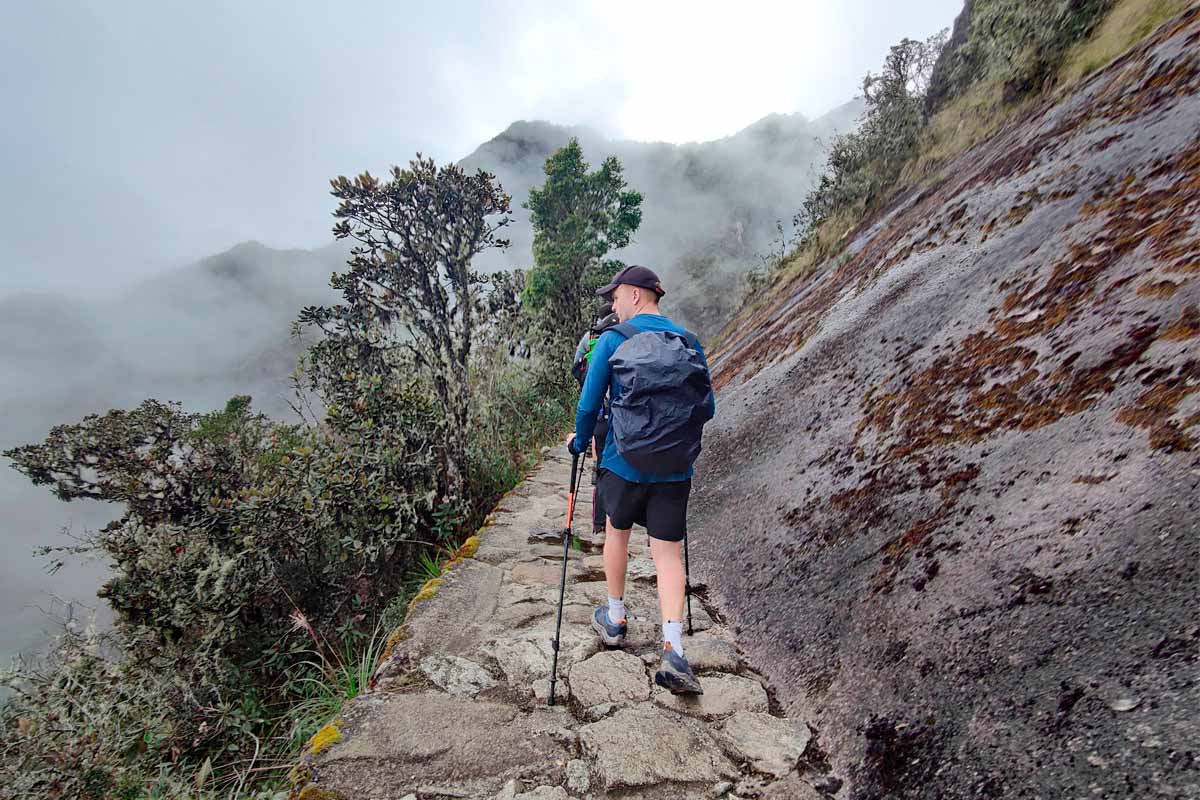
The Inca Trail to Machu Picchu is one of the most requested trekking routes in South America, but also one of the most restricted. Unlike other alternative treks to the citadel, access is controlled by the Ministry of Culture of Peru, which sets a limited number of daily permits for walkers and support staff. This limit makes planning just as important as physical preparation.
Many travelers assume that it is enough to pick a date and agency a few weeks in advance, without considering that permits usually sell out months ahead, especially during the dry season (May to September). Added to this is a four-day trip that combines high altitude sections, weather changes, and a level of physical demand that does not always match the expectations of those who book it.
This guide details everything you need to plan the Inca Trail without surprises: the length of the trip (day by day), the difficulty level and the hardest points of the route, how the permit and spot system works, prices and what the tours include, recommended gear, the best time to do it, and the most common questions from first-timers.
What is the Classic Inca Trail?
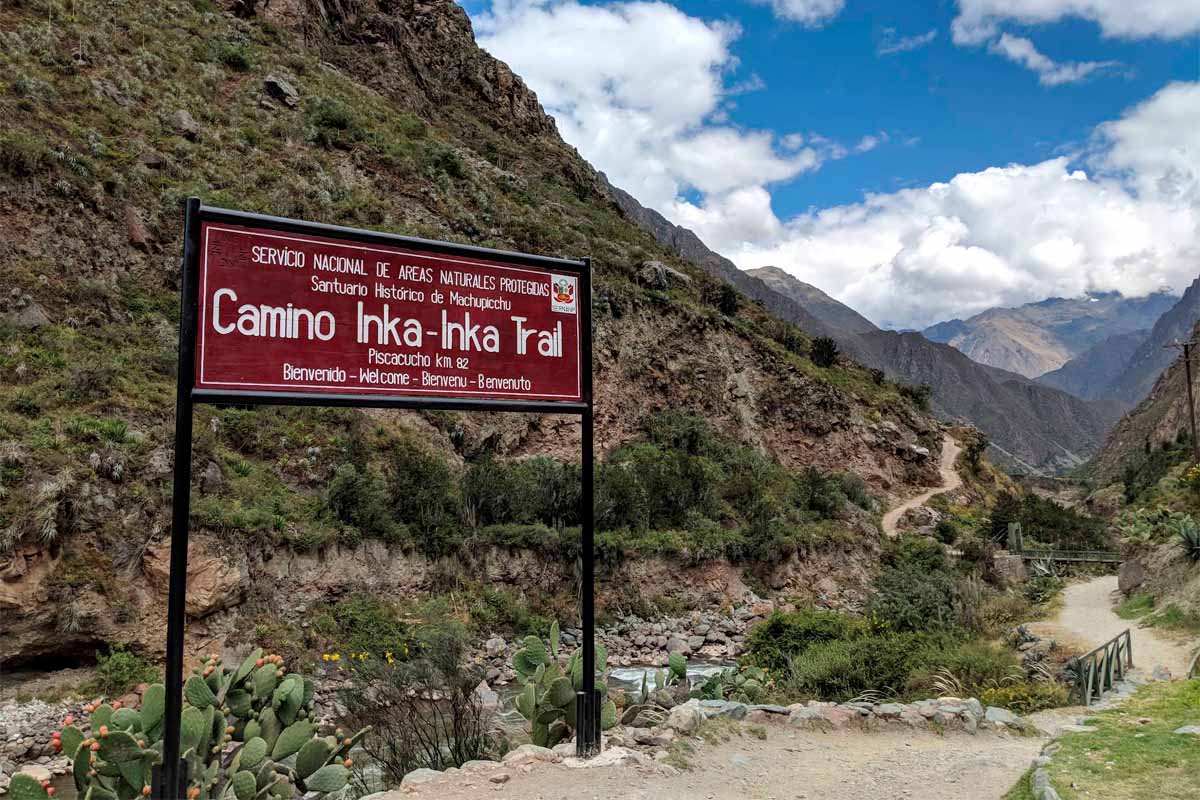
The Classic Inca Trail is a 4 day and 3 night trekking route that connects the Sacred Valley with Machu Picchu, following sections of the road system built by the Incas (the Qhapaq Ñan). The trip starts at kilometer 82 of the Cusco-Machu Picchu train track, near Piscacucho, and ends at the Sun Gate (Inti Punku), the point from where you get the first view of the citadel.
Along the way, the route goes through different ecological levels (from Andean valleys to cloud forest) and passes by at least four Inca archaeological sites before reaching Machu Picchu: Llactapata, Runkurakay, Sayacmarca and Wiñay Wayna. Access is managed exclusively by the Ministry of Culture of Peru, which requires every walker to enter with an authorized agency; doing it on your own is not allowed.
Did you know…? The Inca Trail has a short route
It is known as the Short Inca Trail, also called the “2 day Inca Trail”, it does not cover the same route from the start. It begins at kilometer 104, a point closer to Machu Picchu, so it skips the highest altitude sections of the classic trip, including the pass through Warmiwañusca (Dead Woman’s Pass).
Its route is mainly limited to Wiñay Wayna and the Sun Gate, which makes it an option for those who have less time available or are looking for a lower level of physical demand, although it is also subject to a separate permit system with limited spots.
Duration and trekking days
The Classic Inca Trail has a fixed duration of 4 days and 3 nights, without big changes between agencies, since the itinerary depends on the campsites authorized by the Ministry of Culture. Below is the day-by-day breakdown, with the practical data for each section:
Day 1: Piscacucho (Km 82) – Wayllabamba
The walk starts with a relatively gentle section along the Urubamba river, with views of the snowy Veronica mountain. You pass through the Llactapata and Patallacta archaeological sites before arriving at the Wayllabamba campsite. It is the shortest and least demanding day, planned as acclimatization before the next day’s climb.
Route data:
- Approximate distance: 12-14 km
- Walking time: 6-7 hours
- Altitude: from 2,700 m (start) to 3,000 m (campsite)
Day 2: Wayllabamba – Pacaymayo
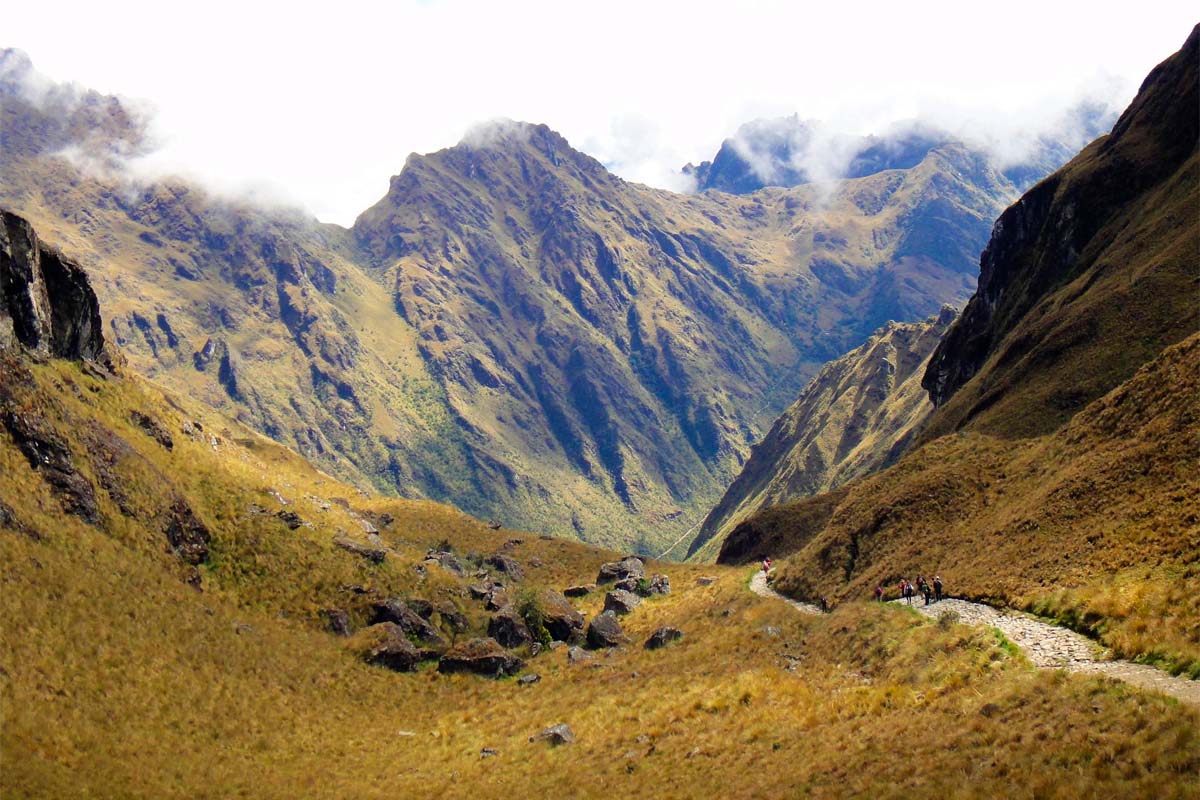
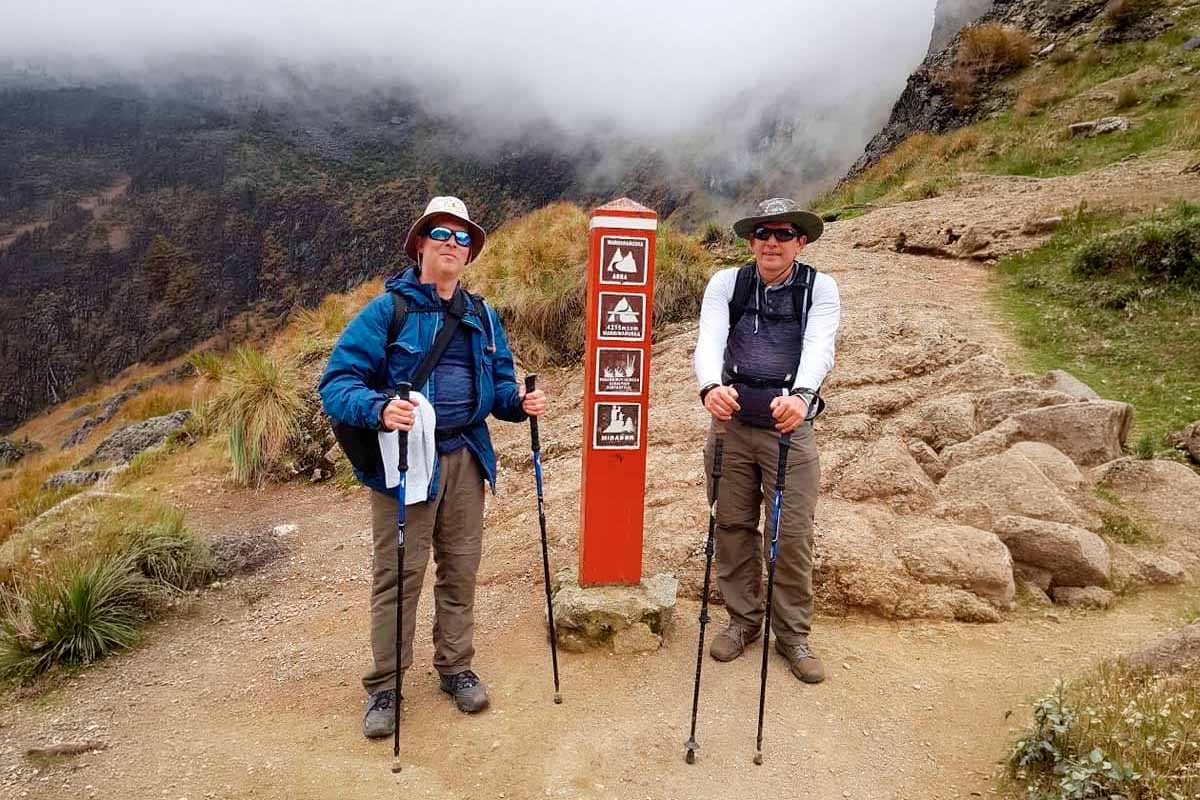
Considered the hardest day of the trip. You climb up to Warmiwañusca (Dead Woman’s Pass), the highest point of the route at 4,215 meters above sea level, to then go down to the Pacaymayo campsite. The altitude change in a few hours is the main factor of physical demand of the whole trek.
This is the section where altitude sickness symptoms appear most often (headache, fatigue, light nausea). Most agencies recommend a slow pace and frequent breaks on the way up, rather than speed.
Route data:
- Approximate distance: 15-16 km
- Walking time: 8-9 hours
- Altitude: climb up to Warmiwañusca (Dead Woman’s Pass) at 4,215 m, then go down to Pacaymayo (3,600 m)
Day 3: Pacaymayo – Wiñay Wayna
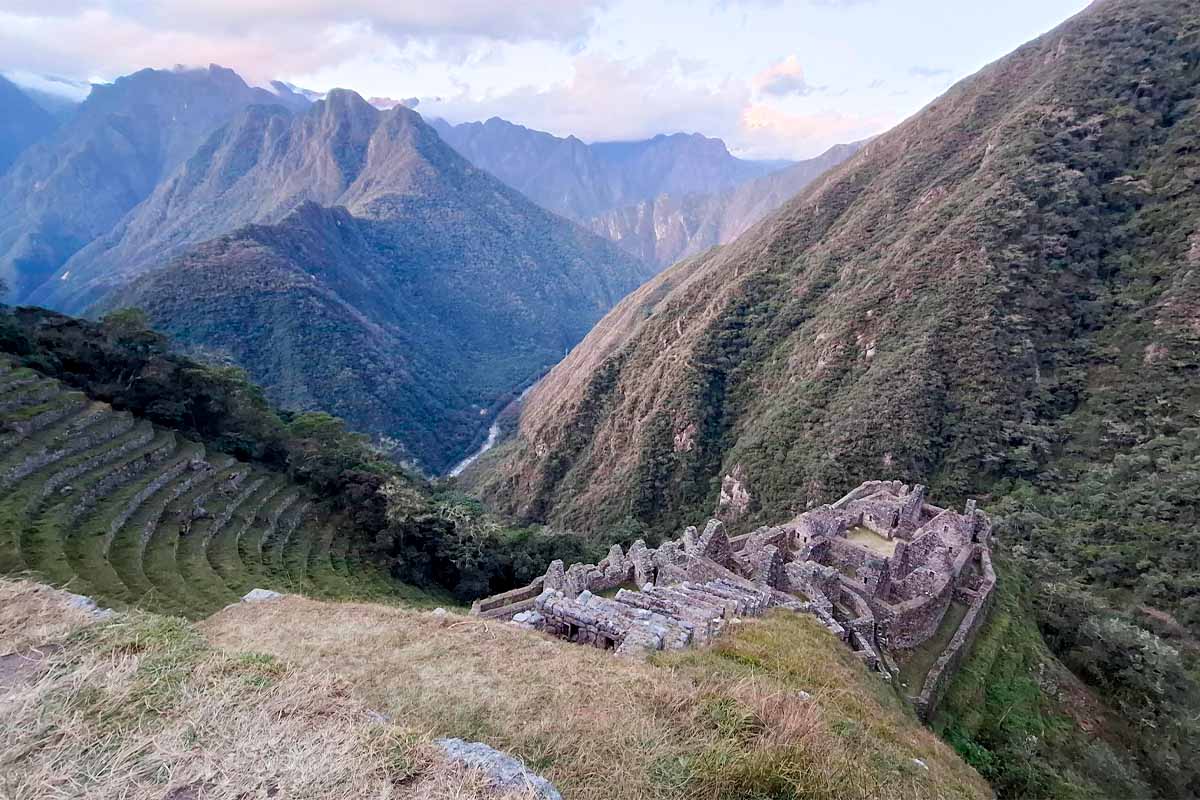
The longest section in distance, but with less demand than the day before. You pass through the Runkurakay and Sayacmarca archaeological sites, and go down gradually into the cloud forest until reaching the Wiñay Wayna complex, the last campsite before Machu Picchu.
Route data:
- Approximate distance: 16 km
- Walking time: 7-8 hours
- Altitude: passes through a second mountain pass (Runkurakay, ~3,950 m) before going down to Wiñay Wayna (~2,650 m)
Day 4: Wiñay Wayna – Machu Picchu
Early morning start (usually before 4:00 a.m.) to arrive at the Sun Gate (Inti Punku) in time for sunrise over the citadel. The final descent to Machu Picchu takes about an hour, and the entry to the citadel is done with the entrance ticket included in the tour.
Route data:
- Approximate distance: 6 km
- Walking time: 2 hours to the Sun Gate, plus 1 hour of descent to the citadel
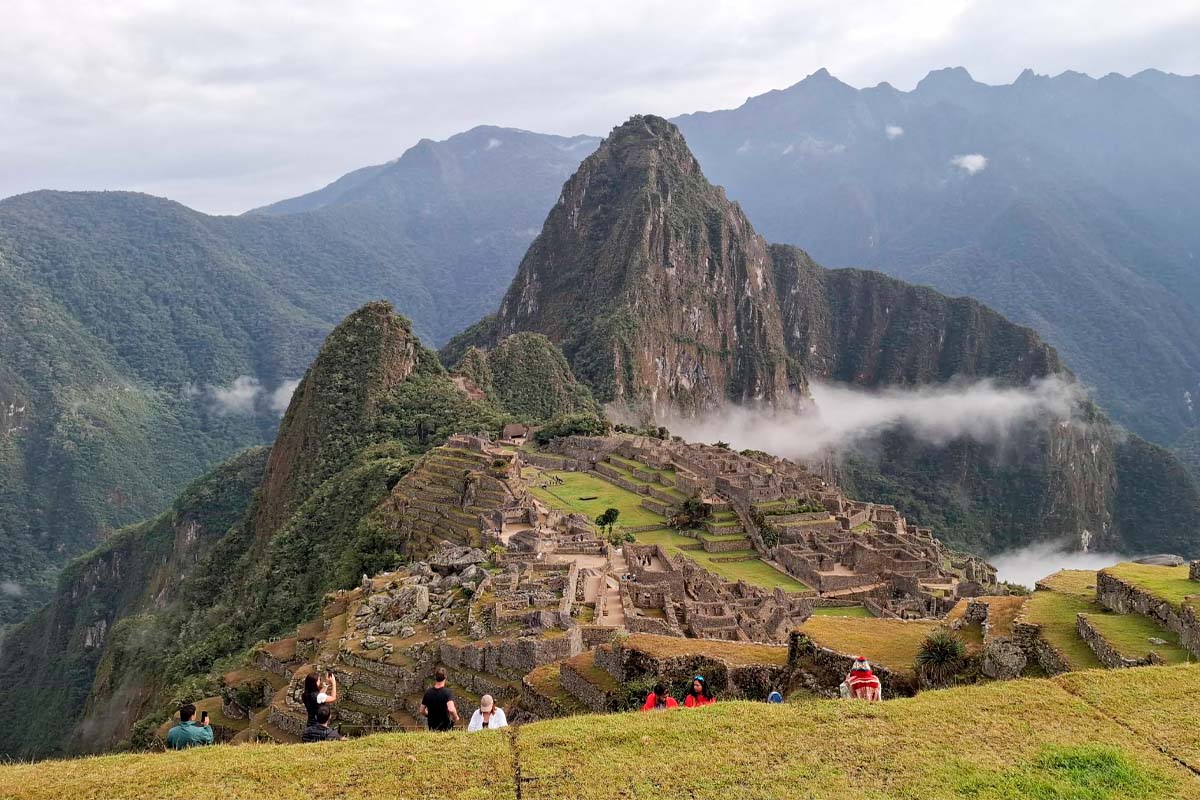
Key points of the full route
- Approximate total distance: 39-42 km in 4 days
- Maximum altitude: 4,215 m (Warmiwañusca, day 2)
- Minimum altitude: Machu Picchu, 2,430 m
The itinerary is the same for all authorized agencies; what changes is the service quality (tents, meals, porters), not the route or the campsites.
Difficulty level
The Inca Trail to Machu Picchu is generally rated as a moderate to high difficulty route, not suitable for those with no physical fitness level or previous high-altitude trekking experience. The challenge does not come from a single factor, but from the mix of altitude, terrain, and the length of the daily hikes.
Factors that determine the difficulty
- Altitude: The route stays between 2,430 meters and 4,215 meters during the 4 days. Long exposure to this height, rather than the physical effort itself, is the main cause of discomfort for hikers.
- Terrain: A large part of the trail keeps the original Inca stone paving, with steps that are uneven in size and height, especially steep on the uphill and downhill sections of day 2 and day 3.
- Length of the hikes: The 6 to 9 hour days, in mountain terrain, mean an ongoing tiredness that is felt more strongly by the third and fourth day.
- Changing weather: It is possible to experience intense sun, rain, and temperatures close to 0°C on the same day, depending on the altitude and time of day.
Most critical point: Warmiwañusca (Dead Woman’s Pass)
The climb on day 2 up to 4,215 meters is always the section that hikers describe as the most demanding of the whole trip. It does not require climbing skills or special gear, but it does need a reasonable heart condition, since the effort is made with less oxygen available.
Recommended physical preparation
- You do not need to be a top athlete, but it is recommended to arrive with a basic level of regular physical activity (walks, light cardio) in the weeks before the trip.
- It is recommended to spend at least 2 to 3 days in Cusco or the Sacred Valley before starting the trek, to allow a partial adjustment to the altitude.
- Age and overall health matter more than previous trekking experience: people with existing heart or breathing conditions should check with a doctor before booking.
Permits and spots
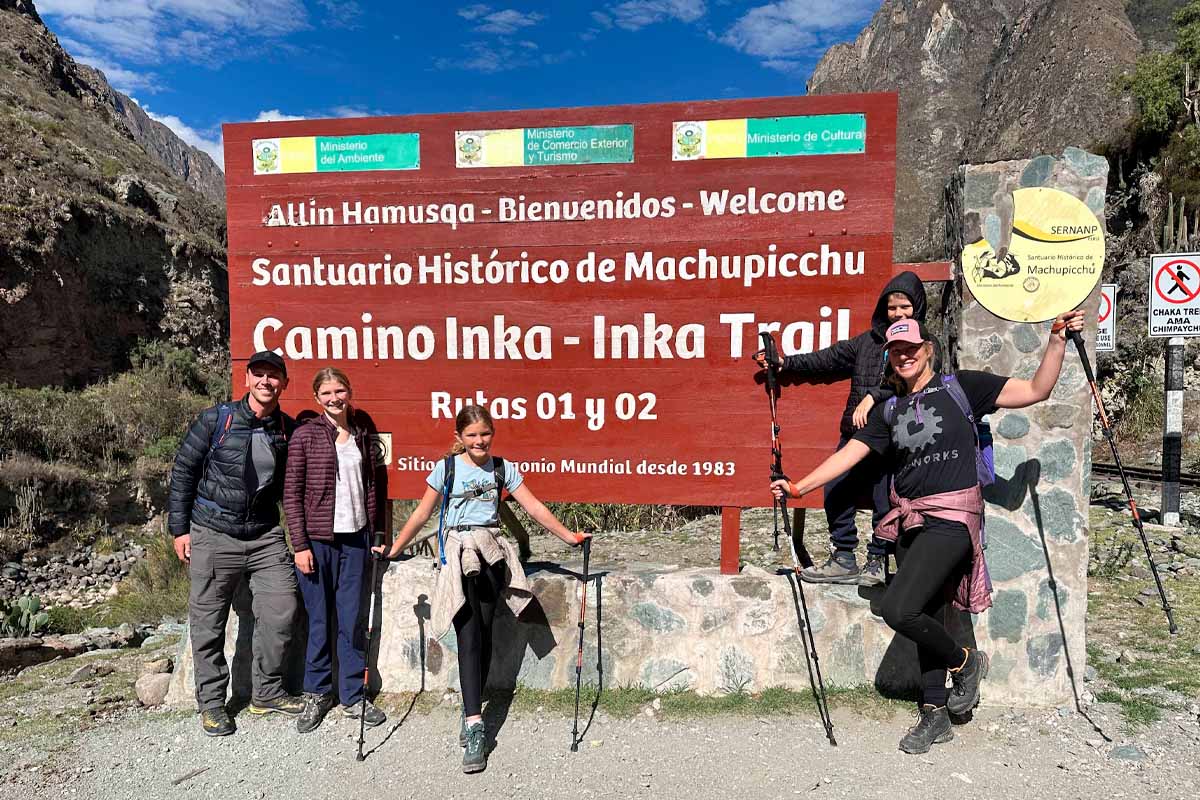
Access to the Inca Trail to Machu Picchu is managed directly by the Ministry of Culture of Peru, through the Machupicchu National Archaeological Park. Unlike other routes to the citadel, it is not possible to enter on your own or buy the permit independently: it must be done through an authorized agency.
How does the spot system work?
- The number of daily permits is limited to 500 people, an amount that includes both hikers and support staff (guides, cooks, and porters).
- Out of that total, it is estimated that about 200 to 250 spots belong to tourists; the rest is for the working staff needed for each group.
- The permits are personal and non-transferable, each one is linked to the visitor’s passport number and must match exactly at the time of entry.
- There is no “waiting list” option on the same day; if the spots for a date run out, the only choice is to pick another date or a different route.
How far in advance to book?
For the high season (May to September), it is recommended to book 4 to 6 months in advance. On the other hand, for the mid-season (April, October), 2 to 3 months is usually enough; lastly, for the low season (November to March, with February closed for maintenance), it is possible to get spots with less notice, although waiting until the last month is not recommended.
What happens if the spots run out?
If the wanted date no longer has availability, there are two choices:
- Change the date: Within the same month or season, looking for days with lower demand (weekdays, avoiding holidays).
- Choose a different route, like the Salkantay Trek, the Lares Trek, or entering through Hidroelectrica, which also arrive at Machu Picchu but do not depend on the Inca Trail permit system.
About the Inca Trail Closure
The Classic Inca Trail to Machu Picchu remains closed during the whole month of February for route maintenance. During this time, agencies usually offer the Salkantay Trek or other choices as a direct replacement.
Prices and what the tour includes
The cost of the 4 day Classic Inca Trail ranges between $700 and $900 USD per person, with a market average close to $830-$840 USD. The short 2-day version has a lower cost, between $470 and $585 USD. In both cases, the price varies depending on the agency, the season and the level of service offered.
By Peruvian law, this route cannot be done on your own: it is mandatory to hire an authorized travel agency and a certified professional guide, a requirement that applies to both the Classic and the Short Inca Trail.
Comparison of main routes
| Service / Tour | Duration | Average price (USD) | What it usually includes |
|---|---|---|---|
| Classic Inca Trail | 4 days / 3 nights | $830 – $840 | Entrance tickets to the Inca Trail and Machu Picchu, full transport (includes return train), camping gear, cooks, porters to carry tents and food, and first aid |
| Short Inca Trail | 2 days / 1 night | $470 – $585 | Tickets, train tickets, transport, bilingual guide, dinner and one night of basic lodging in Aguas Calientes |
Available discounts
Authorized agencies usually apply a price reduction of $30 to $40 USD for certain profiles:
- University students: With a valid international student card (under 25 years old)
- Minors: From 12 to 17 years old, showing a passport or identity document
- Children under 11 years old: Extra discounts on some platforms
Common extra services
For those looking to customize the experience, agencies in Cusco offer add-ons with approximate costs:
- Extra personal porter (up to 6-8 kg): ~$198 USD (some agencies already include it in the base price)
- Sleeping bag rental: ~$25 USD
- Walking stick: ~$10 USD each
- Extra entrance to Huayna Picchu mountain: ~$65 USD
- Upgrade to the panoramic train (Vistadome) for the return: ~$30 USD extra
What to bring to the Inca Trail
The needed gear depends on the changing weather of the route (strong sun during the day and temperatures close to 0°C at night) and the fact that a large part of the personal load must be carried in a small backpack, since the porters only carry the camping gear and a limited amount of personal belongings (usually between 5 and 7 kg per person, depending on the agency).
Among the things you should bring to the Inca Trail to Machu Picchu are:
| Clothing | Personal gear |
|
|
| Footwear | Health and hydration |
|
|
| Documents and money | |
|
The Best time to do it
The weather on the route is marked by two very distinct seasons, with a month of total closure for maintenance.
Dry season (May – September)
You can enjoy sunny and clear days, with the best views of the route and Machu Picchu. Also, keep in mind that the nights are very cold, especially in the higher altitude camps (they can drop below 0°C). On the other hand, this is the season with the highest demand: July and August coincide with holidays in the northern hemisphere, which sells out spots further in advance.
Transition season (April and October)
Good balance between stable weather and fewer tourists, with less chance of rain than in the rainy season, with spots somewhat easier to get than in July-August.
Rainy Season (November – March)
You tend to have the highest chance of rain, especially in the afternoons, but you can see greener vegetation and fewer walkers on the route. It should be noted that: in February the Inca Trail is closed for maintenance; there are no exceptions or permits available that month.
Frequently asked questions
- Can you do the Inca Trail without an agency?
No. By regulation of the Ministry of Culture of Peru, entry to the Classic Inca Trail and the Short Inca Trail is only through an authorized travel agency, with a certified professional guide. There is no option to get the permit on your own. - How far in advance should I book?
It is recommended between 4 and 6 months for the high season (May-September), and between 2 and 3 months for the mid-season. Dates in July, August, and Peruvian holidays usually sell out even further in advance. - What happens if I do not get a spot for the Inca Trail?
The most common alternative is the Salkantay Trek or the Lares Trek, which has no daily limit of permits and also reaches Machu Picchu, although by a different route. - Is the physical passport necessary or is a copy enough?
The original physical passport is required, the same one used to register the booking. A copy, photo, or other identity document is not accepted at the entry control. - Can the Inca Trail be done all year round?
No. The month of February remains completely closed for route maintenance. The rest of the year is available, with weather changes depending on the season. - What is the difference between the Classic and Short Inca Trail?
The Classic lasts 4 days and covers the entire route from kilometer 82, including the pass through Warmiwañusca (4,215 m). The Short lasts 2 days, starts at kilometer 104 (closer to Machu Picchu), and skips the higher altitude sections. - Can I bring my own tent or camping gear?
It is not necessary or recommended. The camping gear (tents, mats, dining tent) is included in the tour and is carried by the porters; bringing your own extra gear reduces the allowed personal weight limit. - What happens if I get altitude sickness during the walk?
The guides carry emergency oxygen and basic first aid knowledge. In moderate cases, drinking water, resting, and a slow pace are recommended; in severe cases, the agency’s protocol includes assisted rescue to the closest point with vehicle access.