

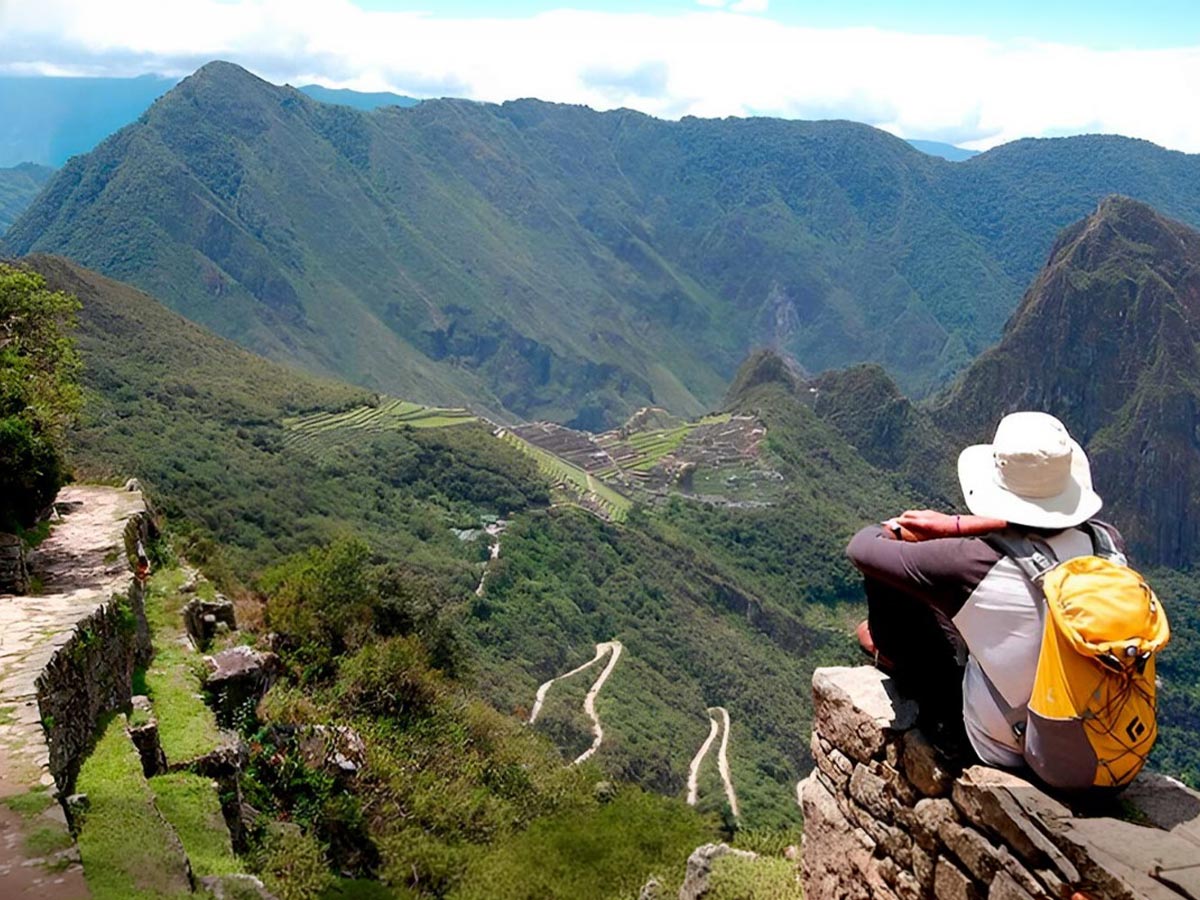
Machu Picchu has two entrances. One is the one most visitors use today and the other is the one the Incas designed as the main access to the citadel: the Inti Punku, or Sun Gate, located at the top of the mountain, next to the path that connects with the Inca Trail.
From up there you get the first full view of Machu Picchu, the same one the Incas had arriving on foot from several places around the region. But this place is not just a viewpoint, it is a control point and, according to several archaeological studies, it also had a role related to watching the solstices.
Getting to the Inti Punku means an extra walk, either as part of the multi-day trekking on the Inca Trail or as a short walk from the citadel itself. In this guide we explain what role this place had, how to get there depending on the route you choose, and if it is really worth adding it to your visit.
Inti Punku: access control and solar observation point
To understand the Inti Punku you have to look at it with two different roles: a practical one, for access control, and another linked to astronomy.
The entrance door to the citadel
The name already gives a clear clue, in Quechua, Inti means “Sun” and Punku means “Door”. But beyond the name, its location had a specific role, archaeologists agree that the Inti Punku worked as a checkpoint, since its position allowed watching the only walking access to the citadel from that direction. From there you also get the first full panoramic view of Machu Picchu, something guides usually point out as one of the best photo spots in the whole site.
Currently, this is the official entrance to Machu Picchu for those arriving after finishing the Inca Trail route, a route that in its classic section takes between 3 and 4 days from kilometer 82.
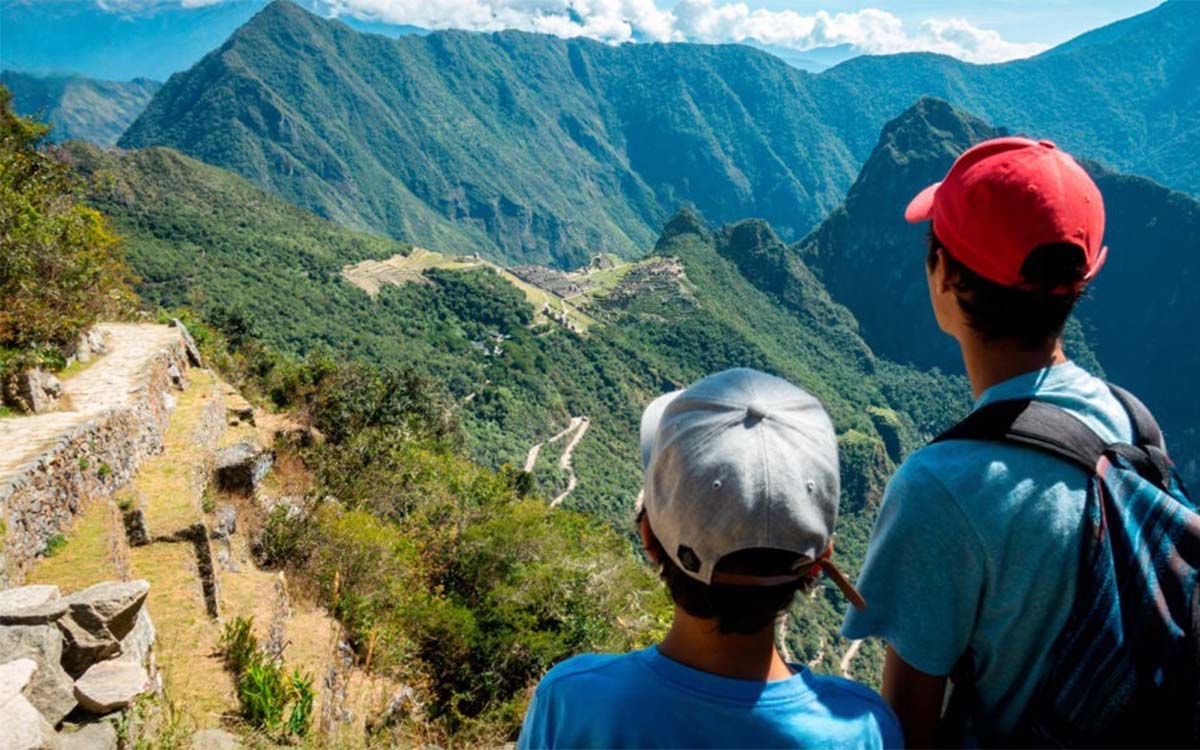
An observation point related to the solstice
The location of the Inti Punku is not random. It lines up with the sunrise of the southern winter solstice, which happens around June 21 (the exact date changes every year by one or two days).
This solar alignment is not exclusive to the Inti Punku, it repeats in other Inca buildings, like the Tower of Machu Picchu itself and the Intihuatana, which strengthens the idea that the site’s architecture was planned based on astronomy, something typical of Inca engineering in several Cusco settlements.
The mark of the builders: history and architecture
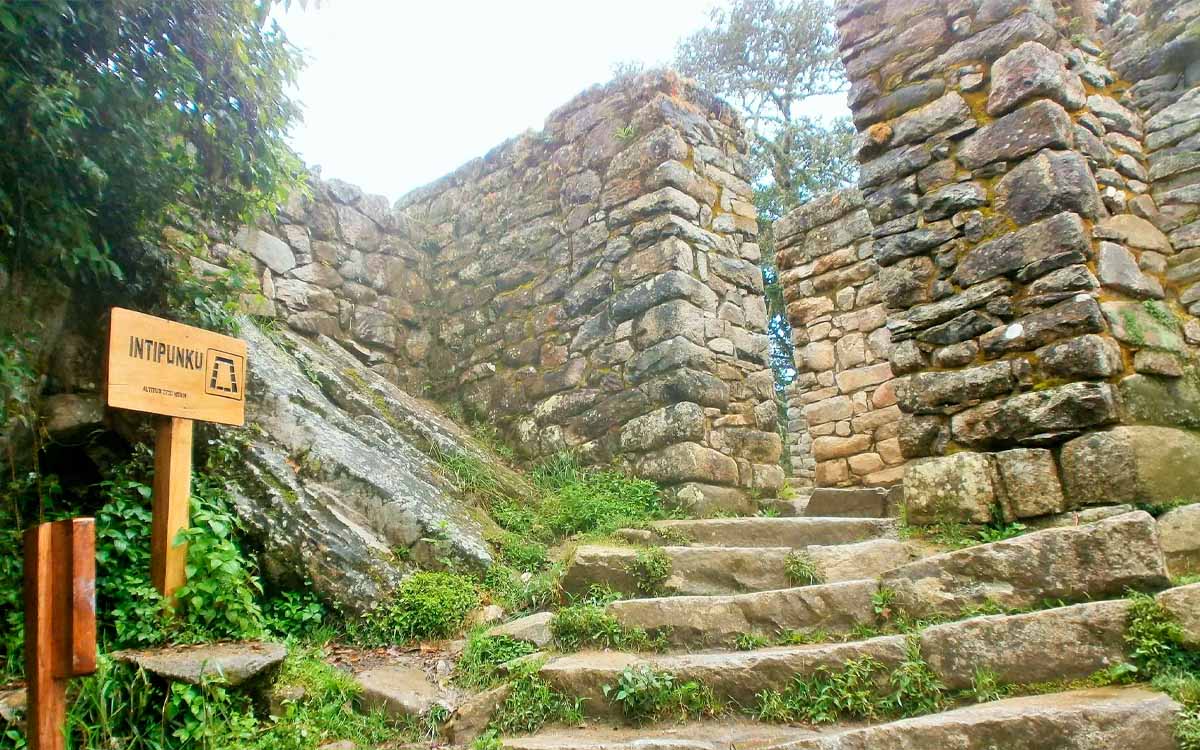
Inti Punku was built during the peak of the Inca Empire, between the 15th and 16th centuries. At first sight it might look like a simple structure of walls and openings, but up close you can see the level of the construction.
- Architecture: The Incas carved and fitted the stone blocks using the mortarless masonry technique, their signature method. The fit between stones is so exact that not even a knife blade fits in. This same technique is seen in other famous buildings in the region, like Sacsayhuaman, Ollantaytambo and the Coricancha in Cusco, and it is the reason why these structures have survived centuries of earthquakes in the area.
- A resting point on the route: Besides its control and watching role, several historians suggest that Inti Punku could have acted as a resting space before entering Machu Picchu, since it marks the final section of the Inca Trail before going down to the citadel.
Did you know…? There is another archaeological site with the same name, the Inti Punku of Ollantaytambo, located in the Sacred Valley. Even though they share the name, they are two completely different places, with different access routes. Next, we explain how to tell them apart so you can plan your visit well.
Key fact: do not confuse the Inti Punku
- The Inti Punku of Machu Picchu: It is the historic entrance door to the citadel, the end point of the Inca Trail, and can be visited on a short walk from inside the archaeological complex. It is the place this guide is about.
- The Inti Punku of Ollantaytambo: It is in the heights of Kachi Qhata, facing the town of Ollantaytambo, in the Sacred Valley. It is a different walk, taking several hours, and the site worked as a watch post.
With this difference clear, let us now see how to get to the Sun Gate of Machu Picchu.
The two ways to get to Inti Punku
There are two ways to get to the Sun Gate of Machu Picchu, and each one matches a different kind of visit.
Through the Inca Trail
This is the original route, the same one the Incas used to enter the citadel. Getting to Inti Punku is the high point of the Classic Inca Trail, after finishing the 4 days of trekking.
In the early morning of the fourth day, walkers arrive at Inti Punku in time to see the sunrise over Machu Picchu from above, before going down to the citadel. This arrival is only available for those who do the full Inca Trail; it is not an option for those who visit Machu Picchu through other routes like the Lares trek or the Salkantay trek.
Walk from inside Machu Picchu
For those who are already inside the citadel, there is a second option: going up to Inti Punku through a short path inside the archaeological complex.
- Starting point: The path begins in the high part of the farming sector, near the Guardian’s House, the classic viewpoint for the panoramic photo.
- Distance and time: It is about 2 km one way (Inti Punku is at 2,745 meters above sea level). It is recommended to plan for 1 to 2 hours for the round trip, depending on the pace of each person.
- Difficulty: Moderate to easy. It is a steady climb on a well-defined stone path; the main factor to consider is the altitude, not the technique of the path.
- Cost and availability: It requires the specific Machu Picchu + Inti Punku ticket (Route 1C), inside Circuit 1. This route only runs in high season (from June 19 to November 2) and has a limited number of spots, so it is a good idea to book it in advance.
What to do when arriving at the Inti Punku?
Once at the top, it is worth taking a moment before going down. This is what you can do at the place:
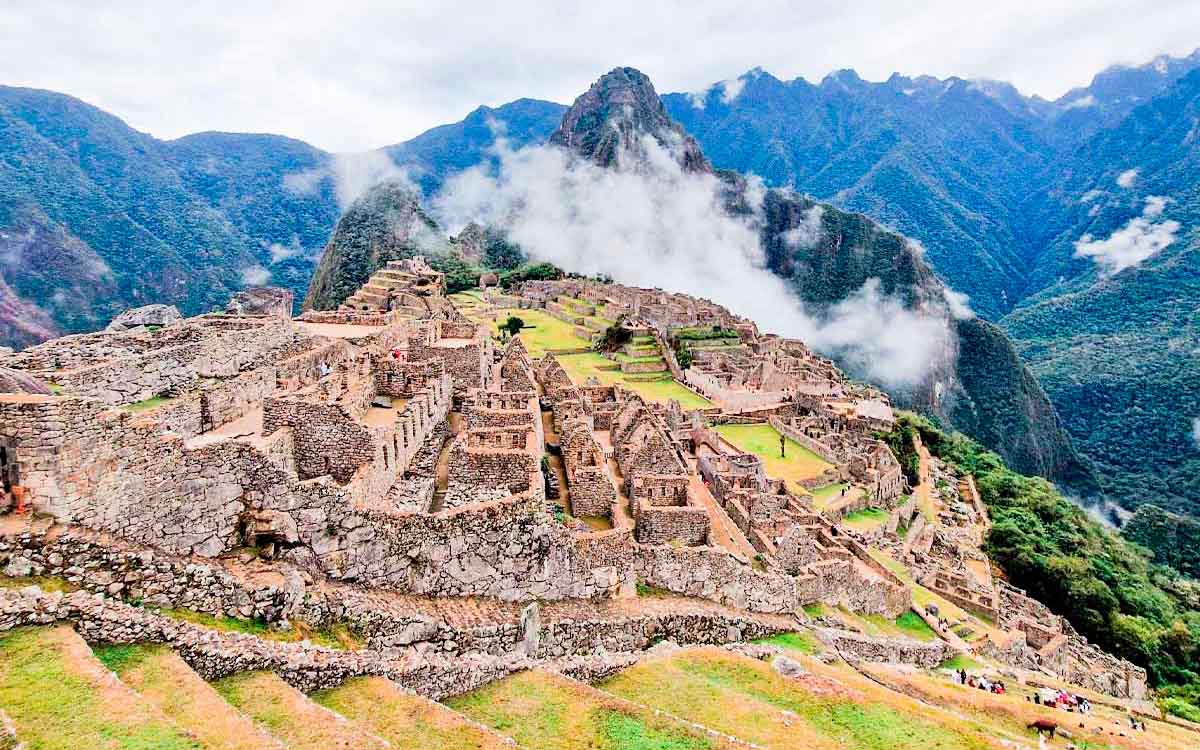
- See the full panoramic view: From the Inti Punku you see Machu Picchu from a different angle than the classic photo from the Guardian’s House: the whole citadel, the shape of Huayna Picchu behind, and at the bottom of the canyon, the path of the Urubamba river (also known as Vilcanota in its upper part). It is one of the best views to understand why the Incas chose this location, surrounded by mountains and with the river going around the site.
- Take photos: It is one of the most recommended spots to photograph Machu Picchu from above. Besides the front shot, you can use the stone frame of the door to frame the citadel in the background. The light is better in the morning, when the sun is not directly above yet and the shadows show the shape of the mountains.
- Rest before going down: After the walk, it is a good spot to sit for a moment, drink water, and rest before starting the way down. The Inti Punku had a ceremonial role for the Incas, so besides being a viewpoint, it is a place with historical value on the tour.
Frequently asked questions about the Inti Punku
- Do I need a special ticket to go up to the Inti Punku?
Yes. To do this walk from inside the citadel you need to buy the ticket “Machu Picchu + Inti Punku (Route 1C)” separately, within Circuit 1. It is no longer included in the general tickets for circuits 1 or 2 as it was before. This route has a limited number of spots (about 300 daily tickets, divided into groups), so it is a good idea to book it in advance, especially on dates with high demand. - Do I need a guide to do this walk?
It is not mandatory. The general visit to the citadel can be done with a guide, but the climb to the Inti Punku is done on your own, following the marked path of Circuit 1. - Is it a hard walk? Who can do it?
It is of medium to easy difficulty: it is not technical, but it means a steady climb that can be hard because of the altitude (the Inti Punku is at 2,745 meters above sea level). It is open to visitors of all ages, though it is recommended to be in reasonable physical shape and be used to walking. It is not the best option for people with mobility problems or sensitive knees. - Will I be able to see the solar alignment with the sunrise?
That event, where the sun lines up with the door at sunrise, happens only around the southern winter solstice (close to June 21, with a change of one or two days depending on the year). The rest of the year, the walk and the panoramic views are still just as highly recommended, just without that specific light effect. - Is the route to the Inti Punku available all year?
No. It is one of the high season routes, which usually runs approximately between June and October or November (the exact dates are set every year, so it is a good idea to confirm them on the official platform before buying). Outside those dates, the only way to reach the Inti Punku is by completing the Inca Trail. - Can I visit the Inti Punku without doing the multi-day Inca Trail?
Yes. It is not necessary to do the full trek: by buying the Route 1C ticket you can go up to the Inti Punku on a short walk from inside the citadel, on the same day of your visit to Machu Picchu.