

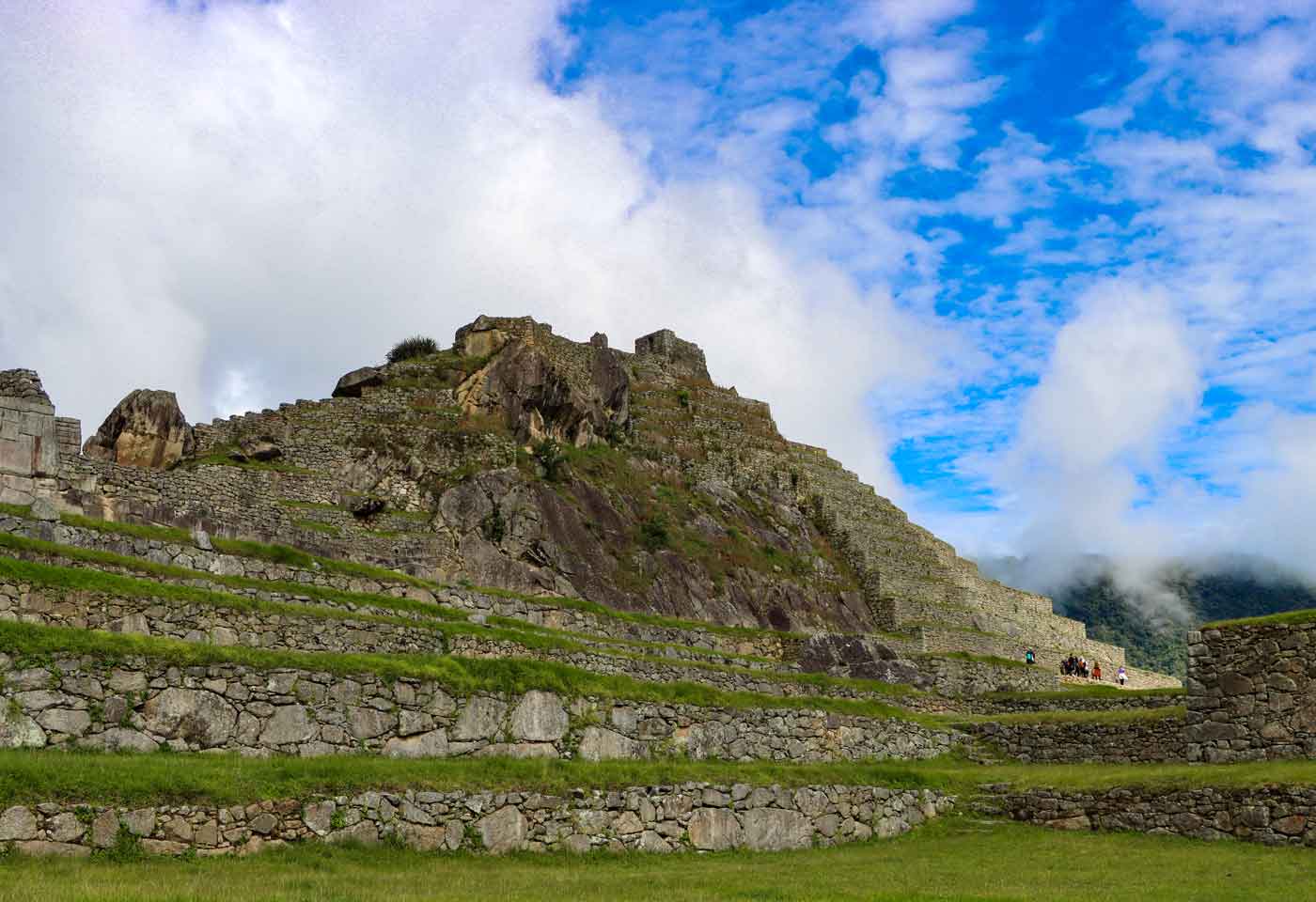
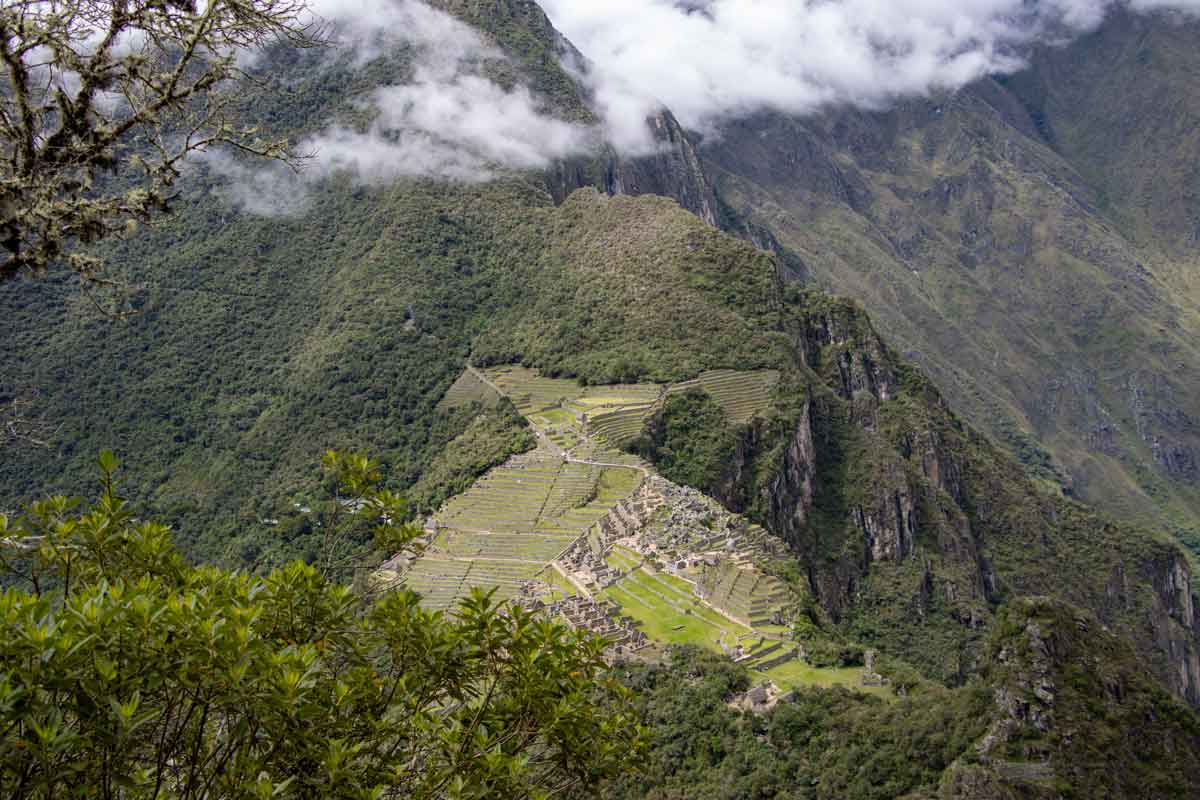
If you’ve ever looked at a photo of Machu Picchu and wondered which peak is which, you’re not alone. “Machu Picchu” refers to both the ancient citadel and the mountain looming behind it — two very different elevations that are constantly confused. In this guide, we’ll break down the exact altitude of Mt. Machu Picchu compared to the citadel, Cusco, and the surrounding peaks, plus what that elevation actually means for your safety on the trail.
Mt. Machu Picchu Altitude, From Highest to Lowest
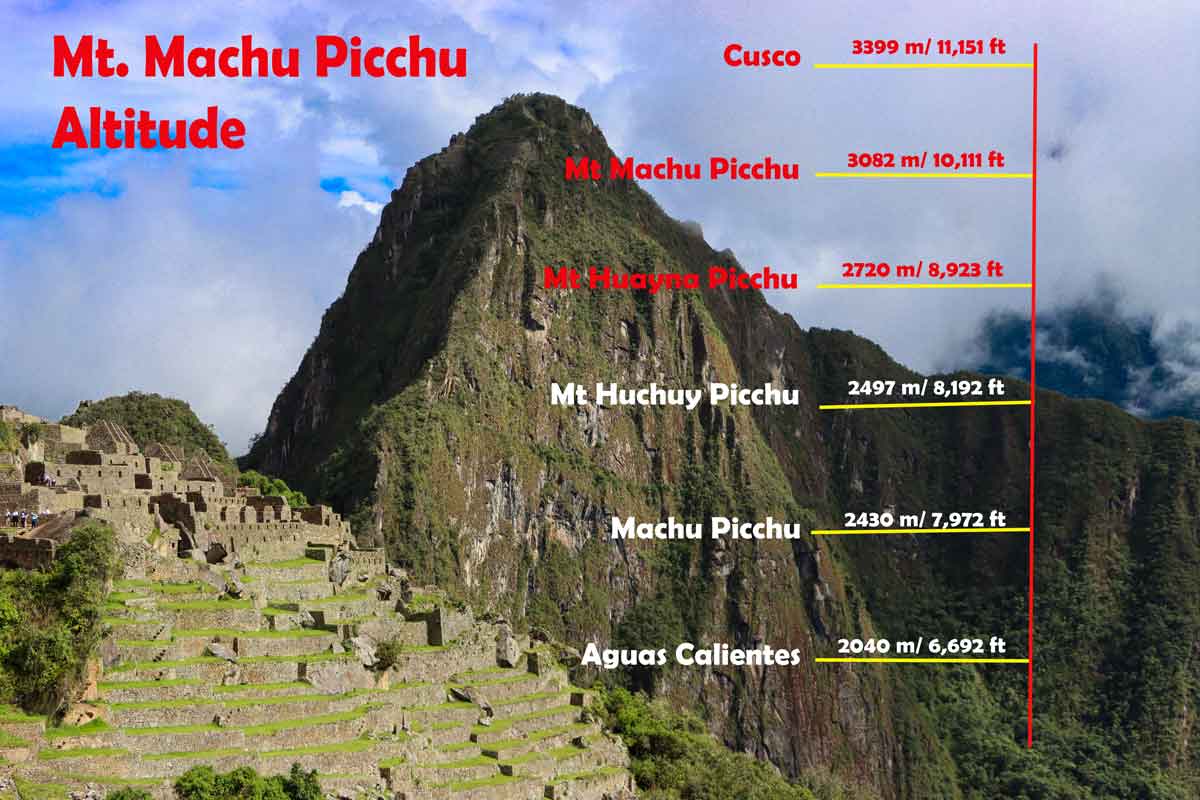
Here’s how the elevations stack up, following the same descending scale you’d see standing at the ruins looking up at the mountain behind them:
| Location | Elevation |
|---|---|
| Cusco | 3,399 m / 11,151 ft |
| Mt. Machu Picchu (the peak) | 3,082 m / 10,111 ft |
| Mt. Huayna Picchu | 2,720 m / 8,923 ft |
| Mt. Huchuy Picchu | 2,497 m / 8,192 ft |
| Machu Picchu (the citadel) | 2,430 m / 7,972 ft |
| Aguas Calientes (Machu Picchu Pueblo) | 2,040 m / 6,692 ft |
Notice something important here: Cusco, where nearly every visitor starts their trip, sits higher than Mt. Machu Picchu itself. That’s why altitude sickness often catches people off guard in Cusco before they’ve even reached the mountain — the hardest adjustment happens before the hike even begins.
Mt. Machu Picchu is also noticeably taller than Huayna Picchu, even though Huayna Picchu tends to get more attention (and bookings) for its dramatic views. If you’re deciding between the two hikes, know that Mt. Machu Picchu is the higher, longer climb, while Huayna Picchu is shorter but steeper near the top.
Altitude Along the Way: Cusco, the Sacred Valley, and Beyond
Before you even get near Machu Picchu, your trip will likely take you through some of the highest points in the region. Knowing these numbers ahead of time helps you plan your acclimatization days properly:
Cusco: 10,990 ft / 3,350 m
Sacred Valley: 9,350 ft / 2,850 m
Humantay Lake: 13,779 ft / 4,200 m
Rainbow Mountain (Vinicunca): 17,060 ft / 5,200 m
Notice that Cusco itself sits higher than Machu Picchu. That’s why most seasoned guides recommend spending at least one or two nights in Cusco before attempting any high-altitude excursions like Humantay Lake or Rainbow Mountain — your body needs time to adjust.
Why This Elevation Difference Matters for Your Trip
Dropping nearly 1,360 meters between Cusco and Aguas Calientes over the course of a couple of days sounds like it should make things easier — and in some ways it does, since your body is descending toward lower altitude by the time you reach the citadel. But the climb back up to Mt. Machu Picchu or Huayna Picchu on the same day can still hit hard if you haven’t acclimatized properly beforehand.
This is the part of trip planning people underestimate the most: the risk isn’t just about how high you go, it’s about how fast you get there.
While the altitude at the Machu Picchu Citadel itself (7,972 ft) rarely causes severe altitude sickness, the gateway cities you must pass through are much higher.
What Happens If You Ignore the Altitude? (Real Risks)
Cusco’s Inca and colonial charm can be so captivating that it’s easy to underestimate the physical toll of high altitude — but doing so can derail your entire trip. Severe altitude sickness can escalate into complications that require emergency medical evacuation.
Unfortunately, altitude-related safety issues remain a real concern for unprepared hikers. Recent incidents reported by local police and Peruvian news outlets are a sobering reminder of how unpredictable the Andes can be without the right precautions:
Inca Trail Fatality: According to reports from El Comercio and Infobae, Matthew Cameron Paton, a 53-year-old Australian tourist, fell approximately 400 meters into a ravine along the Inca Trail on Wednesday, May 20. Rescue teams reportedly faced difficult access conditions while recovering his body.
Medical Emergency in Town: As reported by local Peruvian news outlets, on Friday, June 26, French national Thierry Francois Roger collapsed in Machu Picchu Pueblo (Aguas Calientes). He was rushed by ambulance to a local health center but passed away en route.
Missing on an Alternative Route: As reported by local Peruvian news outlets, on Tuesday, June 30, police recovered the body of Ian Thomas Treger, a 30-year-old American, in Pampacancha, Pitumarca. He had been missing since May 13 while hiking an unmonitored trail near Rainbow Mountain.
Severe Trail Injuries: As reported by local Peruvian news outlets, on Friday, June 12, Elad Yaakov, a 25-year-old Israeli hiker, suffered a severe leg fracture after a fall on the Ausangate trail. He was rescued by high-mountain police units (DIVOPUS Quispicanchi and Cusipata PAR).
Note: The only way in or out of Aguas Calientes is by train or on foot — there are no roads for standard vehicles. That means medical transfers to major hospitals in Cusco can take hours, which is why proper altitude acclimatization and travel insurance covering elevations up to 5,000 meters are not optional extras — they’re essential.
How to Handle the Altitude Safely
Spend at least 1-2 nights in Cusco before attempting any hike, since it’s higher than Mt. Machu Picchu itself.
Book with licensed, registered tour operators — never with unregistered guides on unmonitored trails.
Get travel insurance that explicitly covers altitudes up to 5,000 m.
Stay hydrated, walk at your own pace, and tell your guide immediately if you feel unwell.
If you’re adding Mt. Machu Picchu or Huayna Picchu to your itinerary, treat it as a separate acclimatization challenge, not just “more walking.”
An honest note from Valery: Is it actually worth it?
Yeah, it is. But only if you respect the mountain.
Look, Machu Picchu isn’t going anywhere. Neither are the Rainbow Mountains or Humantay Lake. They will wait for you. So take your time, prepare properly, and above all, listen to your body. Thousands of travelers hike these exact trails every single year and have the time of their lives—simply because they take the altitude seriously.
Do yourself a favor and do the same.