

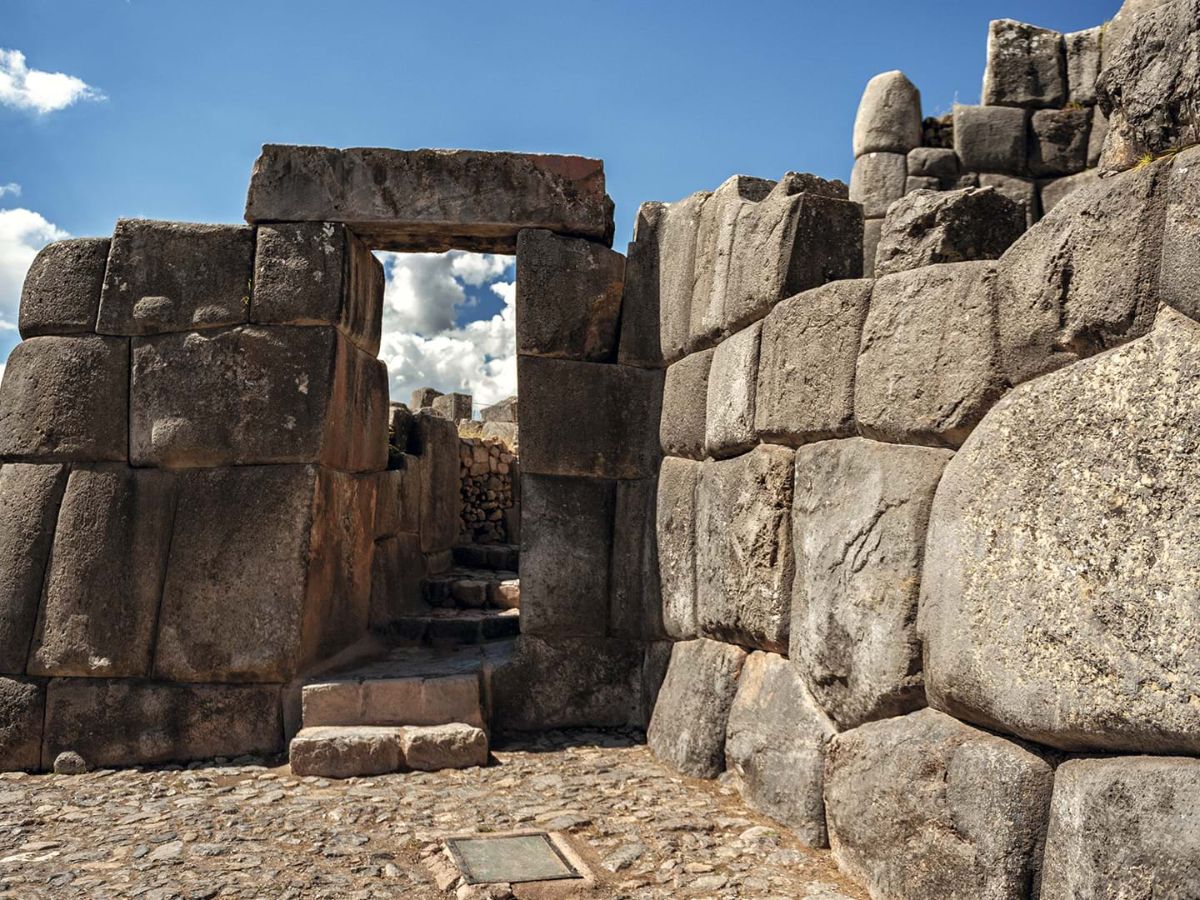
Visiting the fortress of Sacsayhuamán (Quechua word meaning satisfied falcon), one of the most important archaeological complexes of the Inca Empire, is to admire the precision of the engineering used and delve into the history of what was once the greatest civilization in the Americas. pre-columbian And contemplating its harmonious carved stone structures makes its construction process somewhat difficult for the visitor to imagine and explain.
This complex, which occupies an area of 3 thousand hectares, would have required the work of 25 thousand men – including architects, astronomers, engineers, carvers and stone transporters. According to archaeological studies, it is estimated that its construction took more than 90 years from 1350 AD. C., commissioned by Inca Pachacutec, and would have been completed in the 16th century by his successor, Túpac Inca Yupanqui.
Origin and meaning of Sacsayhuaman
The construction of Sacsayhuaman dates back to the height of the Inca Empire in the 15th century, with Pachacutec and Huayna Cápac being the Inca rulers of those times. Its construction was carried out using advanced engineering techniques and a workforce of more than 20,000 men.
The translation from Quechua to Spanish of Sacsayhuaman comes from Sacsay (to be satisfied) and huaman (falcon), “place where the falcon is satiated” or “satisfied falcon.” Since the falcon is a characteristic bird of the high Andean valleys, it is not at all far-fetched to think that tribute was paid to it by using its name for the construction of the complex.
Where is Sacsayhuaman located?
Sacsayhuaman is located 3,700 meters above sea level and is located 2 kilometers north of the Plaza de Armas of Cusco. Its surface covers more than 3,000 hectares and contains the most beautiful landscapes accompanied by its abundant flora and fauna.
How to get to Sacsayhuaman?
You can get to Sacsayhuaman with a City Tour from any agency, with a private vehicle or with a walk from the Plaza de Armas.
If you decide to go on foot, you must go up Sweden Street through Huaynapata, following Resbalosa, turning right at the San Cristóbal church and following the road. Finally, you will find yourself on the ancient Inca route to Sacsayhuaman.
Attractions of Sacsayhuaman
The monumental architecture is the most impressive thing about Sacsayhuaman, therefore, one of its greatest attractions.
The towers
They are located at the top of the fortress and are called Muyucmaarca, Paucarmarca and Sallaqmarca. Each one has its respective meaning: “Marca” means population, “Muyuq” means round; “Pauca” means festive, happy, garden and beautiful; “Sallaq” comes from stony or rough.
To this day, and like much of the complex, only the foundations of what were said towers remain.
The Bulwarks
The bastions are 3 platforms that are formed by walls made of limestone rock blocks, which in turn form indentations of entrances and exits. As they are irregular polyhedra that fit with great perfection, the Spanish attributed their construction to demons and, currently, it is known that stones taken from nearby quarries were used to then be carved and finally transported to the site.
Enclosures
At the top of the hill are beautiful rooms with majestic views of the city squares, they are known as the Sacsayhuaman group of enclosures. They are long and narrow, they are connected to each other by trapezoidal doors and steep faces can be seen on their walls.
Throne of the Inca (K’usilluc Jink’ian)
Its literal translation is “where the monkey gets up.” It is a sequence of seats or benches, which are carved from diorite rock whose aesthetic sense has a great background.
Rodaderos or Suchuna
The slides are a type of slide, or slide, of volcanic origin and were formed over the years.
Tunnels or Chincanas
The famous underground caves of Sacsayhuaman. These 2 tunnels attract the attention of visitors, since legend has it that the end of the largest cave could never be found. It is said that their destination was the Temple of the Sun or Corikancha.
Currently, entry to the chincana is not permitted.
How to enter Sacsayhuaman?
To visit Sacsayhuaman it is necessary to have the Cusco Tourist Ticket. If you don’t have it, you can purchase it for S/70 (USD 20 dollars). In addition, different tourism agencies already include the entrance price in their costs.
Information about Sacsayhuaman: weather, schedule and more
Climate
Sacsayhuaman has a dry and temperate climate. The average temperature per year is 12°C. There are 2 seasons during the year. The rainy season (November to March) presents a greater amount of river precipitation. The dry season (April to October) has hotter days during the day and colder days at night.
Schedules
Sacsayhuaman opens its doors from 7 a.m. to 7 p.m. to 6 p.m.
Height
Sacsayhuaman is approximately 3,700 meters above sea level.
Dimension
Sacsayhuaman is immense. It covers an area of 3,093 hectares.
Construction
It was remodeled in the 15th century by order of Emperor Pachacutec. Its origins are uncertain.
Questions and answers about Sacsayhuaman
1) Is Sacsayhuaman open all year round?
Yes, this archaeological site remains open all year round except in cases of emergencies such as natural disasters or protests in the area.
2) Is there an entrance just to visit Sacsayhuaman?
There is no exclusive entrance to Sacsayhuaman. Admission is with the Cusco Tourist Ticket that also includes access to Qenqo, Pucapucara and Tambomachay.
3) Can I get tour guides in Sacsayhuaman?
Yes you can get tour guides at the entrance gate of Sacsayhuaman. Prices range from 15 soles to more per tourist.
4) What is the most famous construction in Sacsayhuaman?
Sacsayhuaman has famous buildings such as walls, bastions, towers and more. It is also worth highlighting the Cahuide tower, the Inca throne, the slides and more.
5) What does Sacsayhuaman represent?
Sacsayhuaman is a word that comes from the Quechua word that means ‘Satisfied Falcon’. This is because this bird is abundant in the area.
6) What can you do in Sacsayhuaman?
In Sacsayhuaman you can take a historical tour of the Inca fortress. You also have beautiful views of the city of Cusco.
7) What did the Incas do in Sacsayhuaman?
In Sacsayhuaman the Incas carried out religious ceremonies of great importance. The sun festival, Inti Raymi, also took place there.
8) Can I walk to Sacsayhuaman from Cusco?
Yes, the route from the city of Cusco to Sacsayhuaman can be done on foot from the Plaza de Armas. You just have to follow ‘Resbalosa’ street until you reach Don Bosco avenue. The walk is approximately 40 minutes.
9) What is the best time to visit Sacsayhuaman?
The sunny days of the dry season are good to visit Sacsayhuaman. This season runs from April to October.
10) Are there tours to Sacsayhuaman?
Yes, the most famous tour to visit Sacsayhuaman is the ‘City Tour Cusco’. The cost ranges from 30 to 60 dollars for all-inclusive service. The cost varies depending on the tourism agency you choose.
Fortress or ceremonial temple?
According to the chronicler Garcilaso de la Vega, this ceremonial fortress “was the greatest architectural work that the Incas would accomplish during their heyday.” Although its usefulness has not been fully clarified, it is believed that it was intended for military purposes: Inca warriors would be trained here. However, when contemplating its architecture, it appears to us as a great ceremonial temple dedicated to the god Inti (Sun) and perhaps this is the most accurate function.
The main characteristic of this cyclopean construction are its large stone blocks, some more than 9 meters high and weighing 100 tons. They are carved in such a way that not only those located at their base fit together perfectly, but also those that are superimposed on each other without using any type of cement. Inside, large warehouses of food and weapons were found, as well as irrigation canals, ceremonial temples and dozens of complexes.
The cult of the god Inti
In the back area of the complex, the Inti Raymi ceremony, also known as the ‘Festival of the Sun’, takes place every June 24. In the times of the Inca Empire, tens of thousands of people made pilgrimages there to make all kinds of offerings, a tradition that continues to this day. The locals, dressed in colorful costumes, perform typical dances in a performance that has become a majestic tourist attraction.
How to get?
There are four ways to get there from the center of Cusco: on foot – the journey takes approximately 30 minutes from the Plaza de Armas -, by taxi service – it costs about 15 soles -, by bus or with a tour service .
Without a doubt, witnessing the Sacsayhuamán fortress not only allows its visitors to learn a little more about the Inca Empire, but also ends up being dazzled by the great skill that the engineers of pre-Hispanic times had.
Machu Picchu Travel Tours
Reserve our guided trips to Machu Picchu by contacting our travel experts and you will be closer to completing your adventure:
- Cusco to Machu Picchu
- Machu Picchu Day Trip
- Machu Picchu Peru
- Machu Picchu tours from Lima
- 2 Day Inca Trail Tour
- Classic Inca Trail Tour
- 3 Day Inca Trail Hike
Book Huayna Picchu Ticket 2027
Book Machu Picchu Mountain Ticket 2027